
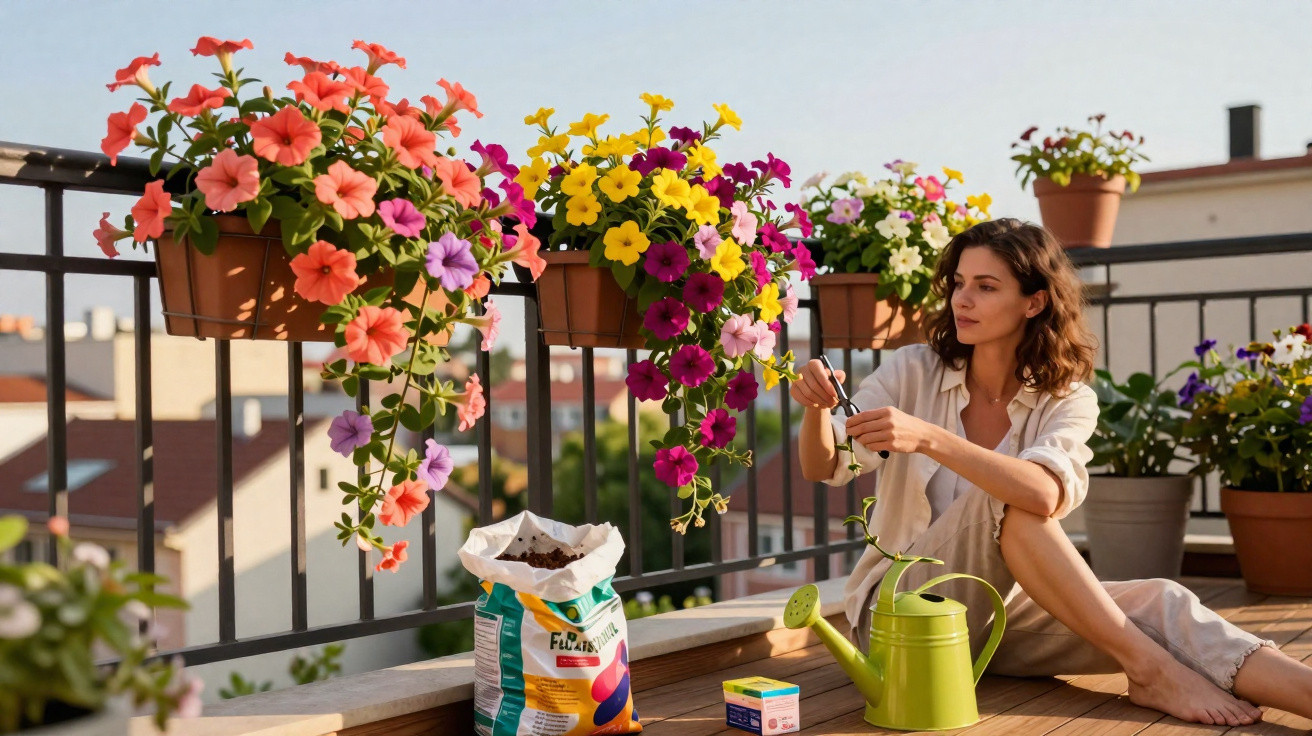
Many balcony gardeners know the frustration: pricey window boxes, attractive pots, planted with high hopes - and by July everything looks thin and disappointing. The good news is that one particular plant makes lush, cascading displays in planters almost a sure thing. What matters most is when you plant it, and how you get it established in the compost.
The secret star behind those flower cascades
If you stroll past especially full balcony boxes in summer, you’ll often spot it even if you don’t know its name: Calibrachoa. In garden centres it’s frequently sold as “Million Bells” or “Mini-petunia”. Botanically it’s closely related to the petunia, but it tends to look finer, neater and more compact.
Calibrachoa forms a dense, gently trailing cushion, typically around 15 to 30 centimetres high and up to 60 centimetres across. Within that green cloud, hundreds of small, bell-shaped flowers appear through summer - from white to yellow, orange, pink and red, plus two-tone “camouflage” shades.
"Calibrachoa turns simple balcony boxes into overflowing flower fountains - with a manageable amount of care."
One very practical benefit is that it’s largely self-cleaning. Spent flowers drop off by themselves, so you don’t have to pinch off dead heads every day with fiddly fingers. That keeps planters looking fresh even when you’re short on time for gardening.
Breeders also release new varieties all the time. Particularly popular are “chameleon” types, where the bloom colour shifts as the season goes on - for example from yellow to pink. The result is that the same balcony box can look quite different in June compared with August, without replacing a single plant.
The right moment in spring makes all the difference
Calibrachoa thrives on warmth and is sensitive to cold. In cooler areas it’s therefore treated like a classic summer bedding plant, replanted into pots and boxes each year.
A simple rule of thumb: plant only when night frosts are no longer expected and temperatures have settled consistently above 8 to 10°C. Depending on where you live, that can mean anything from mid-April to the end of May.
- Planted too early: roots stall in cold compost and growth remains sluggish.
- Planted too late: plants may still get going, but they have less time to build a dense root network before the first heatwave arrives.
- Ideal: place them into nicely warmed planters straight after the last frosty nights and allow a few weeks for rooting in.
In this spring window, most of the action happens below the surface. Roots spread through the entire pot, and shoots start extending. By July, stems then trail clearly over the edge, creating that sought-after “spill-over” flowering look.
For a genuinely full planting in a typical balcony window box, three to four young plants per medium-sized container is a good guide. Hanging baskets can be planted just as densely, so the pot fills more quickly and evenly.
How to plant successfully in a pot or hanging basket
Calibrachoa doesn’t tolerate waterlogging. So the number-one principle is: better free-draining and airy than wet and heavy.
Choosing the right container and compost
- Pick a container with large drainage holes.
- Add a base layer of expanded clay pellets or coarse gravel.
- Fill with a high-quality, loose compost for balcony planters or hanging baskets.
- Add a handful of perlite or sand to improve drainage.
Set plants so that the top of the root ball is only just covered with compost. Leave a little space between each plant - they knit together quickly. Water in thoroughly after planting so the roots make good contact with the compost.
"With Calibrachoa, a very free-draining pot matters more than the exact pot size."
Care for masses of flowers from May until the first frosts
If the spring set-up is right, ongoing care is straightforward. Three factors decide success: light, water and nutrients.
Position: plenty of sun, but not like an oven
Calibrachoa loves bright light and flowers most heavily in full sun. However, on balconies with fierce midday sun and heat radiating from warm walls, the plants can struggle at times. Many varieties do best with morning or evening sun and some shelter from hot, drying winds.
Watering properly - never constantly wet, never bone-dry
Aim for compost that stays evenly slightly moist, without water sitting in a saucer. A good routine is to let the top layer dry a little before the next watering.
- In spring, watering every two to three days is often enough.
- During hot spells in high summer, daily watering may be needed, especially for hanging baskets.
- Water in the morning, so plants don’t go into the night with wet foliage.
If you’re away frequently, water-retaining mats, clay watering cones or automatic irrigation systems can help. Calibrachoa rewards steady moisture with consistently strong flowering.
Feeding: this plant is a real “big eater”
Calibrachoa is a hungry, heavy-feeding balcony plant. In a small pot, nutrients are used up quickly. Adding a base feed at planting time - for example a controlled-release fertiliser - sets the foundation.
For reliably abundant flowering, continue with a liquid feed for flowering plants every two weeks in the watering can. This helps keep growth compact, leaves richly green, and bloom production from tailing off.
When the plant looks tired: a light trim, a big effect
From around mid-July, many balcony boxes can start to look a bit ragged. A gentle summer trim can help. Shorten individual shoots by around 1 centimetre or a little more, spread across the whole plant.
"A light summer cut encourages new branching and a second wave of flowers into autumn."
After cutting back, fresh growth emerges again from the leaf axils. Combined with a good feed, a renewed flowering push typically follows within a few weeks. That way, the planter often stays attractive right up to the first frosty nights.
Colours, combinations and useful tips for balcony planning
Calibrachoa is available with single, semi-double and double flowers. Individual blooms are smaller than those of classic petunias, but en masse they look extremely vivid. If you enjoy playing with colour, you can create specific moods:
- Yellow and orange: warm, Mediterranean, perfect with terracotta pots
- Pink and salmon: romantic, ideal against white house walls
- Burgundy and violet: elegant, striking with dark containers
- Two-tone varieties: lively, and they can look like a mixed planting even on their own
It’s also worth pairing Calibrachoa with other trailing or cushion-forming plants. Particularly harmonious partners include:
- Silver-leaved companions such as silver ragwort, which calm down bold colour mixes
- Scented plants such as heliotrope, adding perfume to the display
- Structural plants such as ornamental grasses, bringing height and movement
For anyone with limited time, Calibrachoa is especially appealing because it doesn’t require routine deadheading. Stick to the basics - correct timing, free-draining compost, and regular feeding - and you can achieve a balcony look that otherwise tends to appear only in garden catalogues, with comparatively little effort.
One last note for gardeners who like to experiment: in very mild areas, individual plants can get through winter indoors where it’s frost-free, such as a bright garage or conservatory. In German-speaking regions this is usually more of a curiosity than a necessity. Fresh young plants in spring grow so quickly that most hobby gardeners prefer to start anew each year - and look forward again to their full summer cascade.


Comments
No comments yet. Be the first to comment!
Leave a Comment