
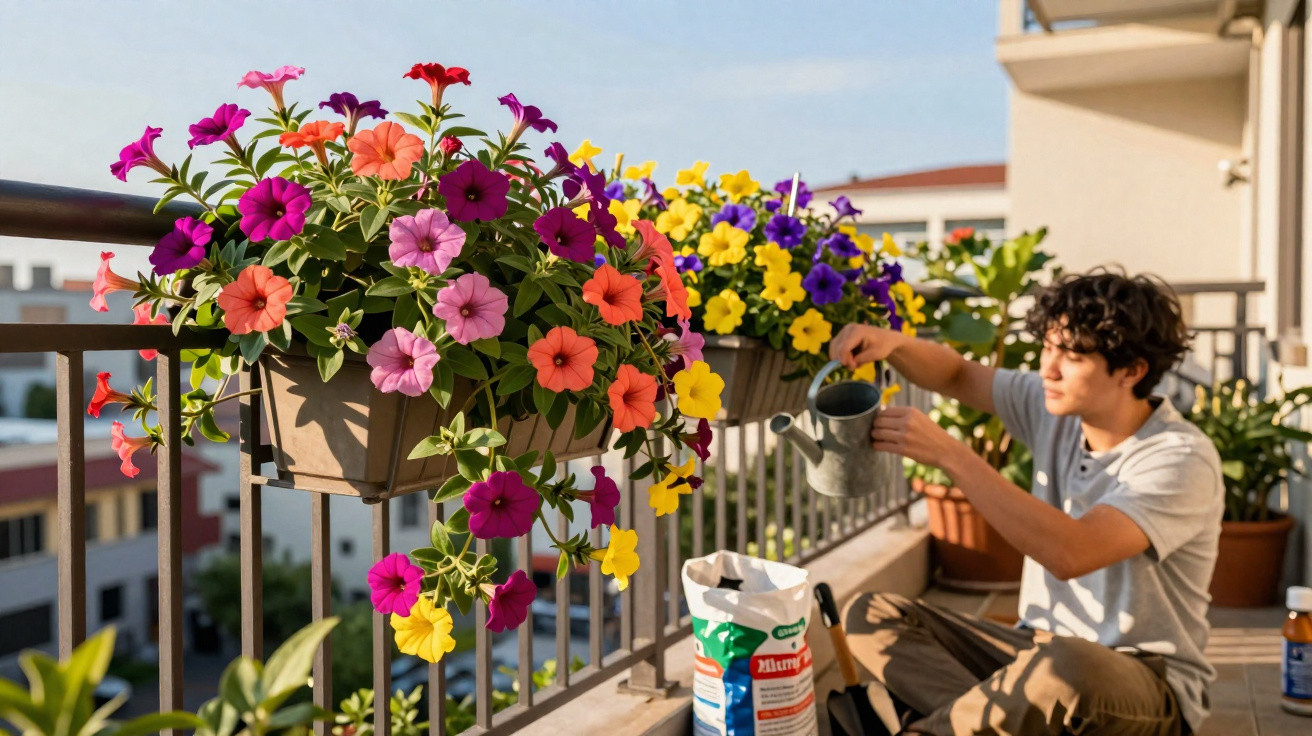
If you want thick “waterfall” flowers spilling over your balcony in summer, you need to make the right choice in spring - and act quickly.
You see them in catalogue balcony shots all the time: overflowing boxes with bright blooms pouring down over the edge like a cascade. There’s usually no trick behind it, just one plant that’s still widely underrated here - Calibrachoa, often sold as Million Bells. Plant it correctly now and you can have near non-stop colour from May right through into autumn.
The hidden star of many catalogue balconies
At first glance, Calibrachoa looks like a carpet of mini petunias. It forms a tight mound that grows outwards and then down, so in balcony boxes, hanging baskets and larger pots it naturally tumbles over the rim. Its hallmark is an abundance of small, bell-shaped flowers that keep coming all summer.
Most plants stay around 15–30 cm tall, but they spread much more than that: 30–60 cm across is typical when they’re well looked after. That’s exactly why they’re ideal as spillers - the kind of plant you use specifically to disguise and soften the edge of a container.
"If you’re after dense, trailing clouds of flowers, you almost inevitably end up with Calibrachoa - especially on sunny balconies."
Another advantage is that Calibrachoa is considered “self-cleaning”. Once the bells fade, they drop off by themselves. You don’t need to pinch out old flowers every day to keep the display looking tidy, which saves time and frustration - particularly when you’re caring for several containers at once.
Newer breeding has also brought in eye-catching effects. You’ll find varieties with double blooms and shifting tones that move from yellow to pink or orange. These “chameleon varieties” look especially striking in hanging baskets and can turn a simple balcony box into something that really stands out.
The ideal spring planting window: neither too early nor too late
Calibrachoa loves warmth and won’t tolerate frost. In the UK climate it won’t survive winter outdoors, so it’s treated like a classic summer bedding plant. Timing matters if you want strong plants that build properly.
- Plant only once there’s no risk of frost
- Aim for nights consistently above 8–10 °C
- Depending on your region, roughly mid-April to the end of May
Plant too early and you risk cold damage or a complete pause in growth. The compost stays chilly, roots barely function, and the plants simply don’t get going. If, however, they’re moved into their final containers soon after the last frost night, the roots can fully colonise the rootball over the following weeks.
That’s what sets you up for the classic cascades from July onwards: the shoots keep lengthening, first starting to trail slightly, then hanging further with each extra centimetre. By high summer they’re well over the rim and filling the space beneath with flowers.
For hanging baskets and medium-sized balcony boxes, a slightly denser planting works best: three to four young plants per container creates an even, full look without the roots severely competing with one another.
Planting successfully in a pot or balcony box
Calibrachoa likes airy conditions but not wet feet. Waterlogging quickly leads to root rot and weak growth, so how you set up the container is crucial.
The right container and compost
- Pots or boxes with large drainage holes
- A drainage layer of expanded clay or gravel at the bottom
- Light, free-draining balcony compost
- Avoid heavy garden soil and plain, structureless multipurpose compost
A layer of expanded clay at the base helps stop water sitting in the lowest part of the pot. Above that, use a loose, nutrient-rich medium - ready-made balcony or hanging-basket composts are ideal. If you’re using standard multipurpose compost, it’s best to mix in a little perlite, sand or fine wood fibre to improve drainage.
When planting, the young plants’ rootballs should be thoroughly moist but not dripping. After positioning them, firm the compost gently around the plants and water well once so any air pockets disappear.
Positioning: light and warmth are essential
Calibrachoa flowers most heavily in full sun. A south- or west-facing balcony usually produces the strongest display. Light partial shade is possible, but it typically means fewer flowers and longer, looser shoots.
Wind isn’t a major issue as long as watering is consistent and containers are stable. On very exposed, draughty balconies, it’s wiser to use heavier pots so hanging baskets don’t tip or swing about.
Summer care: watering, feeding, trimming
To stop the flower cascades collapsing in the middle of high summer, Calibrachoa needs dependable all-round care. Three things matter most: water, nutrients and the occasional cut-back.
Watering properly - without waterlogging
In hanging baskets the compost dries out very quickly, especially on hot, breezy days. Use the finger test: if the surface feels dry, water. If it’s still moist several centimetres down, wait a bit longer.
- Water thoroughly rather than giving frequent small splashes
- Tip away water left in saucers after a few minutes
- During heatwaves, check daily depending on exposure
Yellowing leaves that appear from the centre outwards can indicate roots that are too wet. In that case, skip watering for a day and allow the compost to dry down more.
Feeding for continuous flowering
Calibrachoa is a real heavy feeder. Producing months of flowers takes a lot of energy. If you feed too lightly, you’ll get long shoots with sparse blooms and a thinning centre.
"A base feed at planting time plus regular liquid feeds are the fuel for those famous flower cascades."
A practical routine:
- Mix a slow-release fertiliser for balcony plants into the compost when planting.
- From around four weeks after planting, add liquid feed to the watering can every two weeks.
- In extremely hot periods, when you’re watering a great deal, increase to once a week.
A balanced fertiliser for flowering plants with slightly higher potassium is ideal, as it supports bud formation and keeps growth sturdier.
A light trim for a second wave of flowers
By mid to late July, some Calibrachoa can start to look tired: the outer stems still flower, but the middle becomes patchy. A gentle trim makes a difference.
Shortening individual shoots by 1–2 cm encourages fresh branching. Those new side shoots then deliver a renewed flush of flowers in late summer. Don’t cut everything back at once - spread it out so the display stays attractive throughout.
Which varieties are worth choosing - colour mixes and tips
Calibrachoa comes in almost every colour direction: pure white, lemon yellow, vivid pink, violet, burgundy, and bi-colours with a paler throat. Depending on the style of your balcony, you can create very different effects.
- Pastels: a great fit for Scandinavian or minimalist balconies; calm and refined.
- High-impact colours: strong pink, orange or red add punch to city balconies and read well from a distance.
- Chameleon varieties: shift colour over time and keep giving new effects in the same box.
Mixed planting can also work beautifully: Calibrachoa pairs well with trailing ivy, fine grasses, or scented companions such as heliotrope. The key is choosing partners with similar needs for sun and water.
Common mistakes - and how to avoid them
Knowing the usual pitfalls helps prevent disappointment in high summer.
- Container too small: the plants can’t branch enough. Choose a generously sized pot or box.
- Heavy, compacted compost: it holds water. Drainage and a loose, airy mix are essential.
- Too much shade: leads to weak flowering. For truly dense cascades, you need plenty of light.
- Irregular watering: swinging between drought stress and sogginess stresses the plants. A quick daily check is better.
Some balcony gardeners notice pale or yellowing leaves despite watering well. Often the cause is a nutrient shortage or water that’s too chalky. In hard-water areas, watering occasionally with rainwater or using a feed that includes trace elements such as iron can help.
Why this plant suits people who work full-time
If you’re short on time during the day, you’ll appreciate plants that are reliable and low-fuss. That’s exactly where Calibrachoa shines: no constant deadheading, a straightforward care routine, and a long flowering season. With a larger container, an automatic balcony-box irrigator, or a built-in water reservoir, the plants cope well even with brief hot spells.
In rented homes where space is limited, a simple set-up works well: one or two large hanging baskets plus a long balcony box. Even that can turn an entire loggia into a ribbon of colour - as long as you use the spring window and build the planting properly.
If you’re redesigning your balcony, Calibrachoa can serve as a flexible “building block” in many schemes: from romantic flower cascades to modern two-tone hanging baskets, right through to colour-coordinated mixes with herbs such as thyme or oregano peeking between the blooms. That way you gain not only a visual highlight, but also extra scent - and summer feels noticeably longer, just a step from the living room.
Comments
No comments yet. Be the first to comment!
Leave a Comment