
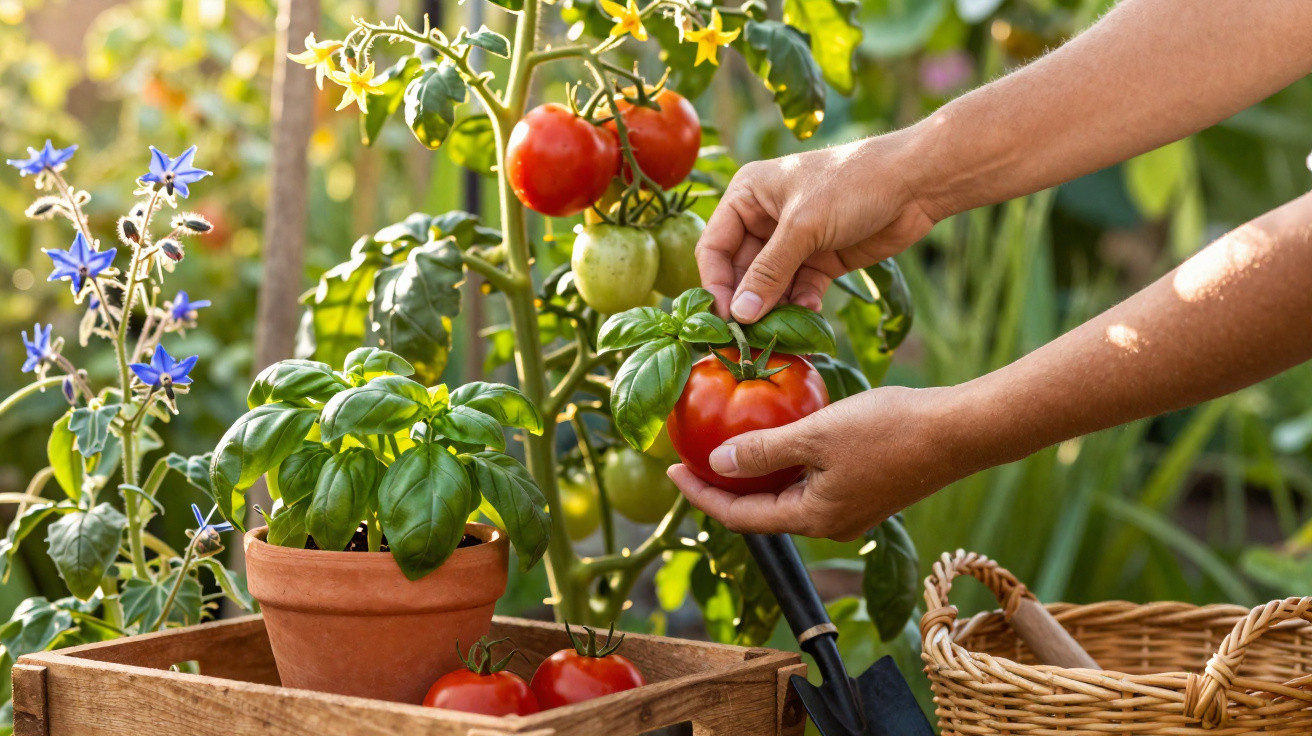
A simple planting trick can change that.
Watered, fed, staked, shielded from heavy rain - tomatoes often receive the most attention in the garden. Yet in some years the flavour still falls short. What many people overlook is that taste isn’t shaped only by variety, sunshine and watering, but also by what’s growing alongside them. One very common kitchen herb can make tomatoes noticeably more aromatic, with no chemicals and no specialist fertiliser.
Why a simple kitchen herb noticeably boosts tomato flavour
Tomatoes and basil are considered a dream pairing in the kitchen - and that same duo can be surprisingly powerful in the bed. Gardeners have been saying for years that fruit smells richer and tastes sweeter when basil is planted directly among the tomato plants.
"If you plant basil among tomatoes, you create a small ecosystem in which the fruit can ripen in peace and develop more aroma."
One key reason: basil’s strong scent confuses common pests such as whiteflies and aphids. These insects puncture leaves, weaken the plants and put them under pressure. Tomatoes under stress often stop ripening sooner, stay smaller and build up less sugar.
When the plant is calmer - not constantly under attack - the fruit can stay on the plant longer and mature fully. During that extra time, more natural sugars and aromatic compounds accumulate. That’s what creates the classic “sun-ripened tomato” feel that many people otherwise only associate with holidays.
More yield, less stress - what basil also does in the bed
Garden guides also point to a measurable impact on harvest volume. In some trials, tomato plants grown with basil nearby increased yields by around 20% on average, and in some home gardens by as much as 30%.
- more reliable fruit set thanks to increased pollinator activity
- a more even microclimate around the plants
- lower disease pressure because plants stay stronger
Basil also casts a light shade over the soil. The ground doesn’t dry out as quickly, and moisture levels remain steadier. That helps prevent tomatoes repeatedly swinging between “bone-dry soil” and “a full watering can all at once” - a stress trigger that can dull flavour and even lead to split fruit.
Because the plants remain more vigorous, many gardeners feel confident leaving tomatoes on the vine longer until they are properly ripe. Fully vine-ripened tomatoes nearly always taste sweeter and less sharp than fruit picked early and left to finish ripening off the plant.
How basil protects tomatoes and makes the bed more lively
Basil brings a second major advantage: its flowers attract bees, bumblebees and other pollinators in large numbers. As they move through, they brush past the yellow tomato blossoms too - raising the pollination rate.
"A flowering border of basil along a tomato row acts like a magnet for pollinators and strengthens every single plant."
At the same time, the herb’s strongly scented oils can disrupt certain sap-sucking or piercing insects. On its own, that doesn’t replace a full plant-protection approach, but it can reduce the pressure substantially. Many home growers report fewer aphids, and in some cases fewer issues with fungal diseases, because the tomatoes stay more robust overall.
The “three-way alliance”: tomato, basil and borage
Some experienced garden enthusiasts take it a step further and add borage to the pairing. With its blue flowers, borage is also a classic companion plant in the veg patch.
- borage flowers attract many beneficial insects
- deep roots loosen the soil and draw nutrients from lower layers
- cut borage stems can be used as mulch around tomatoes
Together, the result is a lively strip: buzzing insects above, tomatoes growing through the middle, and herbs filling the spaces between and below. This diversity stabilises the bed’s mini-ecosystem. Instead of repeatedly reaching for sprays, insects, roots and plant compounds quietly work together and provide support.
How to plant basil properly between your tomatoes
For the strongest effect, tomatoes and basil should start under similar conditions: warm, bright, and protected from late frosts. In the UK, planting from May often works well, though in some areas it’s better to wait until early June, once nights are reliably frost-free.
Plant spacing in open ground
In a standard vegetable bed, these distances have proved practical:
- between two tomato plants: about 50 to 60 centimetres
- one basil plant between them, spaced roughly 30 to 40 centimetres
In practice, it looks like this: a tomato, then basil, then another tomato - repeated along the row. That way, the herbs don’t just protect individual spots; they create a loose, scented barrier along the entire line.
Pot and balcony option for urban gardens
This approach also works without garden soil. If you only have a balcony or terrace, you can grow tomatoes and basil together in a sufficiently large container. A pot holding 40 to 60 litres is usually enough for one tomato plant and one strong basil plant.
Key points:
- high-quality, free-draining compost
- drainage holes in the base of the container
- no permanently wet root area - aim for steady, even moisture
Regular watering without waterlogging helps both plants develop their full aroma. A thin mulch layer - for example grass clippings, chopped straw or dried leaves - helps retain moisture in the pot, especially during hot summer spells.
Care tips: keeping basil and tomatoes aromatic for longer
Basil grows bushier when you harvest it frequently. Regularly cutting the shoot tips encourages fresh growth, keeping the leaves more tender and more intensely flavoured.
"A quick snip with the scissors every few days strengthens basil - and goes straight into salad, pasta or onto a fresh slice of tomato."
Tomatoes also respond well to attentive care - just not over-fussing. Useful steps include:
- removing side shoots in good time for cordon (stake) tomatoes
- light removal of lower leaves to improve air circulation
- watering at the root zone rather than over the leaves
These measures reduce the risk of fungal diseases such as late blight. Less disease pressure in turn means fruit can ripen for longer and more evenly - and often reaches the kitchen at exactly the right moment.
Why tomatoes often taste bland - and what basil changes
Many flavour disappointments come down to three causes: too little sun, too much water in one go, and harvesting too early. Picking tomatoes early “just to be safe” robs them of the final ripening phase, when a large share of the aromatic compounds develops.
With basil in the bed, it becomes easier to let fruit ripen properly. The plants cope better, show fewer stress signs and withstand minor pest activity more easily. Leaves and shoots stay healthier for longer, so tomatoes can remain on the plant until they reach full colour and full flavour.
There’s also an interesting psychological effect: if you’re already visiting the bed frequently for fresh basil, you naturally keep an eye on the tomatoes’ ripeness too. That makes it less likely any fruit is forgotten, and the picking moment becomes much easier to judge.
Practical everyday examples for combining them
A typical family-garden setup: a row with four or five tomato plants, three basil plants spaced between them, and one or two borage plants at the edge. In June, borage tends to flower first, with basil flowers following later. All summer long the bed buzzes while the tomatoes ripen undisturbed.
On a city balcony, a large container with one tomato, one basil plant and a low flowering herb can deliver the same effect on a smaller scale. If you pluck a few basil leaves during evening watering, the difference becomes obvious: a still-warm tomato from the pot, sliced and topped with fresh basil, tastes far more intense than many supermarket tomatoes.
If you like, you can also experiment with varieties: fleshy oxheart tomatoes can taste particularly rich with robust Genovese basil, while sweet cherry tomatoes pair well with small-leaf basil types. Either way, companion herbs improve not only flavour but the overall look of the growing space too: less bare soil, more greenery, more flowers - and a veg garden that looks better and tastes better.
Comments
No comments yet. Be the first to comment!
Leave a Comment