
Act smart now and you’ll often be picking before the neighbours.
Every year, plenty of home gardeners ask the same question: why do their strawberries barely crop in June - or only start producing when the excitement for those first red berries has almost passed? The reason is rarely the variety. Far more often, it comes down to four straightforward spring jobs that are easy to underestimate or forget altogether.
Why spring determines your strawberry harvest
Strawberry plants are generally tough, long-lived performers and can stay in the bed for several years. Even so, they react sharply to the wrong care in early spring - precisely when they set themselves up for flowering, fruit set and flavour.
"If you care for your strawberries deliberately in March and April, you can harvest noticeably earlier, more abundantly and often sweeter from mid-June."
This isn’t about complicated, professional “secret” techniques. It’s about combining four simple actions - thorough cleaning, sensible feeding, effective mulching and correct watering - plus a small measure of protection from late frosts. Together, these steps can turn tired clumps back into productive strawberry plants.
Step 1: Remove old leaves - how to start plants off healthy
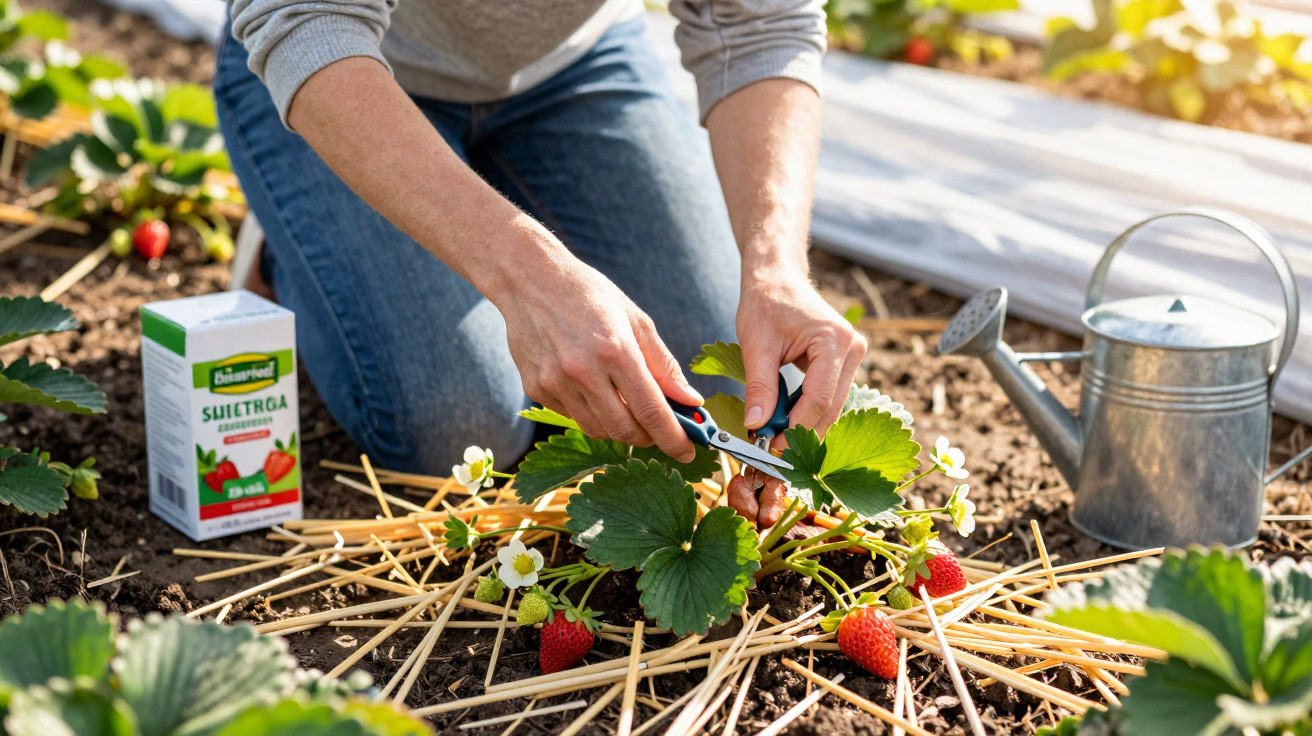
From late March into early April, it’s time for a spring clean in the strawberry bed. Take out anything old, brown or spotted without hesitation. Withered foliage often harbours fungal spores that can later spread to leaves and fruit.
- Cut off all dried or brown leaves just above the crown
- Remove any rotten or mushy plant material completely
- Weed around the plants
Make sure the crown - the short, thickened central stem base - isn’t buried under soil. It should sit roughly level with the soil surface and remain uncovered so it can “breathe”. That helps the plant warm up sooner, start growing earlier and form flower buds more quickly.
If you grow multiple rows, one small habit matters a lot: clean your tools regularly. A damp cloth with a little alcohol, or hot water with washing-up liquid, is enough. This reduces the risk of fungal problems being carried from plant to plant.
Step 2: Feed nutrients - but with a light touch
Once the bed is tidied, it’s time for a boost. Strawberries aren’t as hungry as heavy feeders like cabbages, but they do need a strong start to support good flowering. Well-rotted compost is ideal - cool (no longer heating) and crumbly in the hand.
"About two loose handfuls of mature compost per plant are enough to noticeably push flowering and growth."
Spread the compost in a ring around each plant, rather than tipping it into the crown. Then gently loosen only the very top layer of soil with a hand fork or small cultivator - no more than 2–3 cm deep - because strawberry roots run close to the surface.
This light cultivation breaks any crusting, lets air reach the roots and helps rain or watering soak in properly. Relying solely on a mineral all-purpose fertiliser can quickly lead to excess salts in the soil and watery fruit. Organic matter such as compost releases nutrients more slowly, lasts longer, and also improves soil structure.
Step 3: Mulch as a protective shield for fruit and soil
As soon as fresh growth starts, adding organic mulch is well worth it. Straw, hemp shiv or flax shiv are classic choices for strawberry beds. They help keep moisture levels steadier and stop ripening berries from sitting directly on soil and rotting.
- Apply a mulch layer about 5–10 cm deep around the plants
- Leave a small 2–3 cm gap around the crown
- Use material that rots down slowly and doesn’t go mouldy
If you cover the crown with mulch, you encourage waterlogging and rot at the plant’s most vulnerable point. A clear ring that leaves the centre open is much safer. Later on, mulch keeps berries clean, reduces soil splash during rain, and lowers the risk of grey mould (Botrytis).
Stones or plain gravel are rarely helpful for strawberries. They heat up strongly in sun, dry the soil out and contribute no humus. Organic mulch, by contrast, gradually breaks down and feeds the soil life.
Step 4: Water correctly and protect against late frost
With the first warmer days, strawberries start using more water. They don’t like constantly wet roots, but they also shouldn’t dry out just before and during flowering. The best approach is to water less often, but thoroughly.
"A deep watering once or twice a week is usually enough, provided the soil isn’t extremely sandy."
Crucially, water at soil level rather than over the foliage. Wet leaves and blossoms stay damp longer and are more prone to fungal infection. Drip hoses or watering cans without a rose are clearly better options.
Late frosts are the quiet enemy of early strawberry blossom. Cold nights around mid-May - often associated with the so-called “Ice Saints” period - can freeze the first delicate flowers. A simple horticultural fleece laid loosely over the rows in the evening and removed again in the morning adds a small temperature buffer and can save a lot of blooms.
Extra tips for more and better fruit
Limit runners to concentrate energy
In spring and summer, strawberries produce plenty of runners. If you let them all grow, the plant channels much of its energy into making new young plants - at the expense of fruit. If your priority this year is harvesting, cut off most runners early.
Only if you want to propagate should you keep a few strong runners, root them into small pots, and use those to create new plants for the next bed.
Spot diseases early
Fungal problems such as powdery mildew or grey mould can often be checked in the early stages if you watch closely. Warning signs include:
- dark, sunken patches on leaves
- pale green or limp foliage despite adequate water
- fruit with grey fuzz or soft, mushy areas
Remove affected parts promptly and don’t put them on the compost heap; dispose of them separately or burn them. That quickly reduces disease pressure across the whole bed.
Site, soil and tips for those who garden for flavour
Strawberries thrive in sun. A position with at least six hours of direct sunlight per day boosts yields - and, even more importantly, sweetness. In partial shade, berries often ripen later and tend to taste more tart.
Soil should be loose, free-draining and rich in humus. Waterlogging - for example in dips, or in heavy clay without drainage - can quickly lead to root rot. In tricky spots, slightly raised beds or broad rows built up just a little can help.
If you want to push flavour further, work in a thin layer of mature leaf mould compost in spring, then water once more in May with nettle feed - strongly diluted, of course. This supplies extra potassium, which supports aroma and sugar development.
"A sunny spot, loose soil, organic feeding and consistent spring maintenance - that combination turns any strawberry bed into a little snacking oasis."
The routine can be enjoyable too: children can help snip away old leaves, carry mulch, or lay the fleece over the bed in the evening. Keeping these habits year after year gradually builds a resilient strawberry system - with your own young plants, well-conditioned soil and a dependable crop from mid-June.

Comments
No comments yet. Be the first to comment!
Leave a Comment