
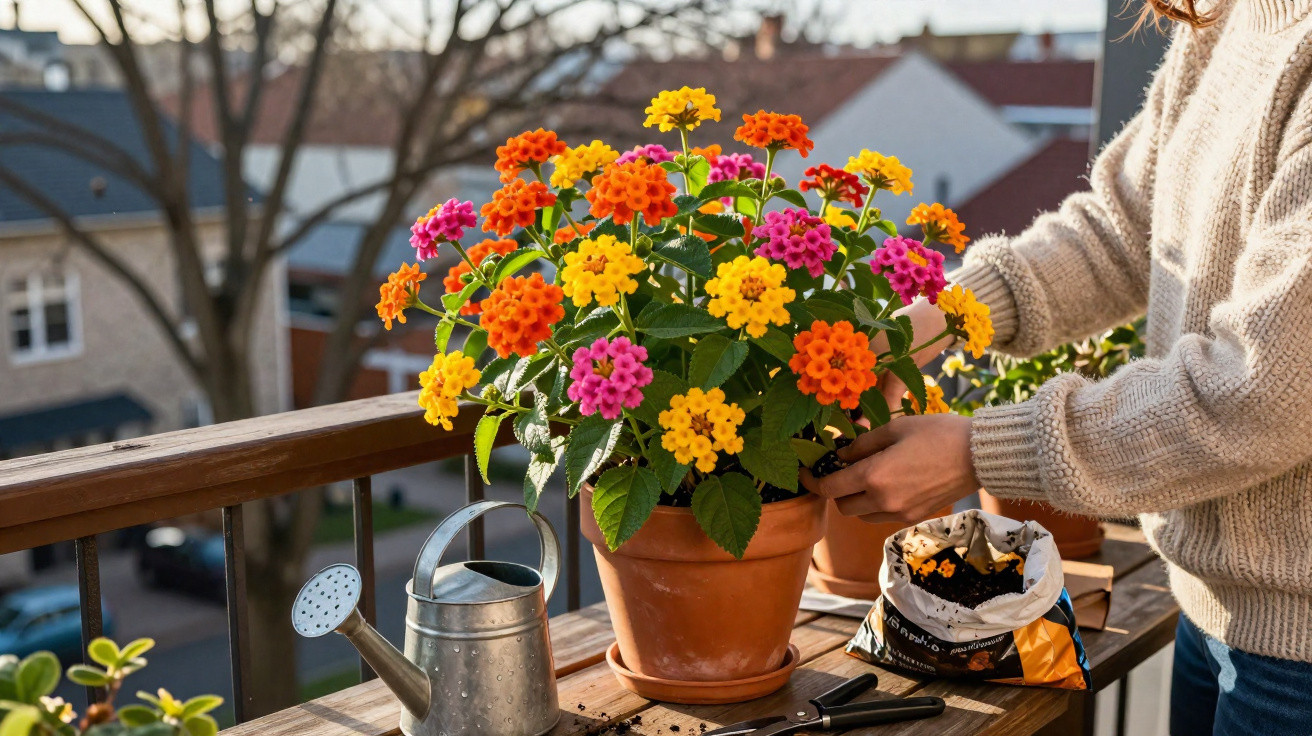
If you want a garden that "more or less runs itself" rather than a formal pleasure garden, it’s easy to default to evergreen hedges or gravel. Yet there’s a plant that can flower for months - and in mild areas, even year-round - while drawing in insects and coping surprisingly well with neglect: the lantana shrub, often sold simply as lantana (shrub verbena).
What’s behind the unassuming name
Lantana is a small shrub, usually with a bushy habit, originating from tropical parts of the Americas and Africa. In our climate it’s best known as a lavishly flowering container plant for balconies, patios and Mediterranean-style planting schemes.
Its hallmark is the dense flower head: lots of tiny individual blooms sit tightly together, forming bright balls or half-balls of colour. The clever part is that these flower heads shift shade as they age.
"A single shrub can show yellow, orange, pink and violet at the same time - within just a few square centimetres."
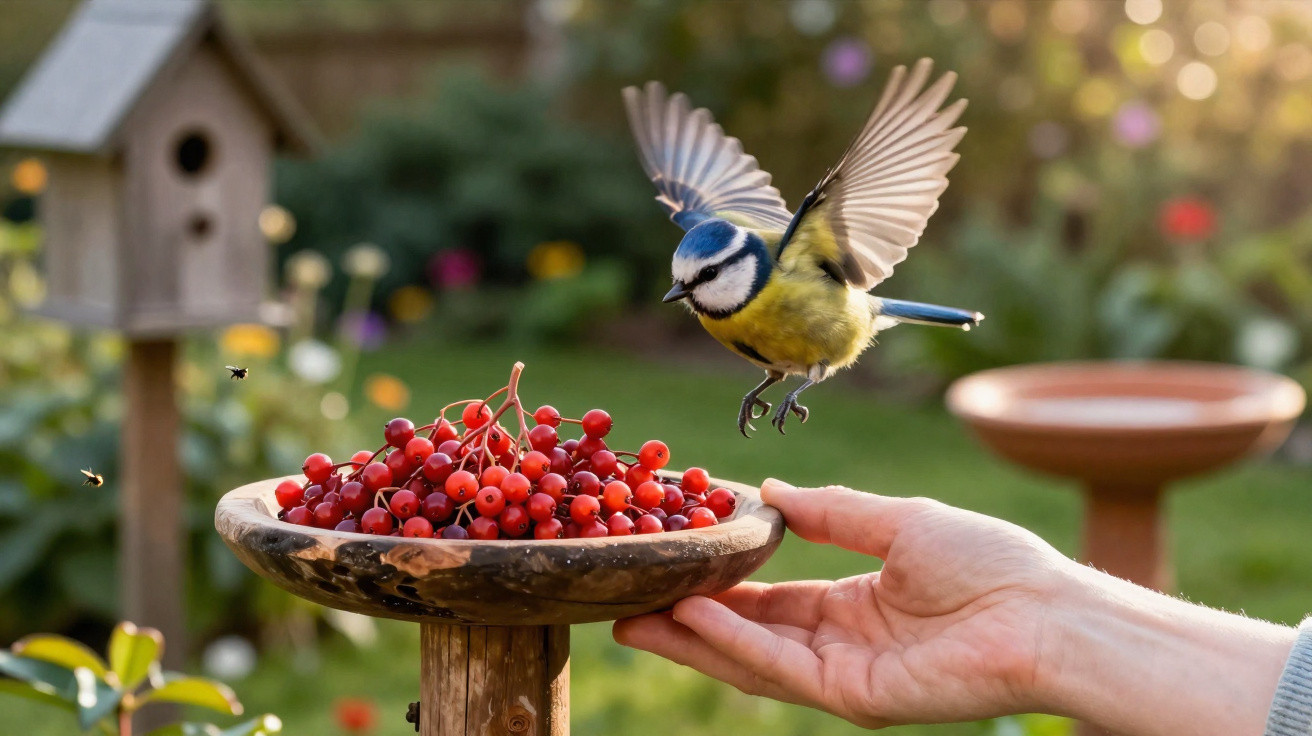
The flowers are rich in nectar, making them a valuable food source for honeybees, solitary bees and butterflies - especially during periods when little else is in bloom. After flowering, small berries form, which can also entice birds.
Why this plant can change day-to-day gardening
Lantana’s biggest advantage is its near-continuous flowering in warm, low-frost areas. In a typical Central European climate there is a resting period in mid-winter, but flowering still generally stretches from spring into late autumn - far longer than many perennials manage.
On top of that, it has traits that appeal to gardeners who like things easy, but still care about results:
- Long flowering period: colourful flower clusters for months on end
- Drought tolerance: once established, it manages with little water
- Excellent for insects: an important nectar source for pollinators
- Tough nature: copes remarkably well with poor soils and heat
- Versatility: works in window boxes, pots or borders
If you’re away for several weeks over summer, this resilience is a real bonus: lantana tolerates short lapses in watering far better than many classic balcony plants such as petunias or fuchsias.
Position and soil: where lantana thrives
Full sun gets flowering started
More light means more flowers - that’s the simplest way to describe the ideal spot. A fully sunny patio position or a south-facing balcony is perfect. In partial shade, the plant will flower much less.
The soil or compost should be:
- loose and free-draining,
- not prone to waterlogging,
- ideally slightly sandy or lightly humus-rich.
Heavy, persistently wet ground quickly leads to root rot. In borders, coarse sand or fine gravel can improve structure. In pots, a good-quality container compost is usually sufficient, mixed with a little sand or expanded clay.
The right pot size for balconies and patios
For container growing, pots of around 7 to 10 litres have proved a practical choice. They give enough room for roots and moisture without becoming awkward to move.
If you’re planting in the ground, allow 50 to 100 centimetres between plants depending on the variety. More vigorous forms need the larger spacing; compact types can be set closer.
Watering, feeding, pruning: easy-care maintenance
Water properly - especially at the beginning
For the first three to four weeks after planting, lantana needs regular watering so it can establish properly. During this phase, the root ball shouldn’t be allowed to dry out completely.
Once settled in, the rule changes: water thoroughly, then let the compost dry a little between waterings, rather than adding small amounts constantly. Waterlogging is harmful, but brief dry spells are handled well.
Pruning encourages more flowers
Because lantana grows quickly, it can start to look a bit untidy or overly sprawling without attention. A spring cut-back - once there’s no longer any risk of frost - keeps it compact and encourages fresh flowering shoots.
If you keep it in a pot year-round, you can also give it a light trim after strong growth spurts. This helps limit height and stops it from swamping neighbouring plants.
"Any confident spring pruning is rewarded with fresh, dense growth and plenty of new flowers."
Propagation made simple: new plants from cuttings
If you end up liking the plant, you don’t have to buy new ones every year. Lantana is straightforward to propagate from cuttings.
Follow these steps:
- In spring, choose healthy, semi-woody shoots.
- Cut pieces 8 to 12 centimetres long.
- Remove the lower leaves, leaving just a small pair at the top.
- Insert into small pots filled with a loose, sandy medium.
- Keep lightly moist and place somewhere bright, but out of harsh midday sun.
After a few weeks, the cuttings should have rooted and can be moved into larger pots or planted out.
Where the limits are - and what to watch for
That vigorous growth has a downside: in small borders, lantana can quickly crowd out other plants. In mild conditions and nutrient-rich soil, it can spread fast.
A proper annual prune, plus a bit of checking around the border edges, helps prevent it from pushing out its neighbours.
There’s also a safety consideration: many varieties are considered poisonous to pets and children. Leaves and unripe berries should not be put in the mouth.
"If you have curious children or free-roaming dogs and cats, it’s better to position the plant out of direct reach."
In regions with very mild winters, lantana can become troublesome if it escapes cultivation. It self-seeds, and seedlings may appear in paving joints, borders and along paths. It’s worth staying alert: pull or lift unwanted seedlings early, before they grow larger.
How to show lantana off to best effect
For balconies and patios
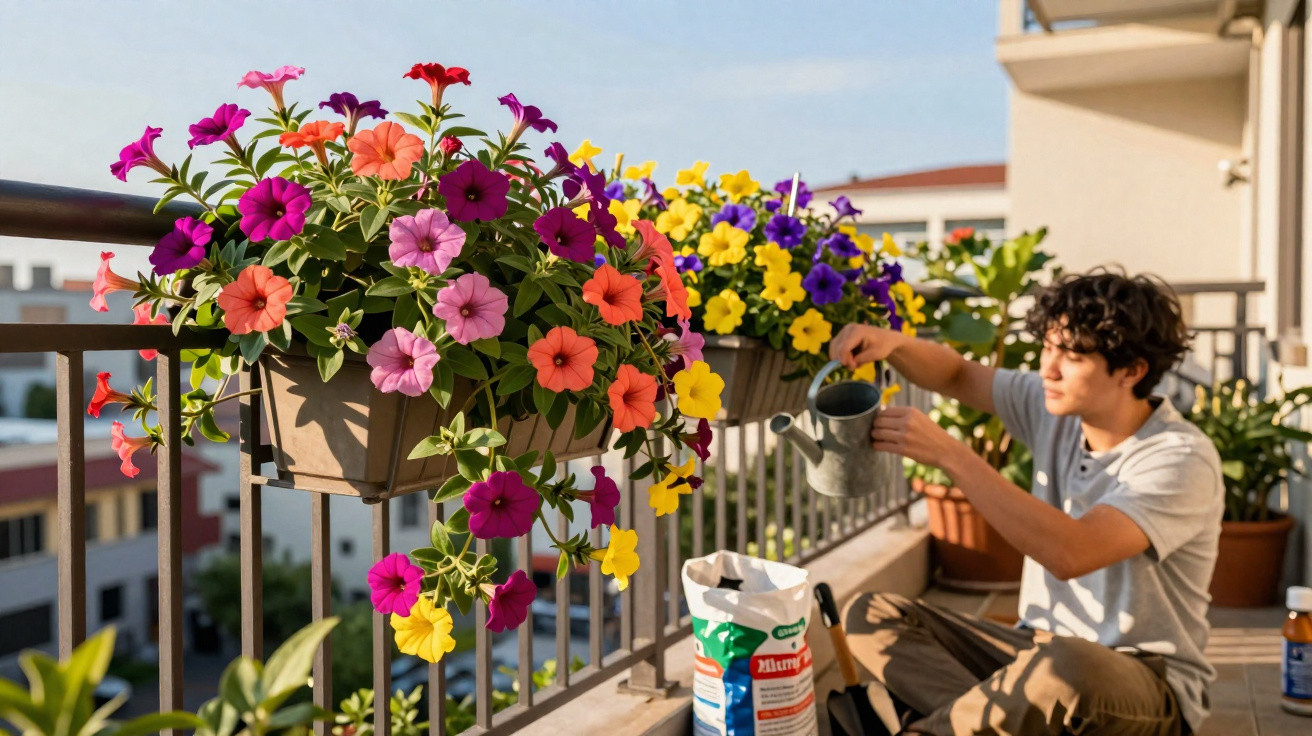
In large pots or planters, lantana works like a small shrub that keeps flowering. It pairs well with trailing or low-growing plants that can soften the base.
Popular companions include:
- fragrant herbs such as thyme or rosemary,
- silver-leaved plants such as dusty miller,
- foliage plants that provide a calmer backdrop.
In borders and front gardens
In a sunny perennial border, lantana fits beautifully with plants that have a Mediterranean feel. It’s often combined with lavender, sage or types of geranium. Contrasting leaf textures and scents add interest to the planting.
It can also be used as a loose, flowering “hedge” along the border edge. With a slightly staggered planting, you get a colourful ribbon that attracts insects for months.
Practical tips for everyday life with the plant
If you live in an area where frost is likely, it’s best to treat lantana as a container plant. Before the first hard frosts, move the pot to a cool, bright place - for example, a frost-free stairwell or a conservatory. The plant then rests and gets going again in spring.
In very mild areas, lantana can overwinter in the ground with protection. A thick mulch of leaves or bark pieces helps shield the roots from cold. Year-round flowering is most realistic in genuinely warm coastal areas or sheltered courtyards.
For anyone who enjoys gardening but doesn’t have much time, this is where it shines: once the plant is well established, the job list is largely limited to occasional watering, a bit of feed during the season, and one prune each year.
That makes lantana a good starting point for anyone wanting to turn an outdoor space into a lively, insect-friendly, colourful spot without spending every weekend with a watering can. With the right placement - and a watchful eye where children, pets or unwanted spread are concerns - this modest-looking shrub becomes a long-term splash of colour, even when the rest of the garden has already slipped into winter mode.
Comments
No comments yet. Be the first to comment!
Leave a Comment