
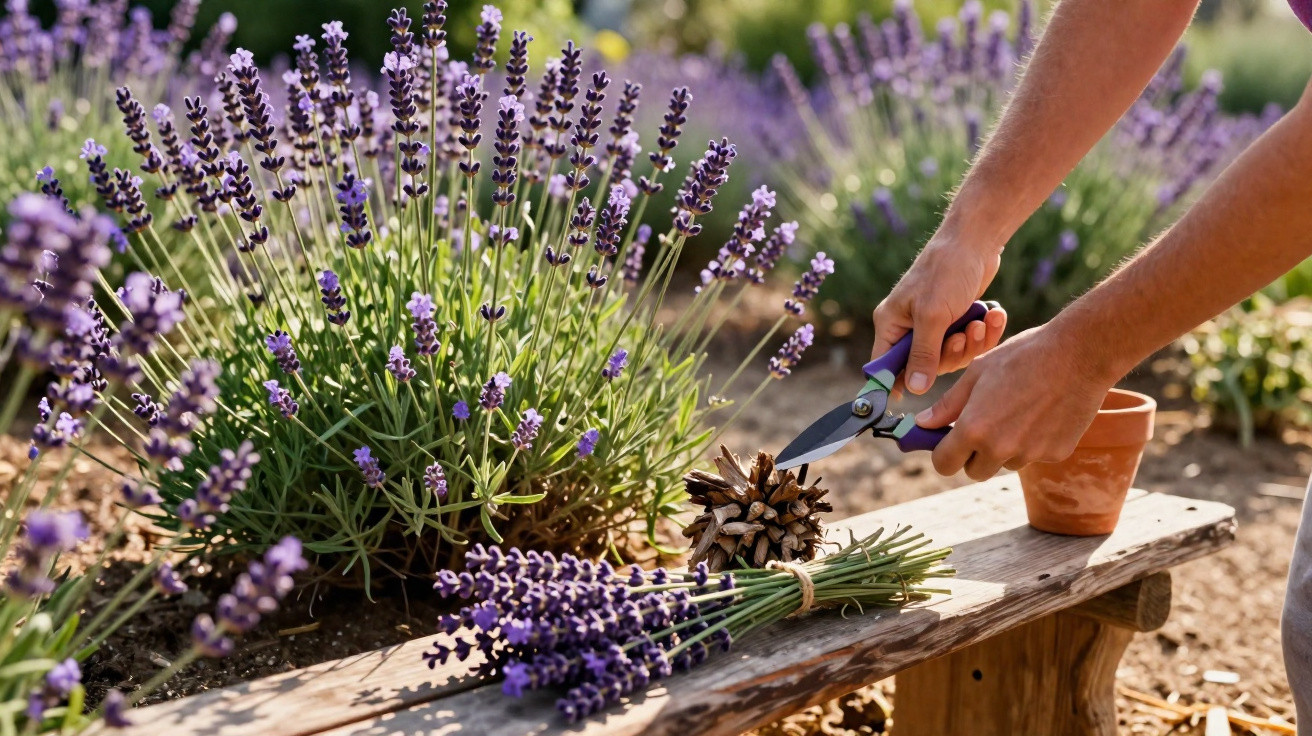
The good news is that it is usually not down to “bad soil” or the weather, but to one straightforward pruning method that is often overlooked. Apply it correctly once or twice a year and you can almost double the lifespan of your lavender plants, keeping them healthy for decades.
Why lavender ages so quickly without pruning
Lavender is not a typical herbaceous border perennial; it is a subshrub. In practice, that means the plant’s base becomes woody fairly fast. This so‑called old wood turns brown and hard and produces very few fresh shoots.
If you simply let lavender grow on unchecked, a predictable pattern follows: new growth appears only at the outer tips, the centre becomes bare, and the whole plant loses its shape and flops apart. After just a few years, instead of a fragrant mound you are left with a tuft of dry, woody stems.
"If you never prune lavender, or prune it the wrong way, you often halve its lifespan in the garden without realising it."
By contrast, lavender bushes that are maintained and cut back regularly stay in the border for much longer. Gardeners report that, with consistent care, plants can reach up to 20 years of age while remaining compact and floriferous.
The best timing: reach for the secateurs twice a year
Timing determines whether pruning helps the plant or knocks it back. A simple routine has proven reliable: one main cut after flowering, plus a shaping or corrective cut at the end of winter.
Main cut after flowering
Depending on your area, lavender typically flowers from June to August. Once the flower spikes turn brown and stop giving off scent, it is best not to delay:
- Window: roughly late August to late September
- Aim: rejuvenate the plant, remove spent flowers, maintain an even shape
- Key point: cut only in the green growth; never go deep into old wood
This trim removes the exhausted flower stems and some of the season’s soft growth. That, in turn, encourages side shoots and helps prevent the plant from splitting open.
Shaping cut in late winter
The second session comes at winter’s end, before lavender really starts into active growth:
- Window: usually February to March
- Aim: refine the outline, remove frost damage, keep the plant tight and tidy
- Condition: choose a dry, frost‑free day - wet, frozen plants are stressed unnecessarily
In milder parts of the country you may be able to prune quite early; in harsher locations it is wiser to wait until the worst frosts have passed.
How mild and harsher regions affect the schedule
A date in the diary is not enough, as climate change has shifted many garden phases. This broad rule of thumb can help you decide:
| Region | Autumn / after flowering | Late winter / spring |
|---|---|---|
| Mild areas (wine‑growing regions, the west, urban gardens) | A stronger maintenance cut in late summer | A light shaping cut is possible from late February if buds are still tight |
| Cooler areas (north, east, higher ground) | Only a light tidy‑up; remove the flower stems | The main cut in March in frost‑free weather |
If you are unsure, read the plant rather than the calendar: when buds are already noticeably swollen and the sap flow is clearly building, keep the pruning on the cautious side.
The golden rule: cut only in the green
The real secret to long‑lived lavender is less about the exact day and more about how far back you cut. Lavender rarely forgives being taken into old wood.
"The safe line is always just above the last green leaves. Below that is the danger zone."
If you want a simple method to follow, keep these three steps in mind:
- Remove flower stems: snip off the spent spikes just above the first leaves.
- Shorten the green growth: reduce the overall cushion shape by about one third.
- Restore a rounded outline: lightly reshape the sides so the plant finishes as an even mound.
Young plants can cope with a firmer cut - up to half of the green portion - as long as plenty of leaves remain. Mature specimens of English lavender, lavandin, or French lavender should be treated more gently: leave 3 to 5 centimetres of leafy stems in place.
Common mistakes that make lavender age early
Most lavender problems trace back to the same pruning errors. Once you know them, they are easy to avoid:
- Cutting too far into woody growth: shoots rarely re‑sprout from brown, bare wood, and whole branches may die back.
- Hard pruning when sap flow is high: if you cut too late in spring, branches can dry out because the plant struggles to seal the wounds.
- Not pruning for months at a time: the shrub creeps outwards, leaving a hole in the middle that is, for practical purposes, impossible to fill again.
- Using blunt tools: crushed stems are an open invitation to fungi and rot.
The simplest protection is a sharp, clean pair of secateurs, a dry day, and a brief check of the plant before you make the first cut.
How to keep lavender young for up to twenty years
With steady care, you can enjoy the same lavender plant for many years. The underlying idea is simple: remove a little every year so the plant keeps producing plenty of vigorous, young growth.
When plants are older, gardeners often use a “staggered rejuvenation” approach: rather than cutting everything back hard in one go, they remove only a few of the oldest, most woody stems each year. That way the shrub renews itself gradually without collapsing.
To keep your planting going in the long term, another useful trick is propagation. In late summer, take the best, healthiest shoots and cut 8–10 centimetres long cuttings, strip the lower leaves, and place them into seed compost. With a bit of luck, within a few months you will have a new generation of lavender plants that matches your existing bed perfectly.
What terms like “old wood” and “subshrub” really mean
Many home gardeners hesitate because guides use technical terms as if everyone knows them. A quick explanation removes the guesswork:
- Old wood: the fully woody, brown section of the plant, usually near the base. There are few dormant buds there, so new shoots are uncommon.
- Subshrub: a growth form between a perennial and a shrub. The base becomes woody while the younger sections stay soft and herbaceous - lavender belongs to this group.
- Ramification: simply the amount of branching. Every cut made within the green growth encourages the plant to produce several side shoots.
Once you understand this principle, pruning becomes much safer: make use of the green growth, avoid old wood, and keep the plant compact.
Practical examples for different lavender types
Not all lavenders respond in exactly the same way. Three common garden types differ slightly in how you handle them:
- English lavender (Lavandula angustifolia): generally robust; copes well with consistent (but not extreme) pruning in the green. Well suited to hedging and border edging.
- Lavandin: more vigorous, forming large bushes. Clear shaping is worthwhile so plants do not sprawl and split.
- French lavender: a little more frost‑sensitive; in many areas it is better grown in a pot. Keep pruning careful and moderate.
For containers, the basic rule still applies: remove spent flower spikes promptly, shorten green shoots, and leave older woody sections alone. With very old potted plants, it can be sensible to “rejuvenate” by raising replacements from cuttings and replanting the pot.
Follow these fundamentals and you will quickly find that lavender is not a diva. With a straightforward pruning routine and a watchful eye, this seemingly delicate subshrub becomes a long‑lived, low‑maintenance source of fragrance that can define borders, paths and terraces for years.
Comments
No comments yet. Be the first to comment!
Leave a Comment