
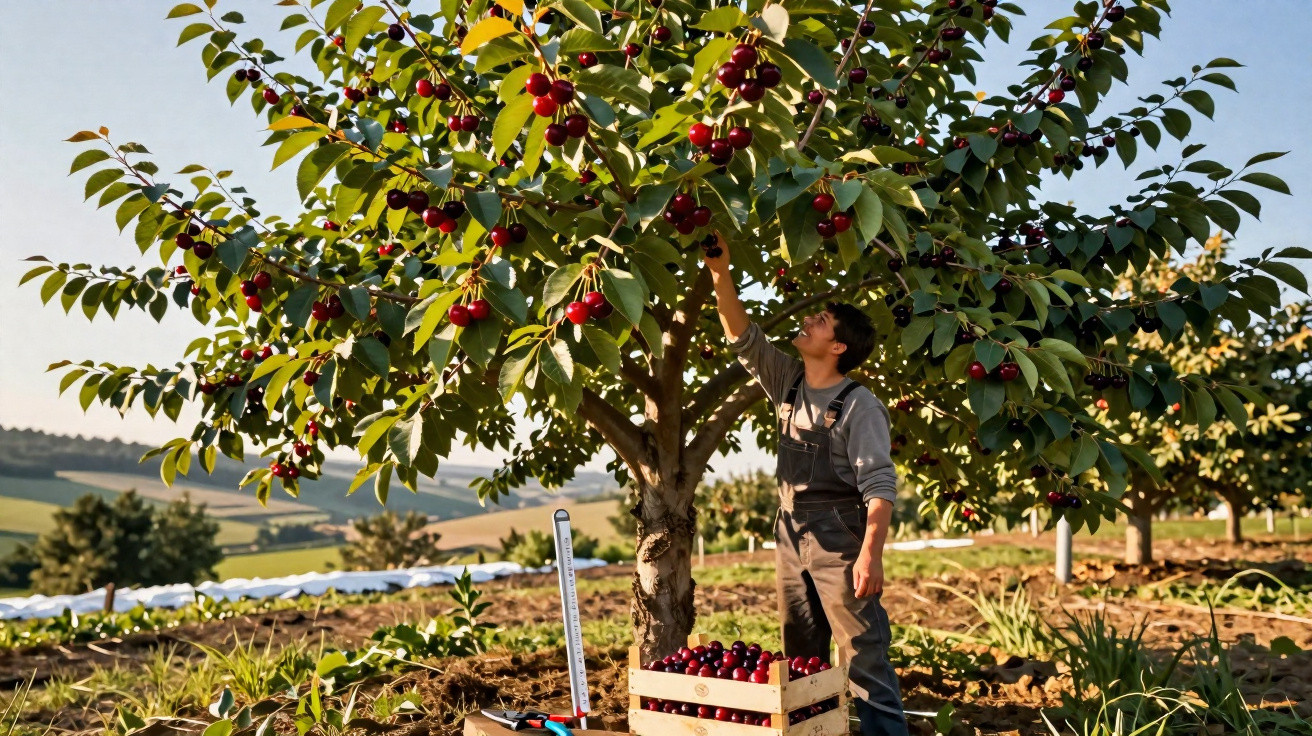
For generations it has quietly filled baskets to the brim - plant it once and it can surprise you for years.
Late frosts, torrential downpours, split fruit: many amateur gardeners know the sinking feeling when a hoped‑for cherry harvest turns into just a couple of meagre handfuls. While well‑known varieties repeatedly fall victim to the weather’s mood swings, there is an old, exceptionally resilient cultivar that copes remarkably well with cold and still crops heavily - yet it remains something of a closely kept tip in much of the German‑speaking world.
Why cherry crops so often fail in spring
Cherry trees flower early, and that very trait makes them vulnerable. In many areas, frost nights still arrive at the end of March or in April. If temperatures dip even briefly to a few degrees below zero, millions of blossoms can be damaged in a single night. No blossom means no fruit - and the crop is gone.
A second issue follows later in the season: heavy rain around ripening time can make sweet cherries split open. Skins tear, water gets in, then rot and wasps quickly move in. Anyone who has stood beneath a cherry tree where half the fruit has cracked knows how maddening that can be.
"A cherry tree that takes both frost and heavy rain in its stride changes everything in the garden."
This is exactly where an older cultivar comes into its own - one originally selected in Germany and now regarded as a tough, dependable workhorse among sweet cherry trees.
The Giant from Hedelfingen: an old variety with a modern answer
The variety is called ‘Géant d’Hedelfingen’, most commonly referred to in English as the Hedelfinger Giant or Giant from Hedelfingen. It was developed in the mid‑19th century in what was then a cherry‑growing region of Germany. Botanically it belongs to the firm‑fleshed sweet cherries (Prunus avium) - the crisp, crunchy type.
Typically, the tree reaches about 4–6 m in height and forms a crown roughly 3–5 m across. Its growth is moderate, combining upright scaffold branches with fruiting shoots that hang slightly. Visually, it feels traditional - almost nostalgic - much like the tree many people remember from a grandparent’s garden.
By mid‑July, its key strength is on show: it produces large cherries that ripen from deep red to almost black, with a firm, juicy, sweet flesh. They are excellent eaten fresh, and they also work well for jam, cherry cake, or bottling/preserving in jars.
What makes the Hedelfinger Giant so productive
This variety’s distinctive way of cropping centres on so‑called May bouquets - small clusters of flower buds packed closely together on short shoots.
- These bud clusters remain fruiting for around four years.
- They stay in the same spot on the branch and produce new blossom year after year.
- The condition is that they are not torn off at picking time, but intentionally protected.
So, if you pick carefully and remove the cherries with their stalks - without yanking at the short shoots - you can rely on a kind of “mini orchard” on a single tree for many seasons. That is how the impressive yields described by experienced growers are achieved.
Hardy down to -15 °C: why this variety copes with climate quirks
The Hedelfinger Giant’s toughness starts even before flowering begins. It opens its blossom comparatively late - depending on the area, between late March and April. That timing allows many buds to avoid the harsh late frosts that routinely damage earlier varieties.
The tree itself is considered winter‑hardy to around -15 °C. In sheltered positions it can tolerate even lower temperatures, provided roots and trunk are not subjected to extreme temperature swings.
"Late flowering, sturdy buds and resilient wood structure turn this variety into a kind of insurance policy against April frost."
At the same time, the Giant handles cooler, wetter regions well. Even in higher‑rainfall areas or at moderate elevations, it tends to deliver reliably - where some modern sweet cherry cultivars can be disappointing.
Fewer split cherries in heavy rain
Another advantage is that its fruit is less prone to splitting during intense summer storms. The skin holds up more strongly, even when rain hammers down on nearly ripe cherries. Splitting cannot be eliminated entirely, but losses are noticeably lower than in more sensitive varieties.
Gardeners who prefer to avoid chemical spraying gain an additional benefit: the Hedelfinger Giant is generally robust against common cherry diseases and pests. That reduces the need for treatments and suits a more wildlife‑friendly garden approach.
A top pollinator: how the tree helps the whole orchard
If you grow more than one cherry variety, you can gain twice over. The Giant from Hedelfingen not only produces its own crop; it is also regarded as an especially good pollen donor for many other sweet cherries.
Varieties that often show clearly improved yields when paired with it include, for example:
- ‘Burlat’ (a very early, red sweet cherry)
- ‘Napoleon’ (a pale yellow to red‑blushed firm‑fleshed cherry, a classic garden choice)
- ‘Moreau’ (a flavoursome, mid‑season variety)
- ‘Van’ (a popular dessert cherry with good flavour)
If these trees are within sight of one another - ideally spaced 10–30 m apart - bumblebees and honeybees move pollen between blossoms. The result is better fruit set across the whole planting.
Step by step: how to plant the Hedelfinger Giant correctly
To make the most of this variety’s record‑level crops, it pays to be careful from the moment you plant. The best window is November to March, while the tree is dormant. In harsher areas, late winter is preferable, once the ground is no longer frozen.
The ideal site
For a long‑lived, healthy tree, it needs:
- a full‑sun position, ideally south‑facing
- a location with at least some shelter from cold winds
- deep, loose soil that is more loamy‑sandy in character
- good drainage, as the variety dislikes waterlogging
- a neutral pH, meaning neither strongly acidic nor strongly alkaline
Before planting, it is worth digging a hole of about 60 × 60 cm. Loosen the base with a fork, then mix the excavated soil with well‑rotted compost. This gives the roots an airy, nutrient‑rich start.
Standard tree or compact crown? Choosing the rootstock
How large the tree becomes later depends greatly on the rootstock - the root and trunk section onto which the variety has been grafted.
| Rootstock | Final height | Suitable for |
|---|---|---|
| Wild bird cherry (vigorous) | 5–6 m and more | classic standard tree, large gardens, orchard meadow |
| Low‑ to medium‑vigour rootstocks | 3–4 m | smaller gardens, easier picking, simpler to prune |
In a smaller garden, a compact‑crowned tree is often the better choice. The canopy stays within reach, and harvesting is possible without risky ladder climbs.
Care through the year: little effort, big results
During the first few years after planting, the tree needs regular watering, especially in dry spells. One thorough soak per week is usually enough, as long as the water penetrates deeply into the soil.
A mulch layer of grass clippings or leaves around the trunk helps prevent the soil drying out and supports soil life. Once a year, at the end of winter, the tree benefits from a dressing of mature compost, lightly worked into the top layer.
With pruning, the rule is: less is more. The Hedelfinger Giant can react badly to heavy cutting. Better approaches are:
- a gentle formative prune in the early years to build a stable crown
- occasional thinning so light and air can reach the canopy
- removing branches that grow steeply inwards or cross and rub
"By avoiding heavy cuts and shaping only lightly, you keep the May bouquets intact and secure high yields for the long term."
Harvest time in mid-July: keeping the May bouquets intact
Depending on the region and the season, the fruit generally ripens from mid‑July. The ideal moment is when the cherries are fully coloured, still firm, and taste richly sweet.
With this variety, one point matters: always pick cherries with the stalk attached, rather than ripping them from the short shoot. Those small clusters carry the buds for the coming years. If they are damaged, production at that point stops.
Harvest with care and you will see the same branch crop generously year after year. That is the basis for this variety’s reputation as a “record supplier” for home gardens.
Risks and limits: what to watch despite its toughness
For all its strengths, the Hedelfinger Giant is still a sweet cherry - and therefore attractive to the cherry fruit fly. In warm, low‑rainfall years, maggot damage can occur. Yellow sticky traps in the tree, promptly collecting fallen fruit, and harvesting as early as possible all reduce the risk.
Birds also relish the dark, sugary cherries. On smaller trees you can use netting; on larger trees, only partial protection of individual branches is practical - or you simply share a portion with blackbirds and their friends.
Why this old variety is worth growing again today
As weather patterns become more changeable, robust, late‑flowering, high‑yield varieties are becoming more important. The Giant from Hedelfingen fits that need precisely: it tolerates frost well into double‑digit sub‑zero temperatures, handles summer rain better than many rivals, and crops reliably if its May bouquets are treated with respect.
For home gardeners who do not want to replace trees regularly or spray intensively, this tree is a long‑term investment. Planted well, cared for sensibly and harvested gently, it can turn an ordinary garden into a small cherry haven - with yields that, in some years, can feel like the output of half an orchard.




Comments
No comments yet. Be the first to comment!
Leave a Comment