

Across many housing estates the same picture is now appearing: Photinia hedges that once looked lush and impressive have become patchy and unwell, letting prying eyes see straight through. As a result, garden professionals are increasingly turning their backs on what used to be a fashionable hedge plant and choosing a different shrub instead-one that stands out for reliable health, naturally dense growth and unexpectedly attractive foliage: Pittosporum.
Why the Photinia hedge is suddenly failing
Fungal disease can ruin entire hedges
The biggest weakness of the popular Photinia (often sold as red robin) is entomosporiosis. This is caused by a fungus, Entomosporium maculatum, which can spread across the leaves. It typically starts with brown spots; then the affected areas dry out, the leaf can no longer photosynthesise properly, and eventually it drops.
The result is that hedges planted for privacy become see-through. Gaps open up between the branches, and neighbours or passers-by regain a clear view of the patio, living room or balcony. The problem is especially severe in years with mild winters and damp springs-exactly the kind of weather pattern that is becoming more frequent as the climate changes.
“Where Photinia used to be seen as a miracle solution for fast-growing hedges, today it often leaves nothing behind but skeletons of bare twigs.”
Frustration for amateur gardeners and high costs
Many homeowners deliberately chose Photinia: fast growth and striking red new shoots sounded like the ideal answer for fresh privacy on a new-build estate. In reality, they now find themselves dealing with a bundle of issues:
- frequent use of costly fungicides to tackle the infection
- constant collection and disposal of diseased leaves
- regular pruning to remove dead sections
- despite all the effort, no long-term dense, green hedge
Plenty of people report spending money, time and patience year after year-only for the hedge to continue deteriorating. It is no surprise that many are now looking for an alternative that does not demand endless maintenance and spraying.
A front-garden monoculture is a risk
Photinia is not the first example. A few decades ago, Thuja hedging was considered the default for terraced-house gardens. Then disease problems, drought damage and pest pressure became more common. The lesson is repeating itself: when the same shrub is planted throughout entire neighbourhoods, pests and diseases can spread far more easily.
Landscape gardeners are already describing a clear shift: markedly less demand for Photinia, and growing interest in tougher substitutes. Garden centres are reducing their Photinia lines and giving more space to hardier options. One choice in particular is currently standing out.
Pittosporum: the new favourite for dense hedging
Evergreen, compact and unexpectedly decorative
Pittosporum (often referred to as pittosporum or “sticky-seed”) is increasingly being viewed as a serious successor to Photinia. It keeps its leaves all year, grows in a tidy, compact way, and naturally develops a dense crown-exactly what you want for dependable screening.
Its biggest advantage is the refined look of the foliage. Many varieties have two-toned, slightly glossy leaves in combinations of green and creamy shades. Growth is also moderate at around 20 to 30 centimetres per year. That means you can build a privacy screen reasonably quickly without needing to reach for the hedge trimmers several times a year.
“Pittosporum combines what many people want: an evergreen look, steady growth, little work-and still a decorative standout.”
Compared with Photinia, which can shoot upwards and often needs frequent cutting, Pittosporum is notably easier to manage. Anyone with a busy working life-or simply no desire for constant upkeep-benefits from that straight away.
Strong resistance to fungi and similar problems
The key point is that Pittosporum tends to react far more calmly to fungal diseases. So far, leaf damage appears much less often and usually remains limited to small areas. The chance of a whole hedge losing its value within a few years is therefore considerably lower.
That, in turn, reduces the need for chemical plant-protection products. For most plants, a light prune once a year and targeted watering during dry spells is enough. If you prefer a wildlife-friendly approach and want to protect insects, Pittosporum offers a practical balance between low effort and environmental consideration.
How Pittosporum can be used in the garden
Pittosporum is not only suitable for a traditional boundary hedge. It can also work well in several other roles:
- Hedge along the patio – as a green backdrop that blocks wind and views
- Garden room divider – as a looser hedge separating lawn from vegetable beds
- Large specimen shrub – planted on its own as a focal point in a border
- Container plant – in a sheltered spot, it can also be grown in a pot on a balcony or roof terrace
A bright position is important-ideally full sun to partial shade. In very exposed corners or harsher locations, it pays to choose a more sheltered spot, such as in front of a wall or fence.
Why mixed hedges make more sense in the long run
More species, fewer issues
Garden experts stress that even if Pittosporum currently seems very robust, you should not fall into the same trap as with Thuja or Photinia. Monocultures remain vulnerable. If you are planning new screening or replacing a failing hedge, a mixed planting is the wiser route.
Good companions for Pittosporum include, for example:
| Shrub | Strength |
|---|---|
| Elaeagnus (oleaster) | very tough, silvery foliage, tolerates wind |
| Hazel | native, valuable for insects and squirrels |
| Cornus sanguinea (common dogwood) | striking red stems in winter, strong structure |
Mixed hedges look more varied, with flowers, berries and different leaf colours-and they are less likely to be wiped out by a single disease.
More life in the garden through diversity
A mixed hedge functions like a small habitat: flowers attract wild bees and butterflies, berries feed birds, and dense shrubs provide shelter and nesting spots. At the same time, a range of root systems improves the soil by loosening it and accessing nutrients at different depths.
If you incorporate Pittosporum into that kind of scheme, you gain not only reliable privacy but also better biodiversity in your own garden. It becomes a modern counterpoint to the sterile, uniform rows of Thuja or Photinia.
Practical tips for switching to Pittosporum
Best planting time and basic care
The best time to plant a new Pittosporum hedge is in spring or early autumn. The soil is warm and moist enough for strong root establishment. In areas prone to hard frosts, starting in spring is the safer option.
- Plant spacing: depending on the variety, around 60 to 80 centimetres
- Soil: free-draining, not permanently waterlogged
- Feeding: in spring, apply an organic fertiliser or compost
- Pruning: once a year after the main growth period; light shaping cuts are usually sufficient
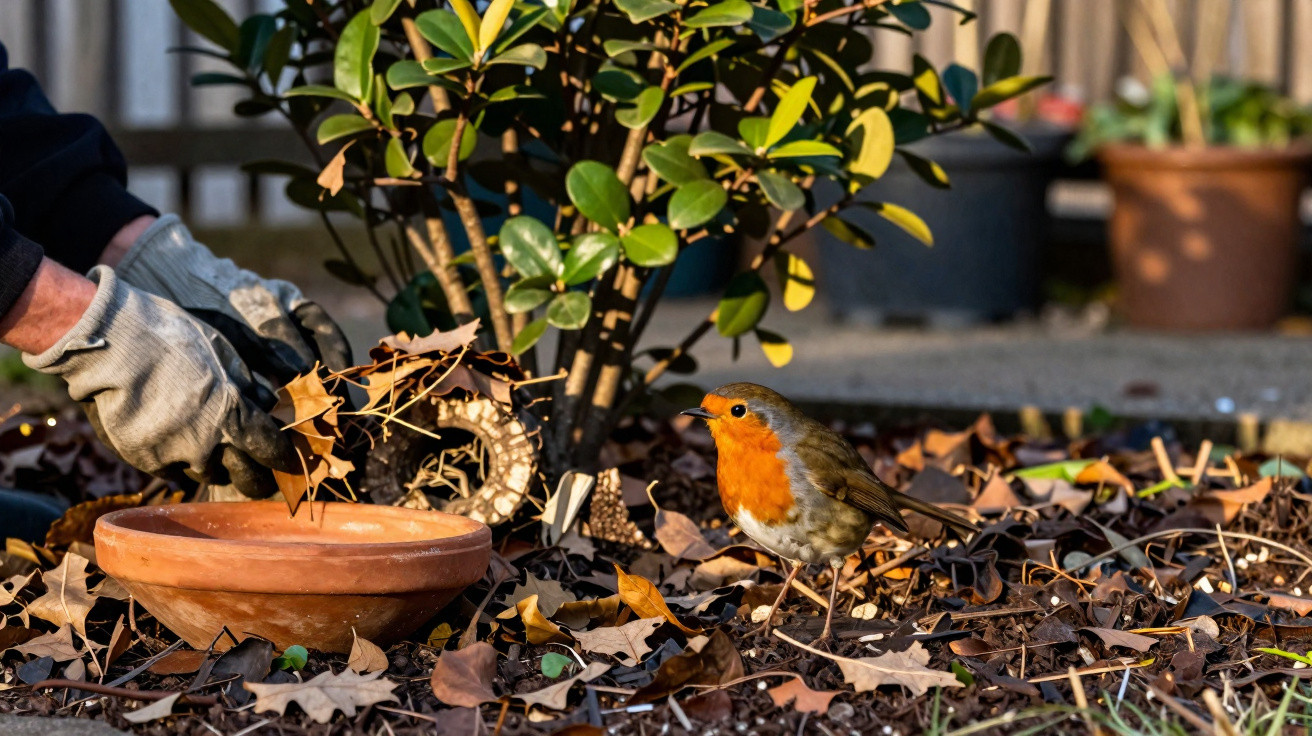
If you already have a damaged Photinia hedge, remove affected plants gradually and do not leave fallen foliage lying around the garden. Replacing in stages is sensible: clear one section at a time, loosen the soil, and plant the new shrubs-ideally alongside additional hedge species.
Risks and limits of the new trend shrub
No shrub is completely without risk. Depending on the variety, Pittosporum only tolerates severe, prolonged frost to a limited extent. In colder areas, it is worth choosing more frost-hardy forms and a well-sheltered position. In extreme winters, individual shoots can die back, although in many cases the plant will reshoot.
Drought stress is another consideration. In the first few years after planting, Pittosporum should be watered regularly during extended hot spells. Once established, it copes better, but it is still wise to keep an occasional eye on soil moisture so it does not dry out completely.
Why it pays to look beyond your own garden fence
The shift from Photinia to Pittosporum shows how strongly trends-and real-world experience-shape our gardens. If you look carefully around your neighbourhood, you can quickly see which hedges stay healthy over time and which plants are struggling across entire streets.
For many homeowners and flat owners, Pittosporum is currently an appealing building block for reshaping outdoor space: a calm, evergreen backdrop that combines privacy with design-while causing far less hassle than the former star among hedging shrubs.

Comments
No comments yet. Be the first to comment!
Leave a Comment