
Many keen gardeners sense it straight away: this means something.
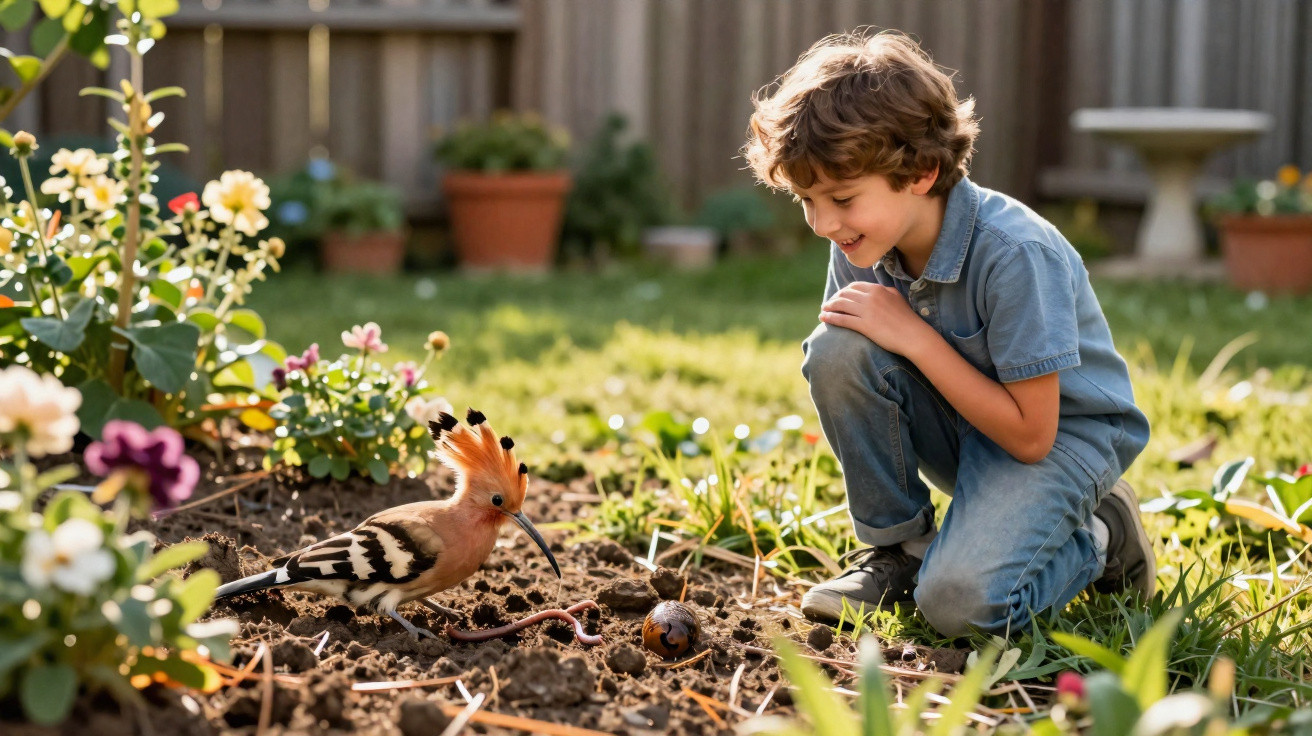
With its raiseable crest and black-and-white barred wings, the hoopoe can look like a tropical stray. In reality, its appearance is far more than a pretty photo opportunity. If this rare bird turns up in your garden, it is a strong sign of how healthy your soil is - and what that could mean for the future of your own patch of green.
A special guest: what the hoopoe reveals about your soil
From a biologist’s perspective, the hoopoe is, above all, a highly specialised insect-eater. It probes into the ground and into loose cracks in the earth with its long, slightly curved bill. There it searches for:
- Chafer grubs and other beetle larvae
- Mole crickets
- Caterpillars, including those of processionary moths
- Beetles and crickets
- Various other soil-dwelling insects
That menu only works where the ground is full of life. A hoopoe does not settle just anywhere. It needs places where insects are abundant and have not been wiped out by toxins or mowing too frequently.
If a hoopoe stays in a garden for several days or even weeks, it suggests healthy, living soil without widespread pesticide use.
What suits it best are open, sunny patches with fairly short grass, plus areas of bare earth. Typical landscapes include traditional orchards, vineyards, low-intensity pasture - or gardens where not every square metre is clipped to “golf-course” standards.
Garden habitat: what the bird specifically needs
To understand why a hoopoe might be choosing your garden, it helps to look at three factors: soil, structure, and peace and quiet.
A closer look at the soil
The bird avoids heavily compacted ground, soil that is regularly turned over, and earth treated with chemicals. What it prefers is:
- Loose, easily worked soil that its bill can penetrate
- Ground rich in organic matter, where many larvae can develop
- Corners where leaves are allowed to remain, giving small creatures shelter
If the hoopoe appears several times a day, garden owners can be fairly confident that little to no synthetic insecticide has been used in recent years. Where insects are scarce, this species quickly moves on.
Lawns, beds, fallow patches: the right mix
A typical set-up is a mix of short turf and bare spots - for instance along path edges, in borders, or beneath fruit trees. These are the places where the hoopoe can find prey most easily. Helpful features include:
- Open orchard areas with old trees
- Beds with strips of exposed soil between plants
- Unsealed paths and dry, sandy patches
- Log piles, gaps in walls, or old tree cavities as potential nesting sites
If you cover the entire garden in gravel, concrete blocks, or a thick layer of bark mulch, you lose that opportunity. The bird needs transitional zones, not a sterile “stone desert”.
Journey from African savannahs: why its visit is no coincidence
The hoopoe spends winter mainly south of the Sahara. In spring it migrates to Europe, including Central Europe. In warmer areas it can arrive from late February; in cooler regions it is most often seen from April to September.
In the UK and across Europe, it is encountered more often in warmer southern areas and in places with favourable local climates. Further north it remains rare in many locations. When a hoopoe does drop into a northern garden, it usually means several requirements are being met at once:
- Enough food available in the soil
- Suitable structure for foraging and resting
- Relative calm without constant disturbance
Research from various countries shows that after marked population declines in the 1990s, numbers have recovered slightly. One reason is a moderate reduction in pesticide use, alongside more conservation measures. Even so, the hoopoe is still among the rarer breeding birds and is strictly protected.
Anyone watching one in the garden is seeing more than a visual highlight - they are also encountering a protected species with fairly demanding needs.
Symbolism: what the “bird with a crown” has meant for millennia
The hoopoe has intrigued people since antiquity. Its striking feather crest resembles a small crown, which is why it is nicknamed the “king bird” in some cultures. Added to that is its unmistakable call, a three-syllable “hup-hup-hup” that used to be one of the classic sounds of spring in many rural areas.
In old Persian writings, it appears as a guide and companion on an inner quest, representing direction, guidance and renewal. In ancient Egypt, it even found its way into written symbols and was seen as a sign of gratitude and family connection.
These interpretations still shape how many people see the bird today: when a hoopoe lands in the garden, it is often felt to be a good omen - a hint of positive change ahead, or of living “properly” in step with nature.
What gardeners can do to encourage a return visit
If you do not want to treat the sighting as a one-off honour, and would rather increase the chances of seeing the bird again, there are practical steps you can take. The most important are a few everyday choices:
- Avoid pesticides: Insect killers, chemical lawn treatments and many soil toxins remove the hoopoe’s food supply.
- Leave some areas “imperfect”: A neatly cut patch is fine, but it helps to keep wilder zones alongside.
- Create nesting opportunities: Keep old trees with cavities, avoid sealing every wall crevice, and consider installing suitable nest boxes.
- Maintain tranquillity: Constant loud noise and continual activity can deter sensitive species.
One detail can surprise people: near its nesting cavities, the hoopoe can produce a rather strong smell. Both adults and chicks have glands whose secretions help keep predators away. In the past, this earned it nicknames such as “stinkbird” or “stinking cock”. If you want to support the species, you may need to tolerate that sharper scent at least during the breeding period.
Ally in the fight against pests
For gardeners, the bird also has a very practical value: it eats a range of insects that could otherwise cause damage. That includes large grubs that chew roots, and caterpillars that harm trees and shrubs.
Of course, a hoopoe is not a replacement for professional pest control in fruit growing. It is better thought of as a free helper, removing larvae and insects before they build up in large numbers. The more diverse the garden’s design, the more effectively such natural allies can do their work.
| Sign from the hoopoe | What it means for the garden |
|---|---|
| Regular visits | The soil is rich in insects and not heavily poisoned |
| Foraging in particular spots | Larvae and beetles are concentrated there; the soil is especially lively in that area |
| Attempting to breed in the garden | The surroundings provide longer-term food, quiet and suitable structure |
What its appearance suggests about your garden’s future
A hoopoe’s visit can also be read as a small forecast. A garden that attracts this bird has good prospects of remaining stable and resilient over the long term. Rich soil life does not only increase insect numbers; it also improves structure, builds humus and boosts water retention.
By deliberately maintaining those conditions, you help prepare your plot for drought periods and heavy downpours. Earthworms and other soil organisms keep the ground open, roots can reach deeper, and plants cope better with stress. In that sense, the hoopoe indirectly stands for a style of gardening that values resilience over perfection.
Practical tips if you are now curious
If you want to check how “hoopoe-friendly” your garden is, ask yourself a few straightforward questions:
- Are there open patches of soil that are not covered over?
- Are chemical products largely avoided?
- Are there old trees, dry-stone walls or log piles that could serve as hiding places?
- Are there areas that stay relatively quiet during the day?
Even small changes - such as mowing an edge strip less often, leaving a leaf pile in autumn, or skipping insect poison - can have a big effect. And even if the hoopoe does not show up straight away, many other species benefit: hedgehogs, lizards, wild bees, ground beetles.
For many people, the bird becomes a symbol in its own right: if you shape a garden where a hoopoe can find food and calm, you are also setting a different course for the future - more nature on the doorstep, less chemistry, and soil that is not merely a surface, but a living foundation.
Comments
No comments yet. Be the first to comment!
Leave a Comment