
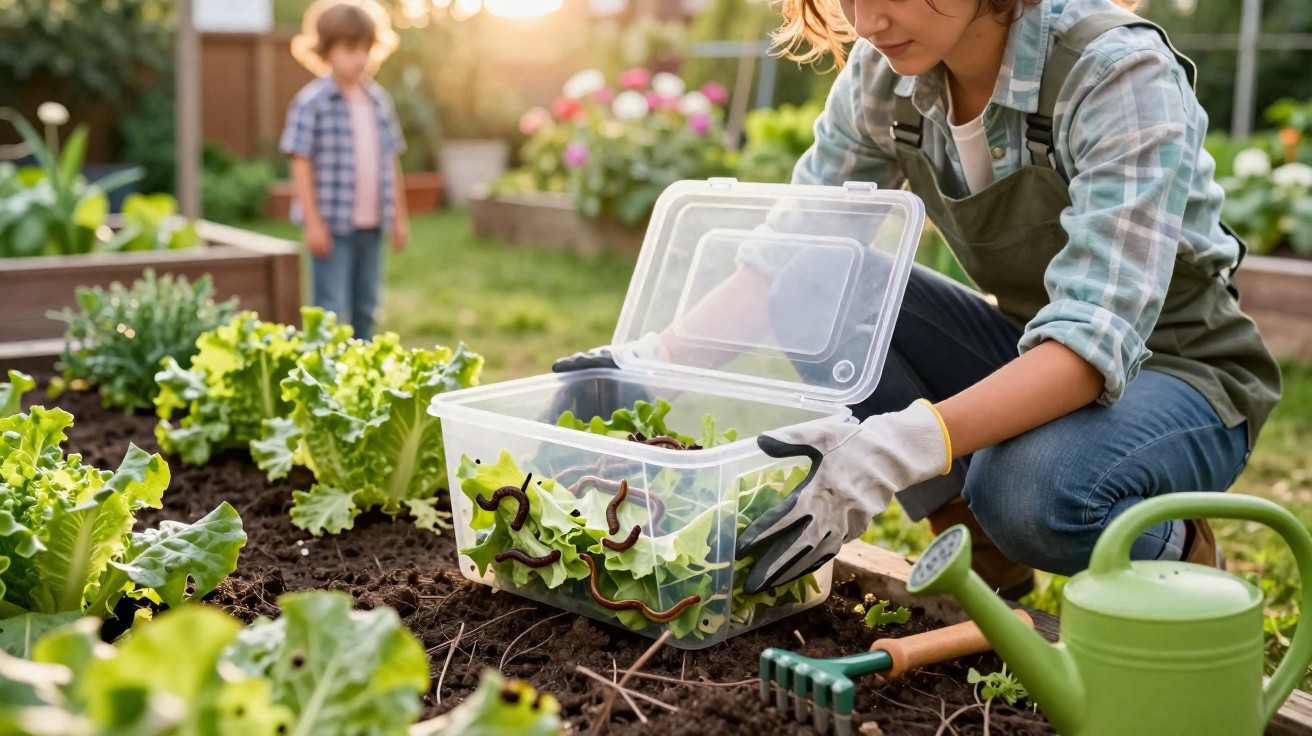
Rather than reaching for poison pellets or beer traps, more and more gardeners are turning to a surprisingly simple fix: a repurposed plastic salad box that draws slugs and snails in as if by magic, keeps them safely contained, and lets you relocate them later-alive. No poison, no slimy slaughter, and with impressively good results.
Why slugs and snails love your vegetable garden
As soon as the evening turns cooler, or after a heavy shower, your beds become a late-night buffet. Slugs and snails creep out from cracks, gaps in walls and from under boards, and head straight for the plants gardeners prize most: soft, juicy new growth.
They’re especially keen on:
- lettuces and other leafy greens
- strawberries and young vegetable seedlings
- plants with tender leaves such as hostas (Hosta)
- seedlings just after they’ve emerged
In a healthy garden, a certain number of slugs and snails is normal. It becomes a problem when they multiply in large numbers. Then even a small group can wipe out a whole row of lettuces in a single night. One larger individual can eat a noticeable portion of its body weight in plant matter every day-you’ll see the damage quickly in the bed.
Do slugs and snails really need to die?
Plenty of frustrated hobby gardeners eventually resort to drastic measures: blue poison pellets, beer traps, salt, scissors. It may look effective in the short term, but in the long run it often harms the garden more than it helps.
“Poisons never affect only slugs-hedgehogs, birds, toads and even pets can suffer too.”
Beer traps attract slugs from far and wide, only for them to drown miserably. Chemical treatments end up in the soil, threaten beneficial wildlife, and can be picked up by children or cats. If you prefer a wildlife-friendly approach, you’ll want ways to protect plants without upsetting the ecological balance.
That’s exactly what the salad box trap does: it catches slugs and snails selectively, doesn’t kill them, and allows you to release them at a safe distance.
The clever fix: a salad box as a slug and snail hotel
The concept is disarmingly straightforward: a clear plastic box-like the ones used in supermarkets for ready-to-eat salads-becomes a miniature slug shelter with a built-in snack bar.
What you need for the trap
- A transparent plastic box with a lid (salad, fruit or bakery packaging)
- A very ripe piece of fruit or veg (e.g. apple, melon, overripe pumpkin, wilted lettuce leaves)
- A craft knife or sturdy scissors
- A handful of damp soil or moss
- A small stone or wooden wedge for propping
Step by step: how to make the salad box trap
- Using a knife or scissors, cut several small openings into the side walls of the box, around 2 cm above the base. These little “doorways” let slugs and snails crawl in easily.
- Add a thin layer of damp soil or moss. This creates a cool, humid microclimate the animals like to stay in.
- Place a piece of very ripe fruit or veg in the centre. The sweeter and stronger the smell, the better the bait works.
- Turn the box upside down so the lid sits on the ground and the main container becomes the “roof”.
- Lift one edge slightly with a stone so slugs and snails can slide in without effort.
Place the trap in a shaded, slightly damp spot, ideally close to the beds that keep getting eaten. In strong sun the inside heats up too much, which neither the bait nor the slugs and snails will appreciate.
The trap works like an all-inclusive deal: damp, dark, sheltered-and it smells of overripe fruit.
How the trick works-and why it’s so effective
Slugs and snails rely heavily on their sense of smell. Rotting or very ripe fruit gives off intense scent cues they can detect from some distance. Paired with a cool, moist hiding place, it’s close to irresistible.
The clear plastic shell adds another helpful effect: many animals find it easy to get in, but struggle to find their way back out through the same small openings. They remain inside until you check the trap.
If you look in the evening or early morning, you’ll often find several individuals happily feeding on the fruit. You can then lift the whole box and release them well away from your crops-for example:
- along a grassy verge
- in an untidy hedge
- at a damp, unmanaged edge of land
- in a wildlife-friendly corner of your own garden, far from the beds
Common mistakes that ruin the results
The method is simple, yet many gardeners make small errors that significantly reduce how many you catch.
- Putting it in full sun: it gets too hot inside, the fruit dries out, and slugs and snails avoid it.
- Using completely gone bait: heavily fermented fruit attracts flies, ants and other insects. Better: very ripe, but not mouldy.
- Placing the trap too far from the problem bed: slugs and snails take the shortest route to food. If the box is tucked away, only a few will find it.
- Releasing them just beyond a neighbour’s fence: that only shifts the issue. They should be released in genuinely unmanaged, natural spots.
- Checking too rarely: if you forget it for days, the bait can dry out and the animals stay trapped longer than necessary.
How often to check, and how many traps to put out?
When slug pressure is high-such as after rainy spells in spring-it’s worth checking daily, ideally early in the morning. The animals are still active then and can be relocated with minimal stress.
In larger gardens, it makes sense to run several traps at once: for instance one by the lettuce bed, one along the strawberry row and one in the perennial border. Three to five boxes are usually plenty for most home gardens, provided they’re positioned sensibly and looked after regularly.
Extra protection: how to make your garden less slug-friendly
The salad box is one tool, but not the only lever you can pull. If you want fewer problems long term, adjust the wider conditions too.
Encourage beneficial wildlife instead of fighting it
Many animals readily eat slugs and snails-or their eggs-if the garden offers them somewhere to live. These include:
- hedgehogs and shrews
- toads and some frogs
- ground beetles (Carabidae)
- many songbirds, such as blackbirds and thrushes
Leaving leaf piles, small stone heaps, a bit of deadwood, or a wilder corner provides shelter for these helpers. A hedge instead of a sterile fence also improves the chances that natural predators will stick around.
Make beds less attractive
Alongside the trap, a few straightforward habits can encourage slugs and snails to choose different routes:
- Water only at the root zone rather than soaking the whole bed-this reduces damp “highways”.
- Spread rough material such as coarse sand, grit or crushed eggshells as a barrier around particularly vulnerable plants.
- Plant tougher, thicker-leaved species (e.g. some herbs, marigolds) between highly susceptible crops.
- Water as early in the evening as possible so the surface can dry before night.
Why this method is especially suitable for families
In gardens with small children or pets, toxins in the soil are a concern. The salad box trap works entirely without chemicals. There’s nothing harmful that can be swallowed or licked.
It’s also a good way to teach children to treat animals respectfully. They learn that you can protect plants without killing everything that crawls and creeps through the garden. Many children are fascinated to watch slugs and snails feed in the box, retreat into cover, and then be moved to a new place.
Practical tips from everyday hobby gardeners
Many garden enthusiasts now combine the salad box trap with a few additional tweaks:
- If you trial several types of fruit, you’ll quickly discover what the slugs and snails in your garden prefer-often it really is sweet apple pieces.
- Some people place a small piece of wet cardboard in the box. The animals hide underneath it during the day, which makes collecting them easier.
- If you sink the box slightly into the soil, the openings sit exactly at slug height.
For anyone who likes to experiment, the same idea can be scaled up with larger tubs or old clear storage boxes. That way you can create full-on “slug hotels”, where dozens gather before being moved on-ideally a long way from lettuces and dahlias.
Comments
No comments yet. Be the first to comment!
Leave a Comment