
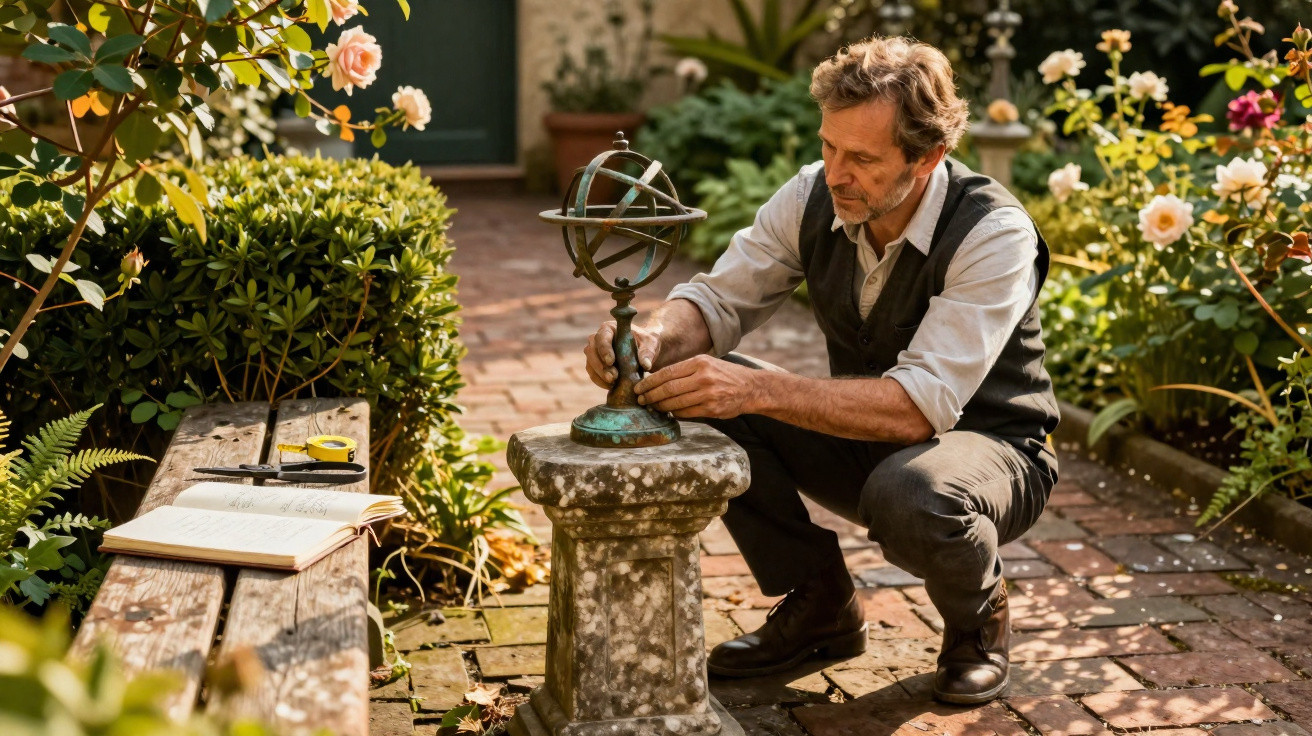
Many keen gardeners long for a romantic hideaway that feels more like an old country estate or an English cottage garden than a typical new-build back garden. The good news is you don’t need an expensive landscape architect to get there. Often, a single well-chosen second-hand find-placed with intent-is enough to shift the whole atmosphere from “quite nice” to “wow, what a place”.
How an antiques dealer turned his yard into an open-air laboratory
In the United States, an antiques dealer and garden designer demonstrates just how powerful one historic object can be. Behind an early-19th-century farmhouse property, he has shaped his garden with salvaged columns, balustrades, stone vessels and iron gates-pieces that were originally destined for the skip.
“His guiding idea: take something others would throw away, put it in the right spot-and suddenly the garden starts telling a story.”
Where there used to be plain lawn, a weathered stone urn now acts as a focal feature. A battered, half-rusted iron fence becomes the backdrop for roses. A broken marble step works as a small seat at the end of a gravel path. Each area looks as though it has been there for decades-if not centuries.
That is exactly the appeal of so-called “old garden charm”: nothing looks like it has just been installed. Instead, the space appears to have evolved gradually-carrying time, weather and stories along with it.
The principle: one strong piece is enough-if it’s positioned well
At the heart of the idea is something surprisingly straightforward: you don’t need decoration everywhere. What you need is one deliberate object that sets the tone for the whole garden. Design professionals often call this a garden “focal point”.
Typical examples of these focal pieces include:
- a large, weathered stone urn or amphora
- an old iron gate that now simply “leads into the green”
- a natural-stone water trough repurposed as a planter
- a short run of historic balusters used as a low garden wall
- a solid wooden bench with obvious signs of use
The key is not pristine condition but personality. Chips, rust, sun-faded paint and scratches are not defects here-they are the very details that create that aged character.
The three best spots for a single historic piece
To get the most from a find like this, it’s worth thinking in terms of placement rather than decorating at random. These positions tend to work particularly well:
- At the end of a path: a vessel or statue draws the eye down a gravel path or stepping-stone route.
- In the middle of a bed: an urn or old fountain set in the centre of a herbaceous border reads like the garden’s heart.
- On a sightline from the house: what you can see directly from the living room, kitchen or terrace shapes the mood every day.
“Rule number one: the statement piece has to be visible-ideally from inside the house.”
Materials that genuinely last outdoors
Not everything that looks old will cope with year-round life outside. If you want to avoid unnecessary hassle, focus on tough materials that tolerate rain, frost and sun without complaint.
| Material | Outdoor suitability | Typical look |
|---|---|---|
| Stone (limestone, granite, marble) | very good | refined patina, moss, lichen |
| Cast iron | very good | veil of rust, dark presence |
| Teak | good | silvery-grey surface, fine grain |
| Zinc / galvanised metal | good | matte, lightly mottled, rustic |
| Plaster / stucco | poor | prone to cracks and flaking |
Plaster figures or cheap, hollow decorative items often look decent only briefly and then crumble once frost hits. Solid stone or metal pieces usually age far more attractively and need very little maintenance.
How to check whether a find is truly garden-proof
If you’re browsing flea markets, reclamation yards or a demolition site, it helps to keep a few simple questions in mind:
- Is it heavy enough? Lightweight décor can topple quickly in wind-or with a nudge from children.
- Does it stand securely? The base and centre of gravity must be right, otherwise it becomes a trip hazard.
- Can I move it at all? A stone trough weighing 300 kilograms needs planning and logistics in advance.
- How does the material handle damp and frost? Otherwise cracks and flaking are almost guaranteed.
- Are children or pets involved? Sharp edges and loose parts are a no-go in that case.
“Better one solid, safe object than five wobbly eye-catchers that cause worry with every storm.”
Which plants complete the “old garden look” perfectly
Without the right planting, even the most beautiful antique can look oddly out of place. It’s the combination of hard materials and soft, generous greenery that creates the impression of a historic garden.
Plants that tend to fit especially well include:
- lavender and rosemary – for scent and a Mediterranean feel
- thyme and other herbs – ideal for pots, wall crevices and steps
- old rose varieties – ideally slightly cascading, trained over iron arches or along fences
- yarrow, lady’s mantle, hardy geranium – soften edges and plinths
- ivy, honeysuckle, clematis – to cloak gates, columns and trelliswork
If you prefer a strongly rural feel, add half-standard fruit trees, a simple vegetable patch and herbs in pots. An old zinc tub filled with mint, an enamel jug used as a plant pot, or a greyed wooden crate as a herb bed all reinforce the atmosphere of historic country homes.
Garden décor from leftovers: staged properly, not cluttered
Reclaimed building materials have huge potential. Old yard setts, removed shutters, a discarded railing-many things can be reimagined in the garden.
Practical examples:
- Old paving stones become a small sitting area for two chairs.
- A single shutter works as a backdrop for climbing roses.
- A section of railing turns into a mini “balustrade” in front of a herb bed.
- A timeworn wooden table becomes a work surface for sowing and potting.
“What matters is that not everything is made ‘pretty’. A certain roughness is part of the old-garden feel.”
Rather than filling the garden with ornaments, it pays to leave deliberate gaps. Space and breathing room give the main pieces more impact. Too much stuff quickly makes a garden feel like a car-boot sale.
How to find the right “key piece”
Many people assume they must buy expensive antiques to achieve this look. In reality, the charm often comes from simple items that hint at a past life: a former feed trough, a fragment of a church pew, a hand-forged gate salvaged from a demolished town house.
If you’re not sure where to begin, start small-perhaps with an old metal container or a single piece of stone-and experiment with the area around it. If the effect feels right, you can introduce a larger piece later on.
It also helps to look closely at historic estates, old cemeteries, castle gardens or village squares: which shapes, materials and proportions keep appearing? Those references provide useful clues for what will look authentic in your own garden.
Practical tips so the vintage look doesn’t feel forced
A common mistake is trying to make everything look old all at once. Newly painted “shabby” furniture placed next to factory-fresh decorative statues can look like dressing up. The result is far more convincing when genuine wear is allowed to lead, with newer elements staying in the background.
- Let new pots weather naturally instead of painting them straight away.
- Don’t place décor in every corner-plan calm, empty spaces.
- Avoid modern materials such as plastic, or hide them carefully.
- In a small garden, limit yourself to no more than two or three strong pieces.
If you stick with this approach, the garden can develop gradually: start with the central object, then add suitable planting, and later perhaps a second historic item in another corner. That way, a believable story emerges, instead of the garden being overloaded with decoration.
Especially when budgets are tight, this idea is appealing: a rescued piece of architectural history-positioned well and surrounded by the right plants-can turn a standard garden into a place that feels like an enchanted yard from another time. And it does so without having to redesign the entire garden.
Comments
No comments yet. Be the first to comment!
Leave a Comment