
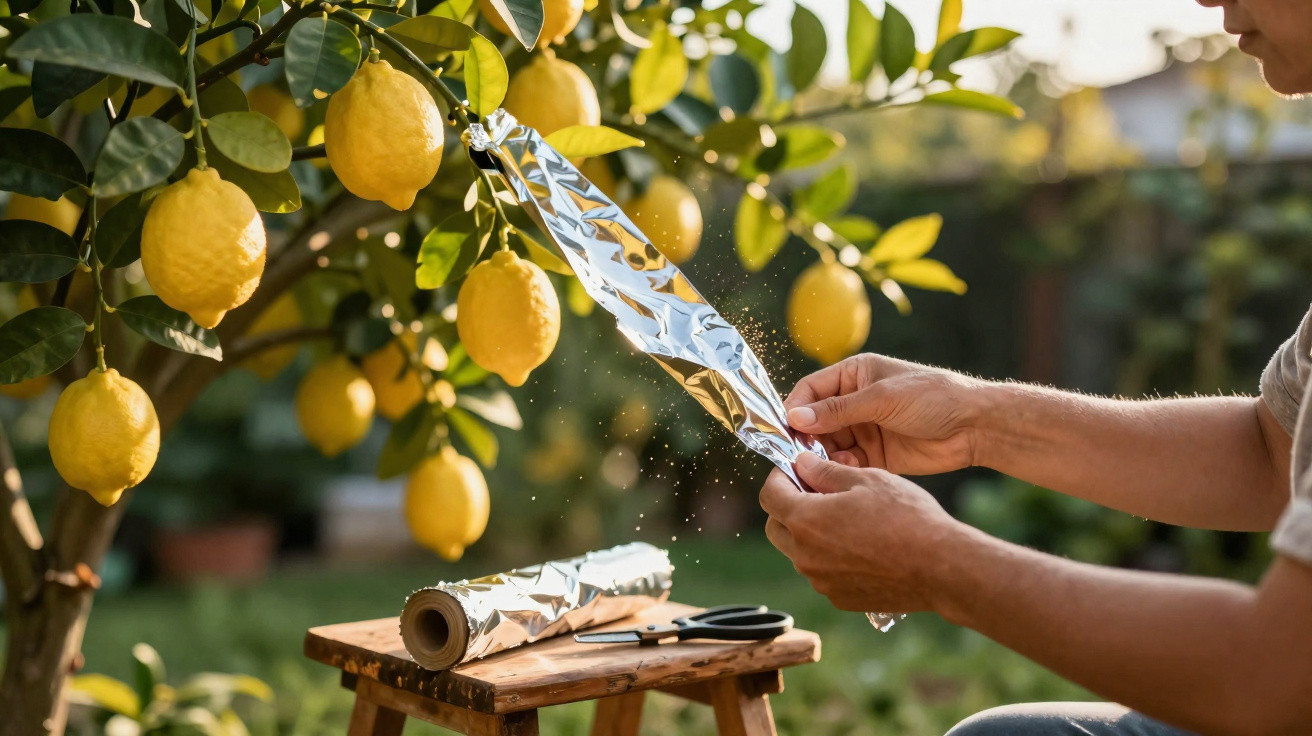
Hanging aluminium foil on a lemon tree is a straightforward trick used to create changing light reflections and movement among the branches. As the strips flutter in the breeze, they throw off uneven flashes and can discourage inquisitive birds, helping to cut down pecking at new shoots, blossoms and lemons that are still developing.
What is the point of hanging strips on the branches?
The aluminium foil strips act like a visual scare device. In bright sunlight they bounce back sharp glints; when the wind picks up, they move suddenly, making the lemon tree less appealing to birds and some small animals.
The aim is not to feed the plant or cure disease. Aluminium foil works as a distraction barrier, particularly during shooting, flowering and fruit set-times when the lemon tree tends to attract more attention in the garden.
Why do the flashes bother birds and pests?
Birds rely heavily on sight to navigate and to spot food. Sudden reflections, a metallic shine and irregular movement can read as a warning sign, prompting them to look elsewhere in the garden.
This effect is often short-lived. After a few days, some animals may get used to the strips if they remain in exactly the same place, which is why the trick tends to work best when paired with other day-to-day management.
How do you put aluminium foil on a lemon tree properly?
It is best to cut strips that are light, long and narrow-enough to swing freely without weighing down the branches. Spread them around the outside of the canopy, close to the fruit and to the areas birds visit most.
- Cut aluminium foil into strips about 2 to 4 centimetres wide.
- Tie them on with soft string, without tightening around the branch.
- Leave each strip loose enough to move with the wind.
- Avoid covering leaves, flowers or fruit with the foil.
- Replace the strips when they tear, get dirty or lose their shine.
What precautions help you avoid harming the plant?
A lemon tree needs light, airflow and uncovered leaves to photosynthesise. For that reason, use only a small number of strips, do not wrap them around branches, do not tie up new shoots, and do not create rubbing points on the bark.
- Do not press or fasten the foil directly onto the trunk or thin branches.
- Take the strips down on days with very strong winds.
- Do not use the trick as a replacement for pruning, feeding or pest control.
- Watch for curled leaves, scale insects, aphids and marks on the fruit.
- Move a few strips to new positions to keep the visual effect working.
When is this trick genuinely worth doing?
Using aluminium foil on a lemon tree is worthwhile when the main issue is birds pecking at fruit, shoots or flowers. In small gardens, containers and home orchards, it is inexpensive, non-toxic and easy to remove once the plant has passed its most sensitive stage.
To keep the lemon tree healthy for longer, treat the foil as a supporting measure. Full sun, watering without waterlogging, free-draining soil, light pruning and frequent leaf checks remain the practices that determine canopy strength, lemon quality and the plant’s resilience throughout the year.


Comments
No comments yet. Be the first to comment!
Leave a Comment