
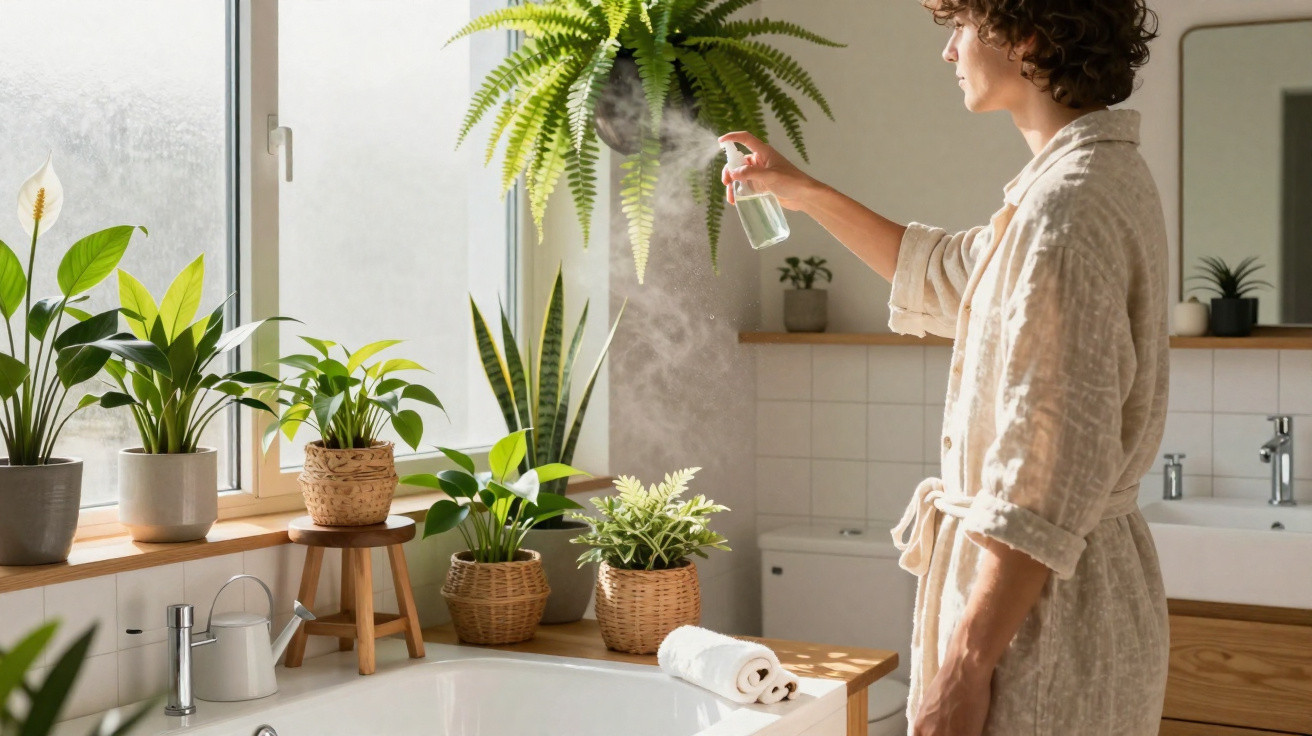
The presence of natural elements can completely change the look and feel of the most private rooms in the home. Bringing a touch of nature into compact spaces increases day-to-day comfort and creates a look that is both modern and refined, helping to add value to the property.
How do you choose the right species for humid rooms?
Designing a space with high humidity calls for a careful choice of suitable plants. Many varieties struggle when there is too much moisture in the air, which can spoil the appearance of the room and disappoint anyone hoping to grow a beautiful indoor garden.
To make this biophilic project work and keep leaves looking fresh, it helps to know a few hardier options. The list below sets out excellent choices that cope well indoors with low light and warmth:
- Snake plant: Tolerates extreme changes and continues to thrive in enclosed rooms.
- Parlour palm: Offers varied foliage and helps filter airborne pollutants.
- Mini cissus: A great trailing option to save space on worktops or smaller walls.
Which plants cope with daily shower steam?
When hot steam builds up often, the room starts to feel almost tropical. Some shade-loving species actually prefer these conditions, taking in moisture through fleshy or delicate leaves and staying consistently healthy and visually appealing.
Hanging pots or placing small plants on well-chosen shelves can refresh the overall composition straight away. This smart use of botanical elements brings life to empty corners, turning simple areas into genuine everyday relaxation spots for a busy family.
A specialist shows, in a practical way, which plants tolerate constant steam and low light, sharing arrangement ideas and ideal planters on the YouTube channel My Plants.
Where should you place indoor pots to make the most of the space?
Where you position containers affects both the visual balance and how easily the room can be used. Making use of raised surfaces and unused alcoves helps create a harmonious look, while ensuring each leafy plant gets the ventilation it needs to grow well.
Optimising internal spaces
Making the most of every available corner
Vertical placement is the best approach in small rooms, allowing greenery to occupy higher areas without getting in the way of the main worktop surfaces.
Wall-mounted holders or small corner shelves can make the room feel more open, shifting the atmosphere with lightness and elegance.
To arrange these plant elements efficiently and attractively, there are a few simple recommendations you can use every day. Choosing the right spots improves longevity and highlights key features, including the following:
- Main worktops near the mirror, so the available light is reflected.
- Overhead shelves that take advantage of the usable height on empty walls.
How do you keep foliage healthy without direct light?
A lack of direct sun does not stop indoor plants from developing well when you choose suitable varieties. Many leafy plants native to tropical forests do perfectly well with only diffused brightness, keeping strong colours and robust textures throughout the year.
Adjusting watering to what the compost actually needs helps prevent sensitive roots from rotting too soon. To protect both the appearance and health of these botanical companions in your room design, follow the essential care steps below closely:
- Touch the growing medium with your finger before adding more water.
- Feed regularly to compensate for a lower rate of photosynthesis.
- Move the pots to a brighter area once a week.
Why does integrating natural elements transform the home?
Introducing plant life into shared spaces creates a deeper sense of welcome and physical comfort. Simply seeing nature can reduce daily stress, improve air quality, and build a harmonious connection that is highly valued in modern architecture.
Small changes to the indoor setting can have a big impact on everyone’s quality of life. Picking the right planters and growing resilient species helps maintain an environment that feels elegant, balanced, and full of positive energy in every season.
Comments
No comments yet. Be the first to comment!
Leave a Comment