
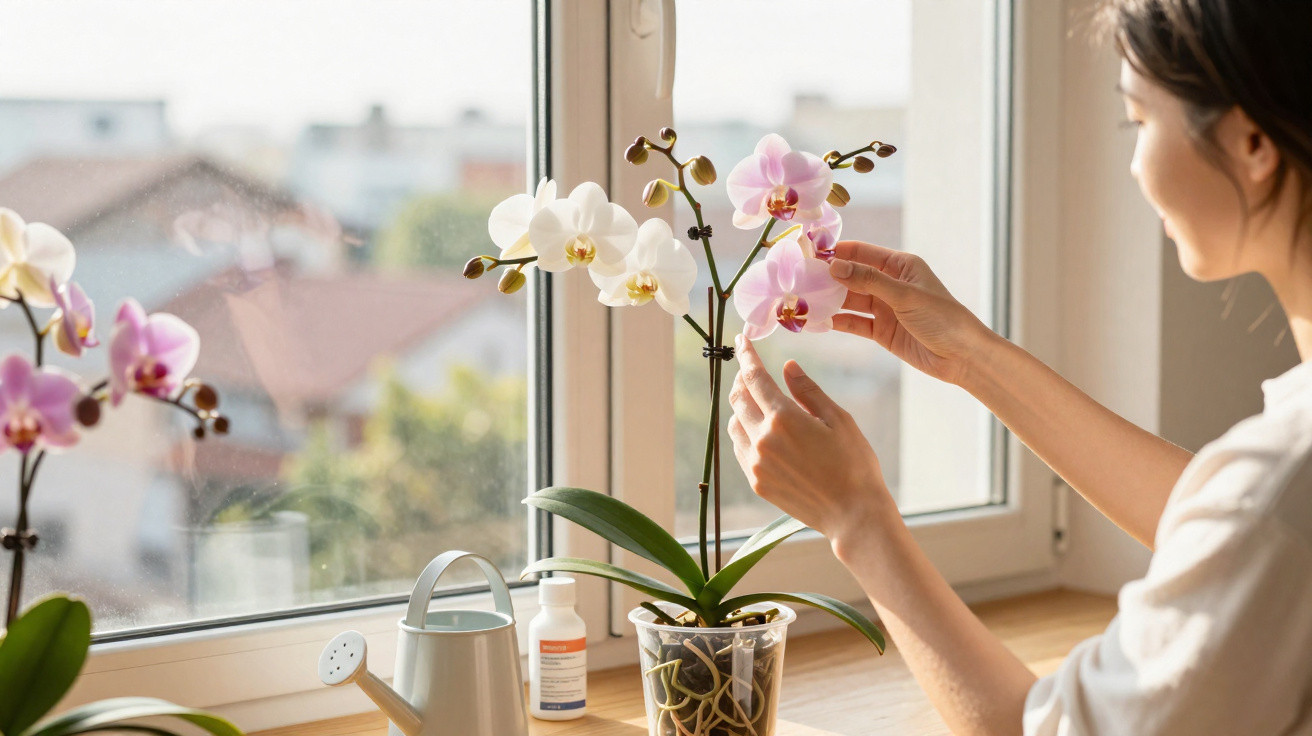
Seeing an orchid produce a new flower spike is one of the most eagerly anticipated moments for anyone who grows this plant. Although flowering time varies depending on the species and how it is cultivated, certain practices can encourage strong growth and make it more likely that fresh blooms will appear. The biggest influences on flowering include suitable light levels, balanced feeding, correct watering and an overall supportive growing environment.
How does light affect orchid flowering?
Light is one of the key factors that gives an orchid enough energy to develop new flower spikes. Most commonly grown indoor types do best in a bright position, but they should be protected from intense direct sun during the hottest part of the day.
A helpful guide is the colour and condition of the leaves. Very dark green foliage can suggest the plant is not getting enough light. On the other hand, yellowing leaves or scorched patches usually point to too much sun. Getting the balance right is essential if you want to encourage healthy flowering.
Watch a video on the Orchids in Action channel explaining why lighting matters for orchids.
Which fertiliser helps encourage new blooms?
An orchid that is well fed is more capable of producing flowers. While the plant is in active growth, it is best to use fertilisers made specifically for orchids, always following the manufacturer’s instructions to avoid overfeeding.
As the orchid approaches its flowering phase, many growers choose a feed with a higher phosphorus content, a nutrient associated with flower development. Feeding should be done consistently, but always in moderate amounts.
- Use fertilisers designed for orchids
- Follow the frequency stated on the packaging
- Avoid applying too much feed
- Water before using liquid fertilisers
- Reduce feeding during dormant periods
- Keep the potting medium clean and free-draining
How to get watering and the growing location right
Overwatering is one of the main reasons orchids become weak. Before watering again, check that the potting medium has partly dried. If you use a clear pot, silvery roots often indicate it is time for another watering.
The growing space should also provide good air movement and moderate humidity. Stagnant, stuffy conditions make disease more likely and can slow the plant’s development. A covered balcony or a spot near a bright window often provides suitable conditions for many species.
- Plenty of bright, indirect light
- Good air circulation
- Water only when the potting medium is almost dry
- A pot with excellent drainage
- Moderate ambient humidity
- Temperatures suitable for the species being grown
Is it possible to get flowers within 60 days?
Some orchids can produce new spikes and flowers in around 60 days when they are already mature, healthy and naturally close to their flowering season. However, this timeframe is not guaranteed for every species and will depend on factors such as the variety, the plant’s age, the climate and the growing conditions.
What matters most is keeping your care routine consistent. An orchid with sufficient light, sensible feeding, watering in the right measure and an appropriate environment is more likely to flower with greater strength when its natural cycle arrives.


Comments
No comments yet. Be the first to comment!
Leave a Comment