
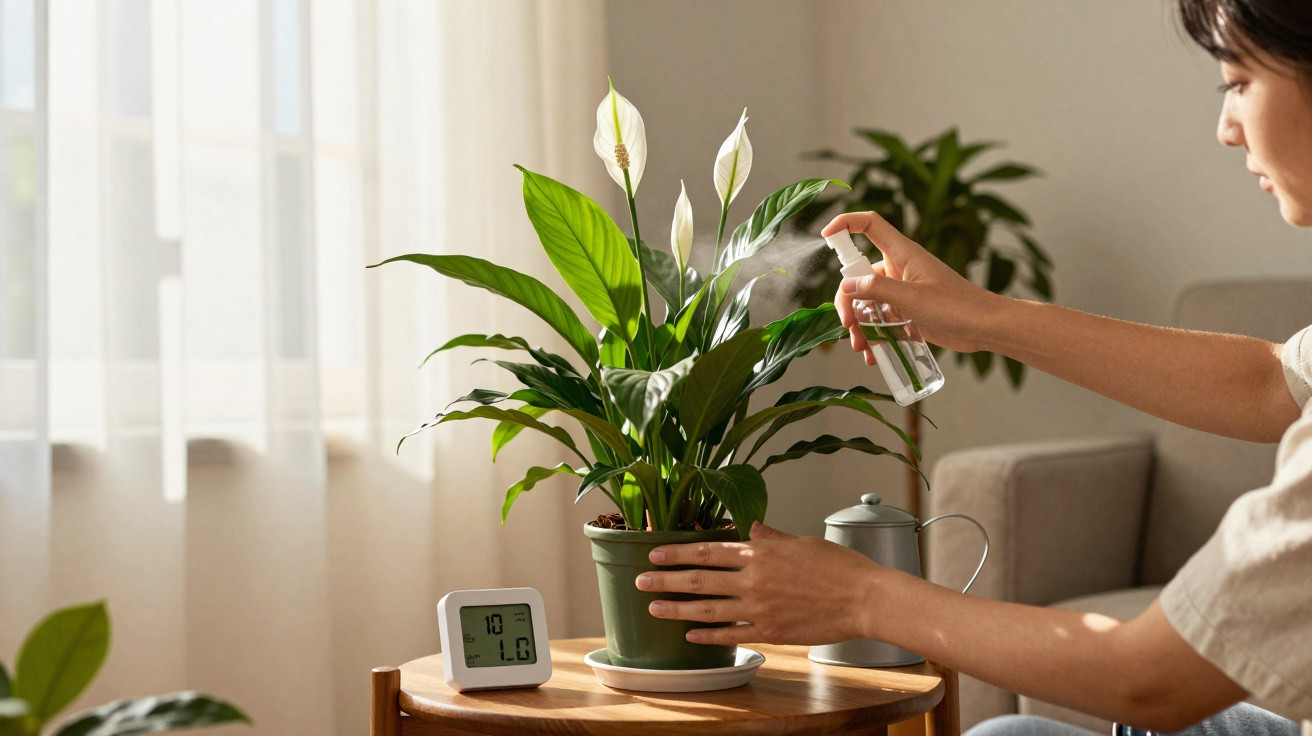
The peace lily is one of the most common indoor plants in homes and offices because it copes with lower light levels than many other species. Even so, if you want it to flower regularly, you need to get the balance of light, temperature, and humidity right. Small tweaks to where the pot sits, which room you choose, and how you water and feed it have a direct impact on how many flowers it produces throughout the year.
What is the best light for a peace lily to flower indoors?
The right light is crucial if a peace lily is to keep healthy foliage and produce blooms. It does best in bright, indirect light: plenty of daylight, but without strong direct sun for hours on end, which can scorch the edges and cause leaves to yellow. In spaces that are too dark, the plant uses its energy simply to maintain its leaves, which reduces-or completely stops-flowering.
In practical terms, a peace lily tends to flower more when it is placed near a well-lit window, in a spot where you can read during the day without switching on a light. The usual sweet spot is about 1 to 2 metres from the window, ideally with a sheer curtain to diffuse the light. If it is kept in windowless corridors or very gloomy corners, the stems will stretch towards the brightest area and flowers become uncommon.
Watch a video on the YouTube channel Minhas Plantas on how to identify the right lighting and the correct fertilising frequency to encourage your peace lily to produce striking white blooms.
What temperature and humidity help a peace lily to flower more?
As a tropical plant, the peace lily responds best to mild, steady temperatures between 18 °C and 28 °C. Prolonged cold below 15 °C slows growth and can make the plant “pause” flowering, while heat above 32 °C-especially when combined with dry air-can lead to rapid wilting and water stress.
Moderate to high air humidity is ideal, particularly in homes with air conditioning, which often dries the air. Leaves with dry tips even when the compost is moist can be a sign that the indoor air is too dry. To make the immediate environment more comfortable for the plant, a few simple measures can help a great deal:
- Set the pot on a saucer filled with pebbles and water, ensuring the base of the pot does not sit in the water.
- Group the peace lily with other plants to create a more humid “microclimate”.
- Mist the leaves on very dry days, always during the cooler parts of the day.
Which rooms are best for keeping a peace lily healthy?
A living room positioned near large windows is often the best choice, as it typically provides good filtered daylight, stable temperatures, and moderate air movement. Bright bedrooms can work too, as long as the pot is kept out of strong direct afternoon sun. In single-storey homes, enclosed verandas and walkways near patio doors often strike a good balance between abundant light and protection from harsh sun.
Well-ventilated bathrooms with a window can also be excellent, as they combine humid air with indirect light-conditions that support lush green leaves and steady flowering. On the other hand, windowless bathrooms, very hot kitchens, and spots tucked behind large furniture tend to restrict light, reducing the plant’s ability to form flower buds even when watering is consistent.
What simple adjustments encourage more peace lily flowers throughout the year?
Moving the pot to a brighter position-while still avoiding strong direct sun-is usually the first step towards improving flowering. Often, shifting the plant just a couple of metres closer to a window is enough to provide the indirect light it needs. It is also worth keeping the peace lily away from cold draughts, frequently used doorways, and air-conditioning blasts, which can dry out the leaves and hinder the development of blooms.
Keeping the compost lightly moist (but never waterlogged), removing faded leaves and spent flowers, and applying a light, regular feed during periods of active growth all help the plant channel energy into new flowering stems. With this combination of care, the peace lily typically responds with more frequent blooms, turning a simple foliage plant into a living, refreshed focal point indoors.

Comments
No comments yet. Be the first to comment!
Leave a Comment