
Keeping weeds under control on patios and other paved spaces is often an ongoing headache for anyone who tends a garden. These unwanted plants take hold easily in the gaps between paving slabs and concrete blocks, then return even after regular weeding. That can make manual work tiring and also raises questions about whether to use chemical products and what they might mean for health, ornamental plants, pets, and the insects moving around the garden.
What is a natural herbicide and why is it used in the garden?
A natural herbicide is any lightly processed or household-made mixture used to suppress or kill weeds, without the same synthetic make-up found in many agricultural weedkillers. In domestic settings, it is most commonly used on patios, driveways, garages, and outdoor flooring, where invasive growth appears in joints and cracks.
The aim is to cut back on long-lasting compounds and reduce exposure for pets, children, and beneficial insects. In these mixes, ingredients such as white vinegar, table salt, and mild washing-up liquid work on contact, drying out the above-ground growth. That contact action makes them better suited to hard surfaces and generally not ideal for direct use in productive beds.
Watch a video on the YouTube channel Horta do Ditinho that shows how to make a powerful homemade, natural herbicide to get rid of weeds without using poison:
https://www.youtube.com/watch?v=rX_jY8dK2aM
How does the vinegar, salt and detergent mixture work as a natural herbicide?
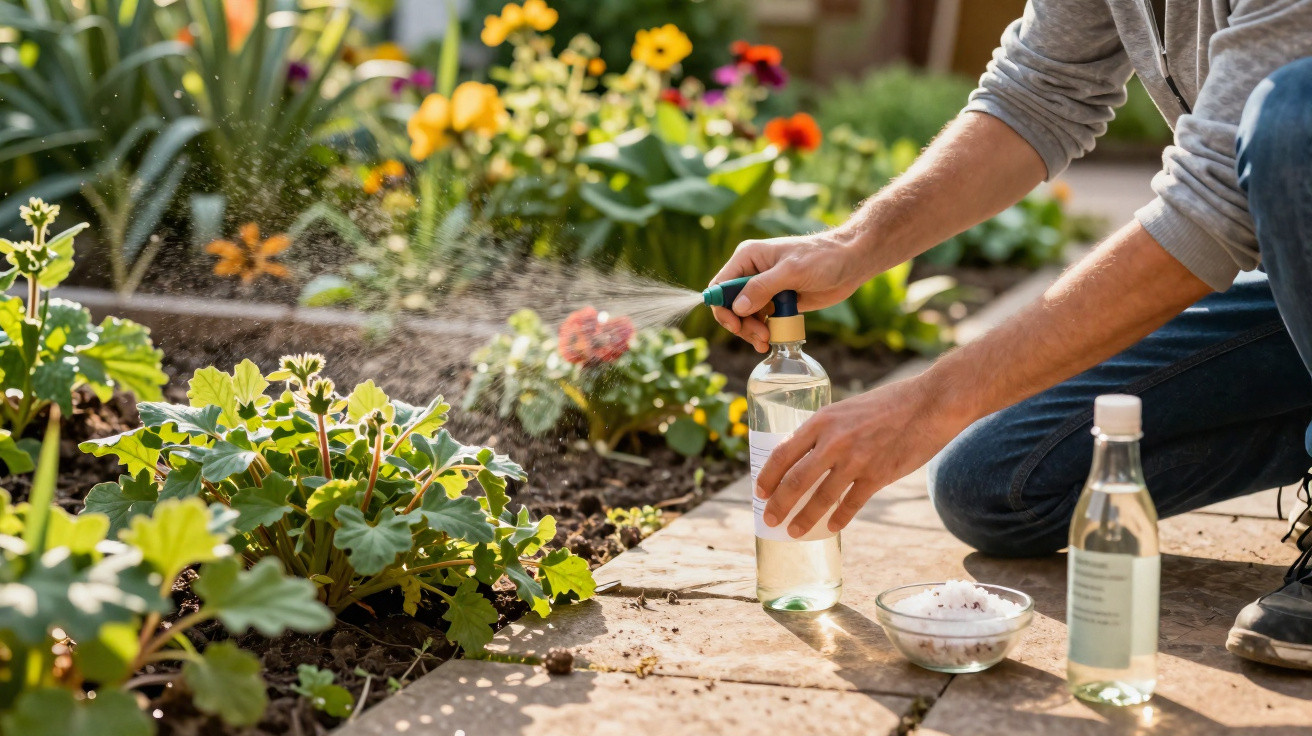
A widely used option combines white vinegar, table salt, and washing-up liquid in a spray bottle, creating a fast-acting solution for young leaves and tender new shoots. The vinegar provides acidity, the salt helps pull moisture from plant tissues, and the washing-up liquid breaks down the waxy layer on leaves, helping the solution soak in.
In general, the recipe follows a straightforward, home-friendly ratio:
- 500 ml of white vinegar (standard culinary vinegar)
- 2 tablespoons of salt (ordinary table salt)
- 2 teaspoons of mild washing-up liquid
- 1 clean spray bottle for application
Mix the vinegar and salt until the salt has fully dissolved, then add the washing-up liquid. Spray the solution straight onto the leaves on a dry, sunny day to avoid rain diluting it and to encourage rapid drying out, which makes any follow-up hand removal far less laborious.
How do you apply natural herbicide safely and get good results?
Even though it is made from everyday items, this type of mixture still needs careful use. Salt can build up in soil, and vinegar can increase local acidity, which may affect nearby roots. For that reason, it is best reserved for paving slabs, stones, block paving, and cracks in concrete, where there is minimal exposed soil.
It is sensible to try it on a small test patch first-particularly on delicate or light-coloured paving-to check for staining or residue. It is also worth keeping pets away while spraying and until the surface is completely dry, to reduce any accidental contact with the wet product.
Does natural herbicide fully replace chemical products?
In many gardens, a vinegar–salt–washing-up liquid mix performs well on shallow weeds, but it will not solve everything on its own, especially when roots run deep or the ground is compacted and encourages regrowth. In those situations, the best approach is to pair occasional use of the solution with hand weeding and improvements to the jointing, creating ongoing management of the gaps.
Some gardeners report better results when they combine frequent sweeping, topping up sand between blocks, and using the natural herbicide sparingly only during heavier infestations. With that routine, patios and paths tend to stay cleaner through the year, reducing the need for harsh products while still keeping weed control practical.




Comments
No comments yet. Be the first to comment!
Leave a Comment