
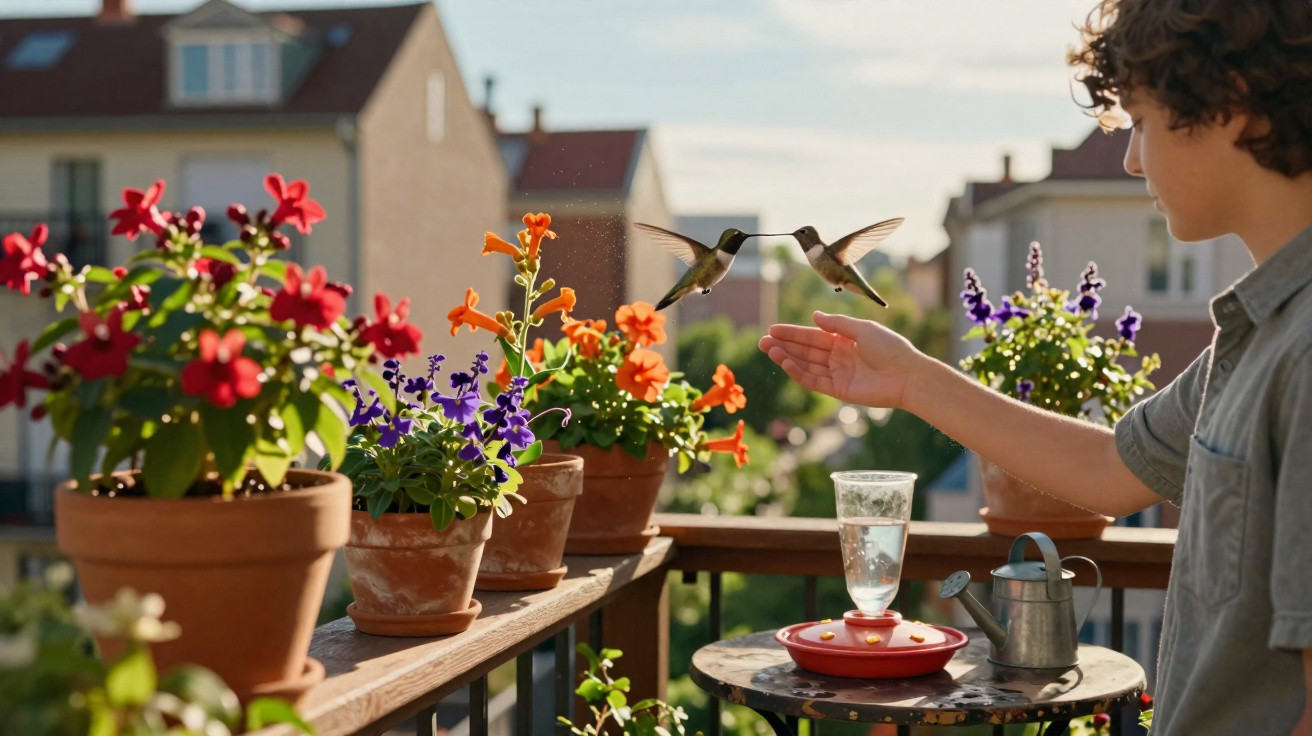
Noticing hummingbirds stopping by your balcony during the day is usually an excellent sign for anyone who grows plants at home. These tiny birds turn up when they can find nectar, a brief bit of shelter and a calm place to feed. Their presence suggests your pots, flowers and little green corners are creating a living, inviting space that fits naturally into the pollination cycle.
What does it mean to see hummingbirds on the balcony?
Seeing hummingbirds on your balcony most often means there are nectar-rich flowers close by. They are drawn to plants with vivid colours, tubular shapes and a reliable food supply. Because they burn a huge amount of energy in flight, they need to visit many flowers throughout the day.
This behaviour is not random. When a hummingbird returns to the same spot, it has likely remembered the food source. Your balcony can become part of the bird’s daily route, especially if your plants flower regularly and the area does not present a constant threat.
Why is it a good sign for your plants?
When these birds visit, it shows your balcony has actively flowering plants and a degree of environmental balance. As hummingbirds search for nectar, they brush against the reproductive parts of flowers and may carry pollen from one bloom to another, supporting the pollination process.
- Flowers that are visited often suggest strong nectar production.
- Their appearance indicates the space is providing food.
- Blooming plants bring more life to the balcony.
- Pollination can encourage seeds and fresh rounds of flowering.
- A container garden becomes more dynamic and healthier.
It also hints that the space is not overly hostile. Balconies with heavy pesticide use, constant loud noise or very little greenery rarely become regular stopping points for birds that are so sensitive to their surroundings.
Which flowers attract hummingbirds the most?
The flowers that most attract hummingbirds tend to be in bold shades-especially red, orange, pink and purple. Long, narrow or tubular blooms make it easier for the bird to reach nectar with its slim beak. In pots, several plant types work well for creating this kind of draw.
- Hibiscus, with large, eye-catching blooms.
- Shrimp plant (Justicia brandegeeana), widely used in tropical-style gardens.
- Lantana, which flowers in colourful clusters.
- Russelia (often called coral plant), with small, hanging flowers.
- Fuchsia, common in areas with partial shade.
- Impatiens, salvia and petunia, all good choices for containers.
It’s best to choose plants that suit your local climate and the amount of sun your balcony receives. A balcony that gets strong morning sun will suit different species from a balcony that stays shaded all day. A healthy plant in the right position will attract more attention than a flowering plant struggling in unsuitable conditions.
How can you welcome hummingbirds without harming them?
To attract these birds safely, prioritise natural flowers. Feeders can draw hummingbirds in, but they require strict cleaning, frequent replacement of the solution and care to prevent fermentation. When neglected, feeders can become a source of fungi and bacteria.
- Choose flowers with natural nectar whenever possible.
- Avoid insecticides on flowering plants.
- Keep cats away from the balcony during visits.
- Do not try to touch, catch or hand-feed the bird.
- If you use a feeder, wash it daily during hot spells.
It also helps to provide a small resting area with thin twigs or medium-sized plants. Hummingbirds may perch for a few seconds between visits, particularly when they are competing for flowers or making multiple stops in the same space.
A balcony visited by birds shows the space is alive
When hummingbirds appear, they turn a balcony into a small nature corridor. The whirr of wings, quick drop-ins and repeated returns to the same blooms show that the space is offering something valuable to local wildlife-even in flats or houses with very limited garden space.
With a mix of flowers, minimal chemical use and a peaceful setting, the balcony becomes more than simple decoration. It starts to function as a place for feeding, pollination and observing nature up close. That’s why seeing hummingbirds nearby is such a good sign: your plants are bringing life, colour and movement into the rhythm of your home.

Comments
No comments yet. Be the first to comment!
Leave a Comment