
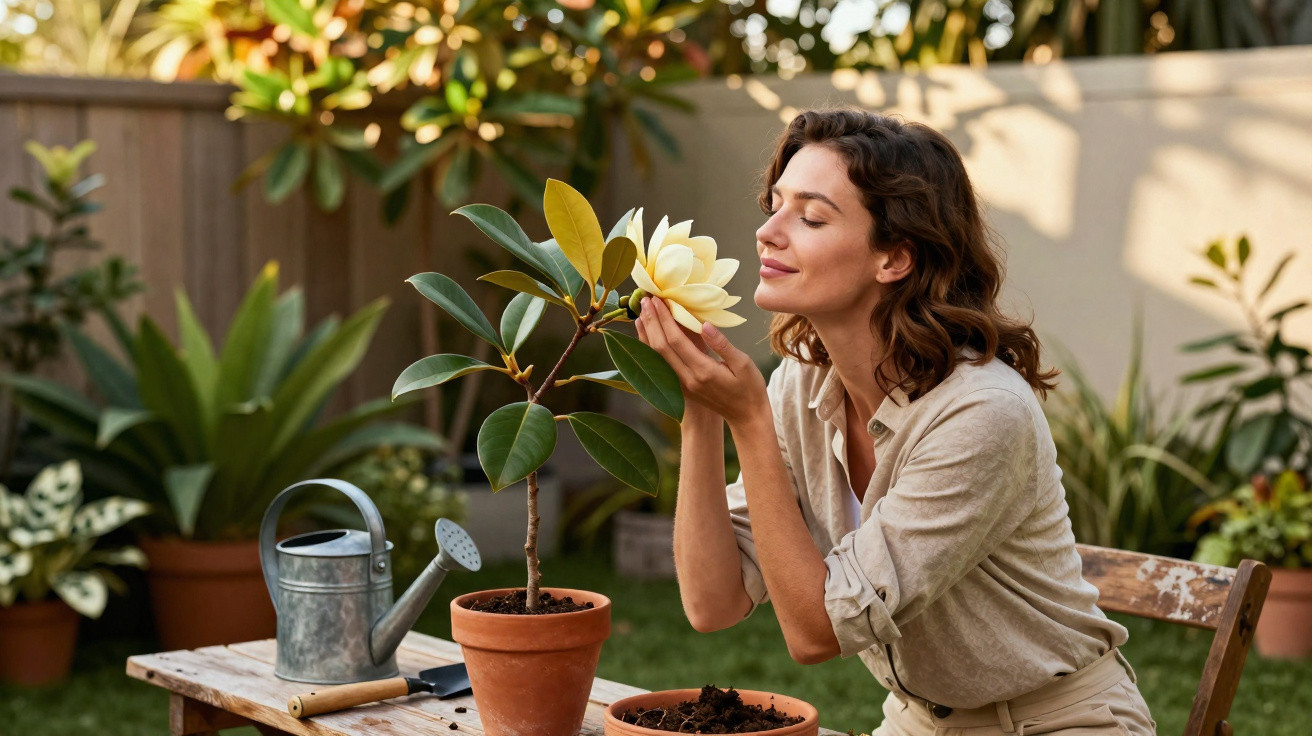
The banana magnolia has been stealing the spotlight in lots of gardens lately - and for good reason. It brings together three things many people love to have at home: a manageable size (it does not turn into a “giant” that takes over everything), highly decorative blooms, and a distinctive fragrance that can bring to mind caramel, ripe fruit and even chewing gum. That makes it a great fit for smaller back gardens, roomy balconies and even pavements.
What is banana magnolia and why is it so sought after?
Banana magnolia - also known as Magnolia figo or dwarf banana magnolia - is a small-to-medium tree that is widely used in compact spaces because it grows in a controlled way and has less troublesome roots. It is chosen more for its looks, scented flowers and standout impact in landscaping than for providing shade.
You can plant it near pathways, boundary walls and front doors, and it can also thrive in large pots as long as the soil is properly prepared. In urban schemes, it often appears on pavements, in small planting beds and pocket parks, as it is easy to maintain and helps avoid heavy pruning over the years.
Watch a video on the YouTube channel Spagnhol Plantas about how to grow banana magnolia and the secrets to keeping it constantly flowering and fragrant in the garden:
https://www.youtube.com/watch?v=D-w-w73WcM8
What are the main advantages of having banana magnolia at home?
People who choose banana magnolia usually want to combine practicality, beauty and a different sensory touch in the garden. It works brilliantly as an aromatic tree for small spaces, creating points of interest in front gardens, balconies and bright outdoor side passages.
Those traits mean it is frequently used alongside other medium-sized species, helping the garden stay appealing throughout the year. Among the benefits most valued by growers, the key highlights are:
- Natural fragrance: the flowers can create an “aromatic corridor” around entrances, social areas and walkways.
- Compact habit: it stays a moderate size and responds well to light shaping and tidy-up pruning.
- Ornamental appeal: brown buds, creamy flowers with purple edges, and deep green foliage deliver a striking look.
- Versatile use: it suits planting as a single specimen, in groups, in rows, and even as a low, flowering hedge.
- Good adaptability: it performs well in narrow back gardens, large planters, winter gardens and smallholdings.
How to care for banana magnolia to keep the flowers and fragrance?
Looking after banana magnolia calls for a moderate level of attention: it is not a plant you can neglect, but it is not difficult either. The crucial point is providing loose, fertile, well-drained soil, avoiding that hard, compacted clay after rain - which can harm roots and reduce flowering.
- Prepare the soil: blend garden soil with peat, leaf mould or well-rotted compost to keep it light and nutrient-rich.
- Ensure good drainage: in pots, add a bottom layer of gravel, expanded clay, or broken pottery pieces.
- Water moderately: keep the growing medium slightly moist without waterlogging it, always checking with your fingers first.
- Provide suitable light: it develops well in full sun or bright partial shade, with good daily light levels.
- Protect from the weather: it does not tolerate hard frosts or prolonged drought; in severe cold, potted plants can be moved to a sheltered spot.
Which spaces does banana magnolia suit best in everyday life?
Banana magnolia suits both urban and rural settings, provided it receives sun and the right amount of water. In single-storey homes, it looks excellent in beds near the entrance or where the breeze can help carry the scent; on spacious balconies, it does well in deep pots with reliable drainage and regular watering.
On pavements and in neighbourhood squares, it is often used as a stand-alone tree, while keeping appropriate distance from walls, pipework and overhead cables to prevent future issues. With straightforward care - occasional cleaning prunes and light feeding during the growing season - it becomes a long-lasting option for making a space feel more welcoming, fragrant and visually engaging as the seasons change.
Comments
No comments yet. Be the first to comment!
Leave a Comment