
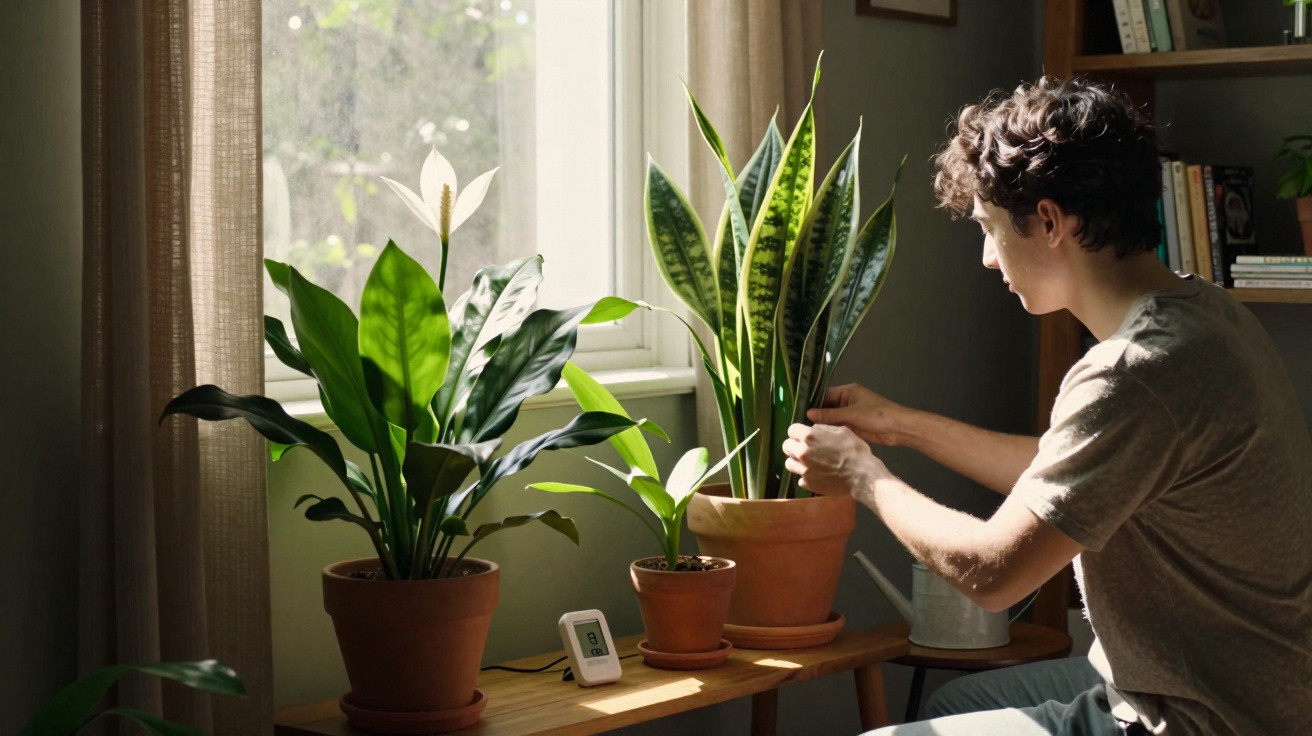
In many homes, the same scene plays out: living rooms that face shaded sunsets, bathrooms without large windows, and narrow corridors that barely catch any sun. Even so, in these softly lit areas, pots of foliage keep going, challenging the notion that plants need strong light to survive. Species such as snake plant, ZZ plant and peace lily have been taking centre stage precisely because they turn dull corners into reliable green features with minimal upkeep.
Shade plants: what should you consider in low-light rooms?
In plenty of households, the absence of big windows or direct sun does not prevent you from creating an indoor space full of plants. Certain species cope well with low light and can grow steadily even in darker rooms. Once you understand what each plant needs in terms of watering, the right potting mix and where to place it, you can put together a balanced green display without relying on lots of natural light.
When setting up a small green corner in a low-light spot, it helps to pay attention to a few basics. The amount of indirect light available during the day, air circulation and temperature all directly affect how shade plants perform. Even plants adapted to low light still require some level of ambient brightness, coming from side windows, glazed doors or filtered daylight. On very overcast days, or in flats that face internal light wells, small grow lights can top up the brightness without changing the decorative feel.
Snake plant: ideal for darker corners?
Choosing suitable species is the first step. Plants that tolerate shade or partial shade generally have tougher leaves and grow more slowly, which suits less brightly lit interiors. On top of that, small habits-such as using the right pots, avoiding waterlogging and turning the pots from time to time-help these plants stay attractive in corridors, bathrooms and living rooms with little sun.
The snake plant is one of the indoor plants most associated with limited natural light. Its stiff, upright leaves handle changes in brightness well, including in corridors, entrance halls and bedrooms with small windows. Although it tolerates shade, it performs best in moderate indirect light; for that reason, it is often placed a few metres from a window, away from strong direct rays. In older buildings, it is commonly seen in lobbies and reception areas, almost acting like a “thermometer” of how well the space is cared for.
ZZ plant and peace lily: how to care for them in indirect light?
For watering, the snake plant does better with longer gaps. Indoors, watering every 10 to 15 days is usually enough, as long as you check that the potting mix is dry in the top few centimetres. Too much water can lead to root rot and marks on the leaves. The ideal mix is slightly sandy and drains well, mimicking soil that does not hold onto moisture for long.
The ZZ plant, known for the glossy look of its leaves, is frequently listed among the best plants for indoor areas with little light. It adjusts well to living rooms where daylight arrives indirectly, internal offices and even reception spaces without nearby windows. When it comes to watering a ZZ plant, the interval should be longer still: fortnightly or even monthly watering, allowing the soil to dry out thoroughly. The peace lily, in contrast, prefers a slightly moist mix and responds with drooping leaves when it needs water-an especially helpful visual cue for anyone without gardening experience.
How to arrange a green look in dark rooms
In darker rooms, the ZZ plant is often set in living-room corners, next to sofas or shelving, making the most of the room’s general indirect light. In offices, medium-sized pots can sit near partitions or beside workstations, without direct exposure to sunlight from a window. The peace lily, meanwhile, tends to suit bathrooms with small windows, cloakrooms and TV rooms, where gentle brightness keeps the foliage looking fresh, even if flowering is more understated.
Creating a lush feel in low-light areas can be done by combining the three species mentioned. The snake plant, with its upright shape, can fill corners and corridors; the ZZ plant works as a sturdy central feature; and the peace lily breaks up the green with broad leaves and the occasional white flower. Placing pots at different heights, choosing neutral cachepots, and sticking to controlled watering and the right potting mix allows houses and flats with limited light to keep a healthy collection of plants, bringing visual freshness and a welcoming atmosphere to the darker parts of the home.


Comments
No comments yet. Be the first to comment!
Leave a Comment