
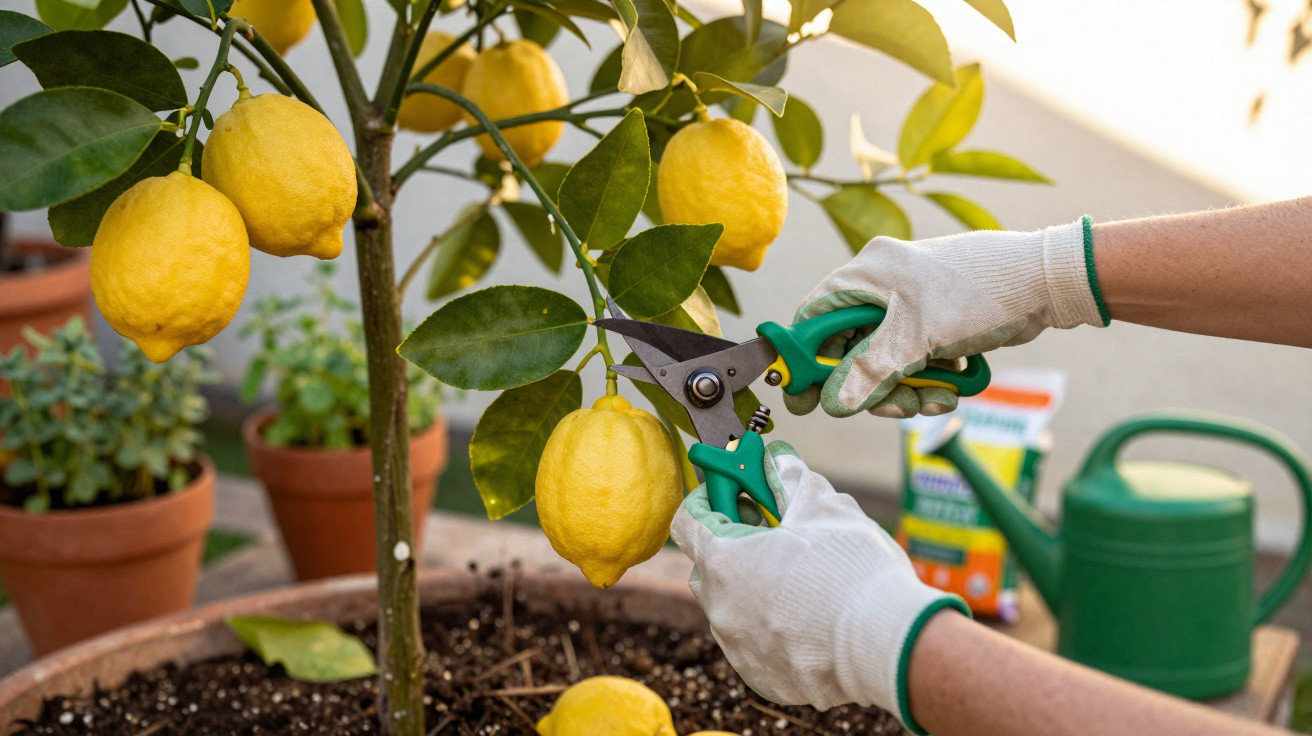
A lemon tree thrives with plenty of sun, well-drained soil, careful watering and light pruning to keep foliage robust and fruiting reliable. This approach helps remove dead wood, improve light reaching the canopy, and cut down on places where pests build up-particularly in small gardens and in pots.
Why does pruning help a lemon tree grow better?
Pruning increases airflow through the branches and allows sunlight to reach the inner parts of the canopy. When a lemon tree becomes too dense, older leaves, crossing branches and weak shoots compete for energy that would otherwise go into flowers and fruit.
The aim is not heavy cutting, but gradually refining the plant’s shape. With gentle pruning, the lemon tree keeps enough green growth to photosynthesise and bounce back without losing strength.
When should you use this technique on a lemon tree?
The best time to prune is when the plant is not carrying an excess of flowers or fruit. In general, a light “tidy-up” prune can be done throughout the year, as long as cuts are small and focused on growth that is dry, diseased, or poorly positioned.
Before you start cutting, look for signs that suggest the tree needs attention:
- Dry, broken, or leafless branches.
- Branches crossing through the centre of the canopy.
- Very long shoots growing beyond the plant’s overall shape.
- Yellowing leaves in areas with poor ventilation.
How do you prune without weakening the plant?
Start lemon tree pruning by removing dead branches and shoots that grow inwards towards the middle of the canopy. Use clean, sharp secateurs, make decisive cuts, and avoid tearing the bark, as large wounds are slower to heal.
It also helps to keep the centre of the canopy more open-without turning the plant into a bare framework. A lemon tree needs healthy leaves to support production, so excessive cutting can delay new growth and reduce the number of fruits.
What other care supports the health of a lemon tree?
Pruning works best alongside good management of soil, water and light. A lemon tree in a pot, for example, quickly suffers from waterlogging if the container has no drainage holes and the compost is not free-draining.
To keep the plant balanced after pruning, these routine habits make a real difference:
- Water only when the top layer of soil feels dry.
- Make sure it gets a few hours of direct sun each day.
- Remove fallen leaves from the pot or bed.
- Feed with organic matter or a citrus-specific fertiliser.
- Watch for scale insects, aphids, and curled leaves.
How do you keep a lemon tree looking good all year round?
A lemon tree responds far better to consistent care than to drastic cutting done all at once. Light pruning, watering without soaking the soil, and balanced feeding keep the canopy refreshed, with stronger branches and leaves able to support new flushes of blossom.
In gardens and on balconies, this technique also helps manage the tree’s size without harming productivity. With well-spaced branches, aerated soil and attention to pests, the lemon tree moves through the seasons with less stress and a better chance of fruiting.




Comments
No comments yet. Be the first to comment!
Leave a Comment