
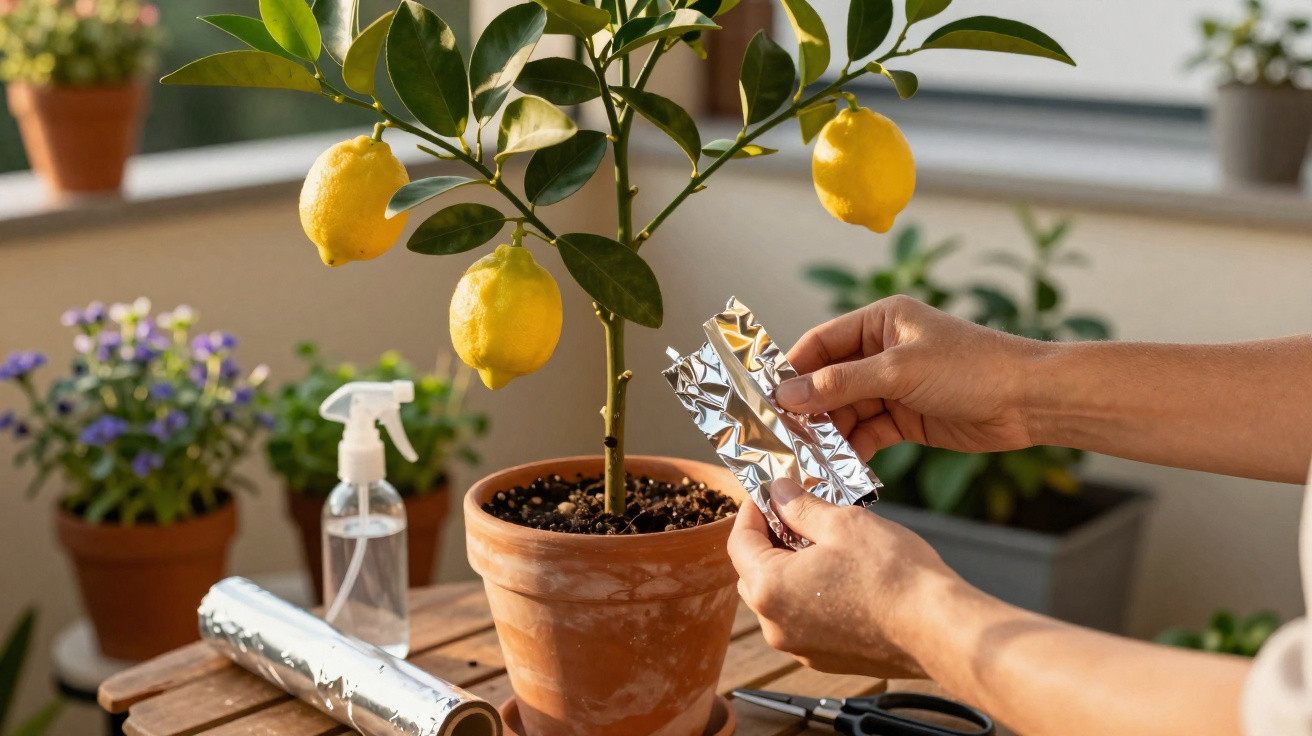
Growing citrus at home means staying alert to small invaders that can ruin fresh shoots. A practical option is to use reflective household materials to create an effective visual barrier, helping fruit develop well without relying on highly toxic pesticides that harm the local ecosystem.
How does the aluminium foil trick work?
The idea is to fasten small, shiny strips to the upper branches so they catch the wind and produce a shifting sparkle. That constant movement, combined with sunlight reflecting off the foil, confuses flying pests and stops them settling on the tree and damaging new leaves or young fruit during the ripening process.
By changing how the space around the canopy looks, this simple tactic works like a modern, “high-tech” scarecrow. The ongoing flicker creates an uncomfortable zone for animals, encouraging them to look for food elsewhere-well away from your home-grown crops in a completely natural way.
Related: How to grow a huge lemon tree in small spaces?
There is a specific pruning and feeding approach that can speed up citrus growth even in small pots… Read more.
Which pests does this technique deter?
Fruit-eating birds and flying insects that target plants during the fruiting period are the main focus of this preventive approach. When they notice the intermittent flashes, they read it as a warning of danger nearby and choose not to land on branches carrying new lemons in your garden or back garden.
This visual method also performs very well against winged aphids and small wasps that lay eggs on the plant’s tender leaves. The strong glare interferes directly with arthropods’ vision, as they rely on steady light to navigate accurately-dramatically lowering the chance of serious infestations on your favourite fruit tree in a completely clean way.
Below is a video from Ricardo Brito’s YouTube channel that explores the points discussed in this topic:
How to install it correctly on the branches?
Attach the strips strategically, focusing on the outside of the canopy and the tips of branches that receive the most direct sunlight. Cut medium-sized pieces that can swing freely in the breeze, creating the reflections needed to form the ideal protection across the crown of your cherished citrus against any opportunistic visitor.
Replacing the material from time to time helps keep the original shine, which can fade as dust builds up and heavy rain weathers the surface. This straightforward upkeep maintains the effectiveness of the optical barrier for many months, keeping your home orchard protected from repeated airborne attacks without spending money on expensive supplies in a highly simplified way.
Materials for managing the deterrent
Basic items required
List of elements to put together the homemade repellent:
- Standard household roll of aluminium foil;
- Thin string or ties for secure fastening;
- Ordinary scissors to cut strips to the right size.
Why avoid chemical products for protection?
Using industrial insecticides too freely can affect fruit quality and drive away pollinators that are essential for ongoing production. Choosing solutions based on visual stimulation protects the biological balance of the garden, keeping natural predators active in controlling smaller pests in a sustainable way that is highly beneficial for your growing area.
Family food safety also improves when artificial substances are removed from the everyday care of fruit trees grown in pots or beds. Moving to cleaner practices supports healthier harvests, without harmful residues that can build up on citrus peel throughout the ripening process of your home-grown food.
Below are the main benefits of adopting this physical control method in your home orchard:
- Full protection of pollinating insects that visit the blossoms;
- Major reduction in spending on industrial crop-protection products;
- Quick installation that adapts to any pot or bed size.
What complementary care is needed in the garden?
Alongside the reflective barrier, proper watering and regular organic feeding strengthen the plant’s structure against opportunistic parasites. A well-nourished tree develops stronger natural defences, making it less prone to serious infestations that often damage new shoots and undermine the stability of an urban fruit tree during extended dry spells.
Frequent hands-on checks further reinforce the effect of the shiny strips, as they help you spot early changes in leaf colour. This ongoing attention keeps the environment balanced and supportive so your fruit tree grows vigorously, delivering abundant, fragrant harvests across every season with little effort and maximum efficiency.

Comments
No comments yet. Be the first to comment!
Leave a Comment