
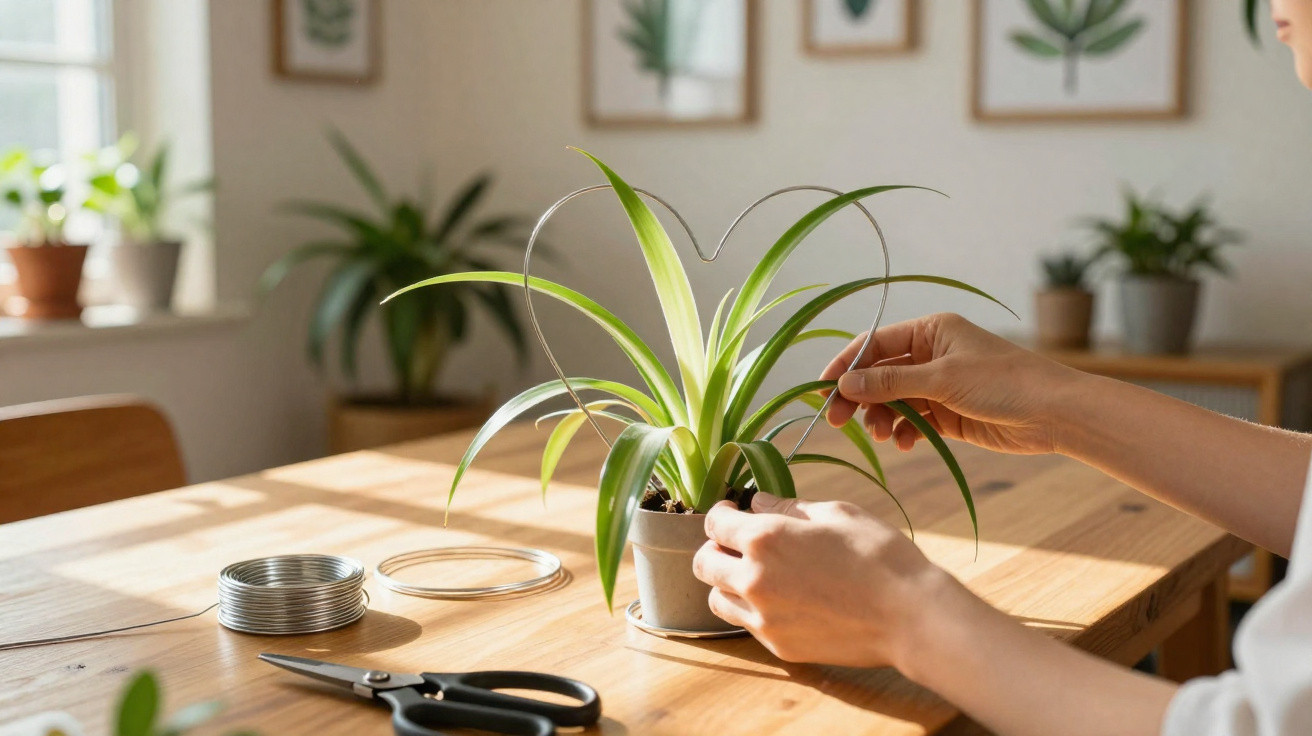
Plenty of homes have one sitting somewhere: a spider plant in a cachepot, tough, low-maintenance, but more background greenery than a centrepiece. Yet this plant has far more potential than most people give it credit for. With one deliberate tweak and a little patience, it can become a living sculpture that lifts any shelf or windowsill.
The underestimated spider plant: from supporting act to standout feature
The spider plant, botanically Chlorophytum comosum, originally comes from South Africa. It grows reliably, forgives lapses in care, and is non-toxic for cats and dogs. That’s precisely the problem: it gets parked somewhere, watered now and then-and you barely notice it anymore.
Look a bit closer, though, and it quickly becomes clear why it’s ideal for creative shaping. From the green leaf rosette-often striped with white-long, thin runners emerge. At the ends of these runners sit small rosettes, the so-called plantlets. Left alone, they simply dangle downwards and, over time, form a dense tangle.
"These trailing plantlets aren’t a random quirk, but an ideal ‘building material’ you can use to create circles, hearts, or even small columns."
The key is not letting the runners hang wherever they like, but guiding them on purpose. The plant doesn’t change-only the presentation does-and suddenly it reads like a design object.
Thinking of the spider plant as a living sculpture
If you want to restyle your spider plant, it helps to stop seeing it as just another potted houseplant and start treating it as a living sculpture. The runners are surprisingly flexible: you can shape and release them gradually without them snapping-so long as you don’t force them.
This is especially useful in smaller flats. Instead of foliage spilling across a sideboard, the plant can be directed upwards to fill unused vertical pockets. The result is a kind of “green totem” that concentrates visual impact in a very small footprint.
Aluminium wire: an invisible stage for green shapes
One of the simplest approaches uses a light armature made from aluminium wire. A slightly thicker craft wire is best-stiff enough to hold a shape, but still easy to bend. You can make, for example:
- a closed circle
- a heart
- an oval or gently curved outline
Push the wire straight into the pot or rest it lightly in the compost, without disturbing the roots too much. Then guide the long runners with their plantlets along the wire and secure them gently using soft plant clips, small raffia loops, or strips cut from an old fabric ribbon.
"The wire almost disappears from view; the plant draws the chosen shape with its runners-like a green light painting."
Aluminium has the advantage of barely rusting and being very lightweight. That means you’re not loading the plant with extra weight, and the final look stays natural even as it plays with form.
Shaping hearts, wreaths and perfectly round sculptures
Before you start, take a moment to assess your “base material”. Pick the strongest, longest runners with several plantlets-these are the best for outlining closed shapes.
The process is essentially a piece of creative styling:
- Bend the wire into a shape (circle, heart, oval).
- Bring the strongest runners to the front and lay them carefully around the outline.
- Fasten the runners loosely, making sure nothing is tied so tight it cuts in.
- Trim off extra plantlets and place them in a second pot to root.
Over time, the plantlets grow larger and denser until the line you set begins to look like a continuous green sculpture. If you like, you can plant additional plantlets around the base, creating a fuller, sturdier “plinth” that makes the shape look as if it’s rising out of a thick green foundation.
Braided columns: when the spider plant grows upwards
A second option skips circles and hearts entirely. Here, you create a kind of plant braid. Gather several long runners and loosely plait them into a column. Place a thin wooden cane in the centre to give the structure support.
Benefits of this method:
- The plant gains noticeable height.
- Narrow gaps suddenly look considered and intentional.
- The braid can be undone and re-plaited whenever you want.
A braided column works well beside an armchair, at the end of a low TV unit, or next to a slim shelving unit. In a small flat, it lets you use overlooked spaces without buying any extra furniture.
Where these plant sculptures look best
Spider plant shapes need one thing above all: a spot where they’ll actually be seen. A dense wreath makes an ideal focal point for the centre of a dining table. The plantlets can drape slightly without blocking anyone’s view.
A heart shape makes a strong statement in the hallway, on a console table or chest of drawers. Corridors are often decorated in a cool, purely practical way; a green sculpture like this adds warmth and a touch of playfulness.
The braided column is particularly effective in tight corners:
- next to a TV stand
- between the sofa and a bookcase
- in a calm corner of a home office
In a small bedroom, a mini column can sit on the bedside table and bring a bit of nature into view without taking up much space. The main rule still applies: avoid harsh, direct midday sun, but give it plenty of bright light.
Care after shaping: keeping the sculpture in form
After a redesign like this, your spider plant benefits from a little boost. A liquid fertiliser with a simple nutrient mix added to the watering can supports plantlet growth and helps your chosen shape fill out more quickly.
Basic rules for healthy plant sculptures:
- Keep the compost lightly moist; avoid waterlogging.
- Turn the pot every few weeks so all sides get enough light.
- Shorten overly long, weak runners regularly.
- Check ties now and then and loosen them if they start to dig in.
In particularly mild areas-where temperatures rarely stay below about 13 °C for long-the spider plant can spend warm months outdoors for a while, sheltered from heavy rain and fierce midday sun. The extra light brings stronger colour and more plantlets.
Why the effort pays off
From a psychological point of view, a shaped spider plant changes the feel of a room far more than yet another standard pot on the windowsill. It reads as more personal-almost like a small project you refine over time.
At the same time, it remains ideal for anyone without a “green thumb”. It tolerates mistakes, pushes new growth after pruning, and continuously produces plantlets you can give away or use for fresh sculptures. If you have children, you can involve them in guiding and pinning the runners-an easy, low-pressure introduction to plant care and simple design.
If you enjoy this kind of styling, you can later apply the idea to other houseplants. Climbers such as devil’s ivy or philodendron can also be trained around shapes, just much more slowly. The spider plant responds quickly, which makes it the perfect plant to experiment with.
That’s how a “completely ordinary” houseplant becomes a small design project: not an expensive decorative object from a furniture shop, but a living sculpture that keeps evolving-and is guaranteed to prompt questions when visitors come round.
Comments
No comments yet. Be the first to comment!
Leave a Comment