
Stopping birds from fouling your back garden is about changing what attracts them, not harming the animals. With regular cleaning, light barriers and visual deterrents, patios and outdoor furniture stay cleaner and are easier to maintain.
Why do birds choose the same garden?
Birds often return to places where they can find food, water, shade, nearby branches and safe spots to perch. That is why outdoor tables, ledges, pergolas and garden chairs can become regular resting areas-leading to repeated mess on the ground below.
The issue tends to worsen when there are food scraps, exposed pet food, fallen fruit or uncovered water sources. Even unintentionally, these small details can turn a back garden into an appealing place for birds looking for shelter and a reliable routine.
The most common attractions are usually:
- Food: crumbs, fruit and pet food encourage repeat visits.
- Water: fountains, bowls and dishes left full act like an invitation.
- Branches: nearby trees make it easy to perch above tables and chairs.
- Furniture: backs and armrests become comfortable resting points.
- Habit: birds come back when the spot remains favourable.
How do you remove garden attractants?
The first step is to take away whatever encourages birds to stay. Wipe up crumbs after meals, pick up fallen fruit, keep bins closed and do not leave pet food out, because readily available food leads to daily and persistent visits.
It also helps to empty containers of standing water, cover decorative fountains when they are not in use, and prune branches that extend over tables. The fewer comfortable perches there are, the lower the chance of build-up of droppings.
Which items deter birds without hurting them?
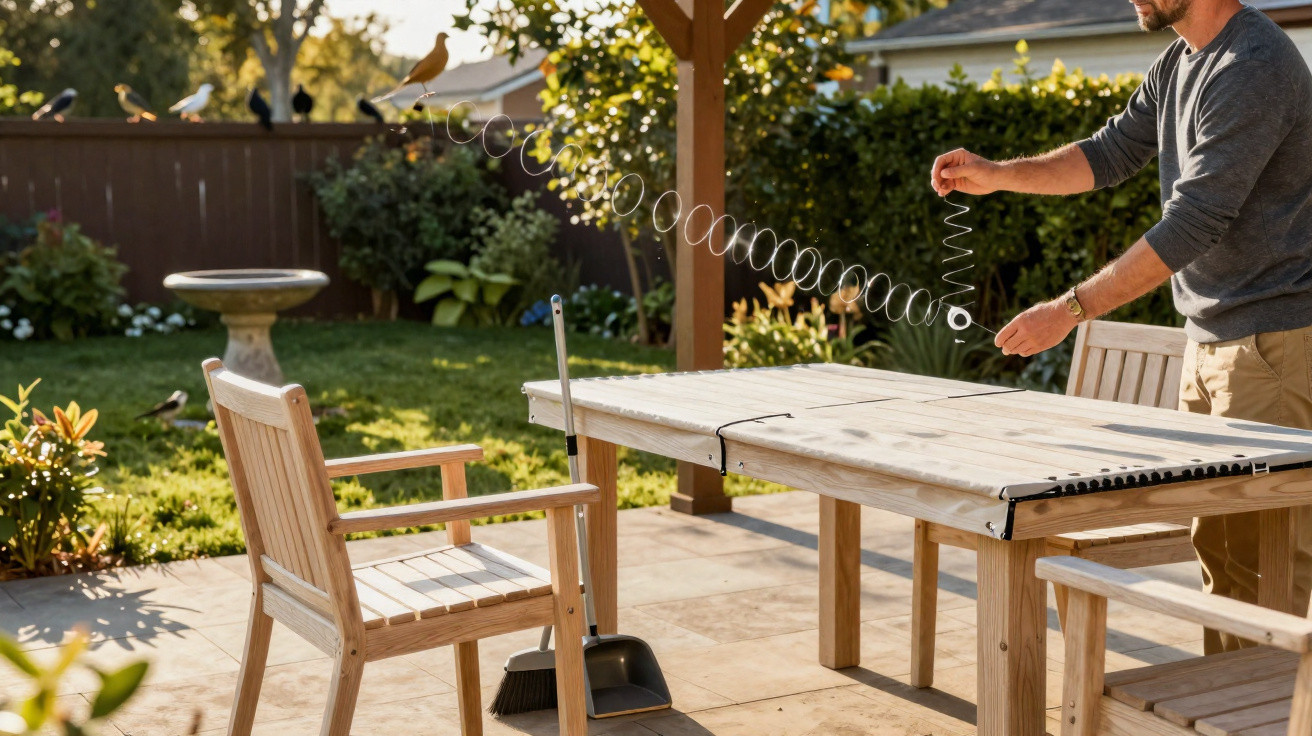
Moving visual deterrents can work well because they make the area feel unpredictable. Reflective tape, old CDs, wind spinners and lightweight mobiles create flashes and motion, which leads many birds to avoid landing due to unease and discomfort.
Movement changes behaviour
The trick needs to change to keep working.
Objects that stay still lose their impact, because birds quickly get used to them.
Change the position, height and direction of reflective items every few days.
Decorative owl decoys and predator silhouettes can help too, but they are most effective when you move them around. If they remain in the same place for weeks, birds realise there is no real danger and return to the same perching spot.
The five most practical measures are:
- Remove food, standing water and exposed pet food from the garden.
- Prune branches that sit above furniture, tables and paved areas.
- Hang reflective tape, CDs or moving wind spinners.
- Cover outdoor furniture when it is not being used.
- Clean marked areas quickly to discourage birds from returning.
How do you protect garden furniture day to day?
Waterproof covers are very helpful for chairs, sun loungers and tables left outside. They do not deter birds on their own, but they protect fabric, wood and aluminium, preventing stubborn stains and cutting down the time spent cleaning.
Where visits are frequent, lightweight mesh, lines strung with ribbons and discreet barriers can reduce perching without injuring animals. The aim is to create visual and physical discomfort-not traps-while keeping the garden clean and safe.
To look after surfaces more effectively, do the following:
- Use covers on furniture that will sit unused for several days.
- Store cushions in storage boxes or covered areas.
- Wash fresh marks before they dry fully.
- Avoid harsh products on wood, fabric and natural stone.
How do you keep the patio clean for longer?
Guides on how to stop birds fouling the patio emphasise combining prevention with cleaning. No single method fixes everything, but a set of habits reduces the problem.
The most effective approach is to make the space less attractive, rotate deterrent objects and cover furniture when it is not being used. This way, the back garden stays pleasant without resorting to aggressive measures against birds or nature.
Comments
No comments yet. Be the first to comment!
Leave a Comment