
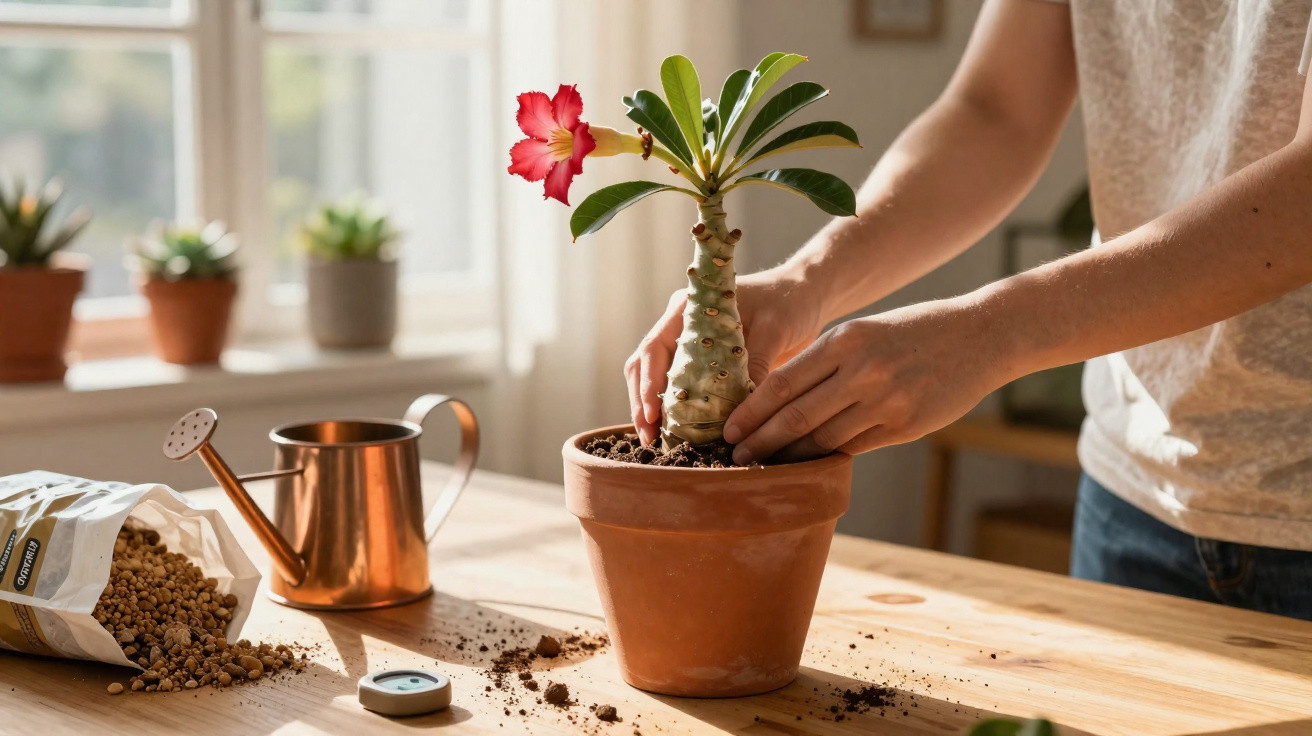
The desert rose has become a favourite for balconies, patios and bright living rooms because it combines showy blooms, a swollen caudex and care that looks straightforward but actually demands precision. For families who enjoy plant cultivation, success depends on paying close attention to light, compost and watering - factors that shape both root health and bud formation.
Why does this species react so badly to too much water?
Because the desert rose stores water in its thickened stem, it struggles when the pot stays damp for days on end. In indoor gardening routines, the most common mistake is treating it like tropical foliage - sticking to fixed watering schedules and using a heavy, moisture-holding mix - which encourages rot and yellowing leaves.
Looking after plants becomes far more reliable when the household checks the pot before reaching for the watering can. Feeling the compost, judging the container’s weight and noticing whether water drains freely through the holes tell you more than any calendar. On cold or rainy days, drying slows down, and the desert rose needs longer gaps between waterings.
How do you set up a pot that supports strong roots and flowering?
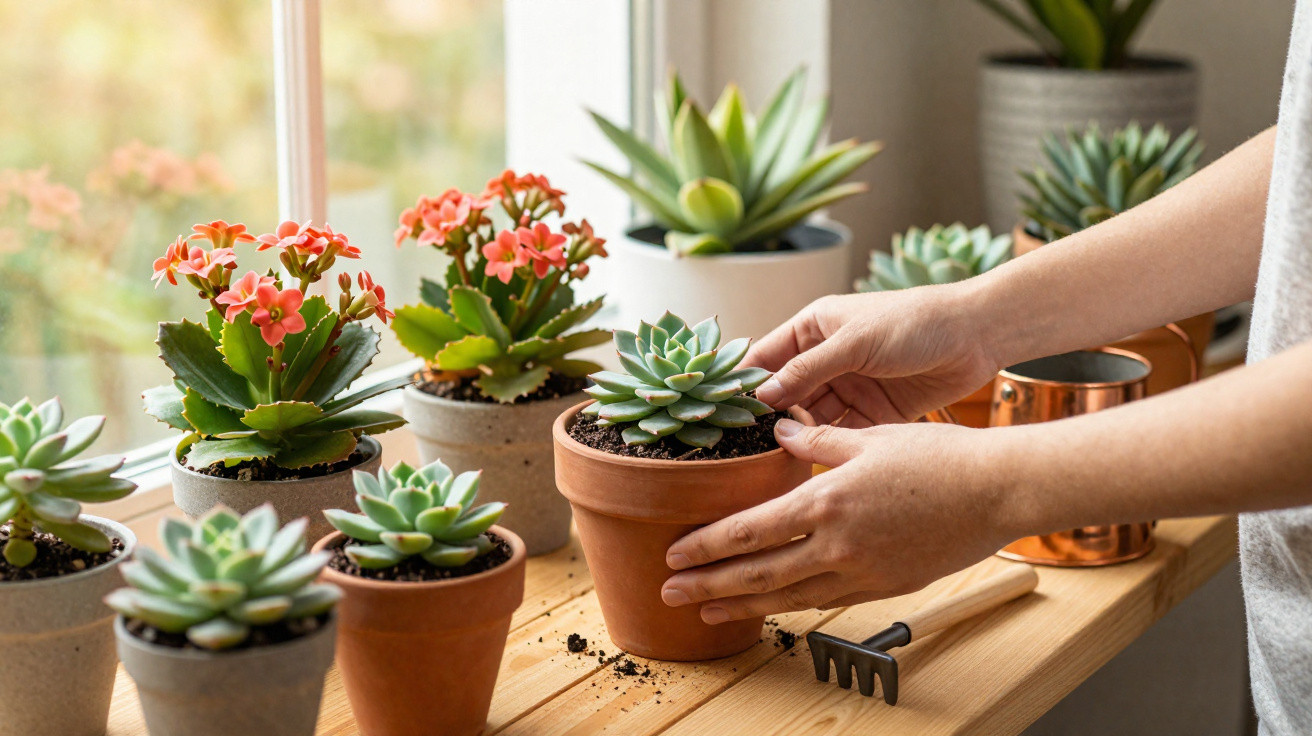
A suitable pot must shed water quickly and allow air to move through the root system. In ornamental plant cultivation, this matters even more for caudex-forming species, which need a loose mix to deter fungi and keep growth balanced.
Before planting, it helps to run through a few practical gardening checks to reduce losses in the first few weeks:
- Choose containers with large drainage holes, and avoid leaving a saucer underneath with standing water.
- Use a light compost mix with mineral components such as coarse sand, perlite or horticultural grit suitable for pots.
- Avoid compacted garden soil, which holds moisture for too long.
- Sit the caudex slightly above the compost line to improve ventilation.
Where is the best place in the home to keep a desert rose?
The desert rose performs best in spots that receive several hours of direct sun. A very shaded window often causes leggy growth, fewer flower buds and weaker leaf colour. In flats, the sunniest aspect usually delivers the most consistent results for anyone committed to caring for flowering plants.
When introducing more sun, make the change gradually - especially after a recent purchase or a move to a new room. A sudden shift can scorch the leaves. Among everyday plant cultivation tasks, tracking how light falls in the morning and afternoon helps you find the point where the crown flowers without excessive stress.
Which signs show the plant needs a quick correction?
Certain symptoms appear early, allowing you to adjust before the roots fail. In busy households, spotting these warnings prevents losses that seem sudden but actually began days earlier with watering, feeding or sun exposure.
In practice, these red flags call for immediate action during routine plant care:
- Soft, yellowing leaves after frequent watering suggest excess moisture.
- Long, widely spaced stems point to a lack of direct light.
- A wrinkled caudex lasting for many days may indicate prolonged dehydration or compromised roots.
- Buds that dry out before opening often follow an abrupt change of environment or irregular watering.
How can you keep the plant looking good for longer indoors?
With this plant, regular gardening does not mean disturbing the pot every week. The desert rose prefers a steady routine: strong sun, balanced feeding during active growth and occasional pruning to shape the crown. Once the family understands that rhythm, plant cultivation becomes more predictable and flowering tends to return more consistently.
Care for this type of plant depends less on extra interventions and more on consistency. The desert rose grows best with intense light, free-draining compost and watering adjusted to the season. In any part of the home, that trio remains the foundation for firm leaves, healthy roots and well-formed buds.
Comments
No comments yet. Be the first to comment!
Leave a Comment