
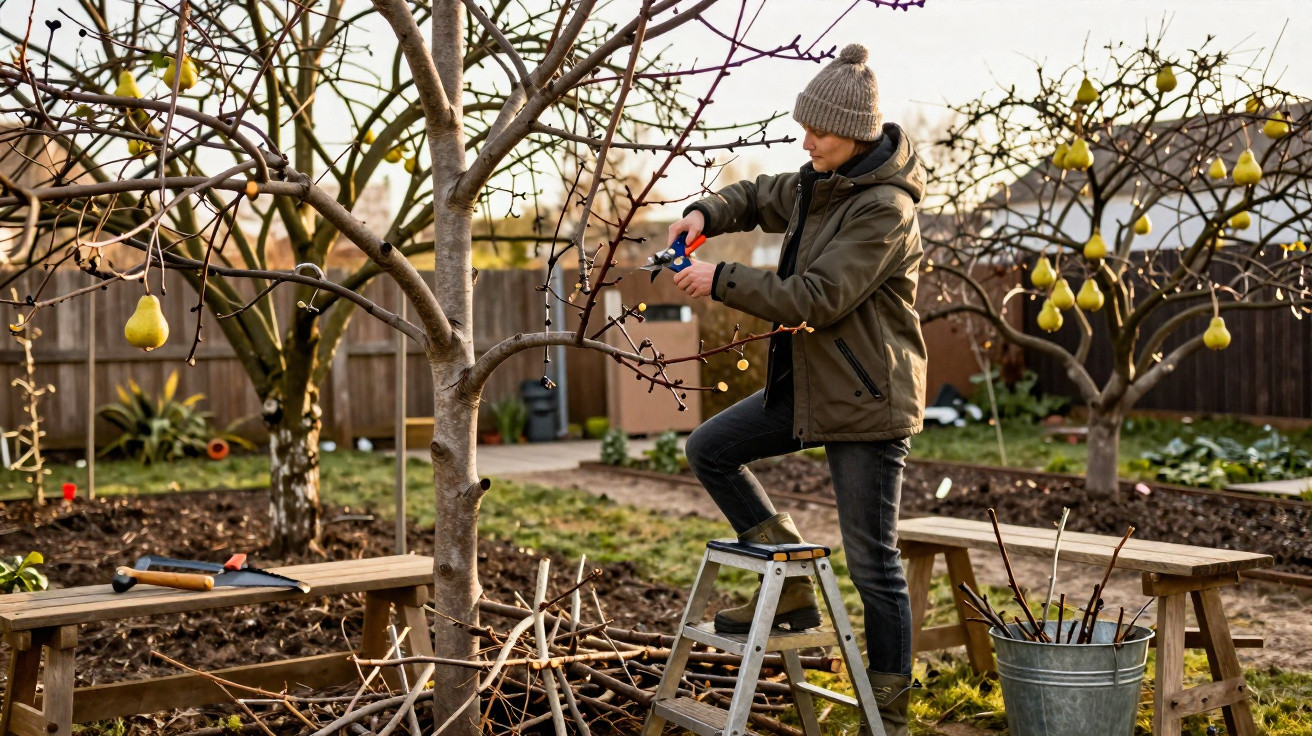
If you care about your fruit trees, don’t write January off as a dull in-between month. With sap flow largely paused and the crown bare, the tree’s framework is fully visible. This is precisely the moment to shape apple tree, pear tree and quince tree so they head into summer vigorous, healthy and well laden with fruit. Leave it too late - or do nothing at all - and you may end up with poor harvests, unhealthy limbs and fruit that’s awkward to reach.
Why January is such a pivotal month for fruit trees
In January, the tree is in its dormant period. Most of the sap has retreated into the trunk and roots, and buds are already formed, but not yet active.
The winter prune shapes the tree’s skeleton without weakening it - and sets the foundation for that same year’s harvest.
At this point, trees respond particularly well to structural work. Thicker branches are easy to spot, and problems in the framework stand out immediately. Pruning now directs spring growth into the areas you actually want: towards strong fruiting wood rather than vigorous, unproductive shoots.
Pruning an apple tree in January: light and stability matter most
Apple trees generally cope very well with winter pruning. If you never pick up the secateurs, the crown tends to become dense, shaded and less fruitful. Lots of small apples, lots of leaf, and too little quality is the classic outcome when an apple tree is left to its own devices for years.
How amateur gardeners should approach an apple tree
With apples, the aim is a bright, well-ventilated crown supported by a sturdy basic structure.
- Open the centre: Remove branches in the middle of the crown that cross, rub or grow inwards. This lets more light reach the fruiting shoots, helps moisture dry out, and makes fungal diseases less likely.
- Shorten the main limbs: Reduce the length of the primary scaffold branches moderately. This brings the crop closer to the trunk, lowers the risk of branches snapping under weight, and makes picking easier.
- Remove water shoots: Cut out (or tear out where appropriate) the strongly upright shoots that shoot straight up from branches. They clutter the crown and produce very little fruit.
As a rough guide, you should be able to imagine summer sunshine reaching into the inner crown. An apple tree is not meant to be a leafy canopy; it should be a framework designed to carry fruit.
Pruning a pear tree: keeping the height in check is essential
Pear trees behave differently from apples. They naturally push upwards, and many varieties develop almost tower-like crowns over time. Without pruning, you eventually need a long ladder to reach the pears, while the lower crown becomes bare and unproductive.
Breaking the dominance of the top
For a pear tree, thinning is not the main priority. The key is limiting height and encouraging more horizontal branches.
Key steps:
- Cut back vertical growth: Strongly upright shoots should be shortened decisively or removed altogether, so the crown top no longer dominates.
- Encourage side branches: Keep flatter, slightly horizontal laterals, or reduce them only a little. These are the areas where flower buds tend to form.
- Build fruiting spurs: Over time, short side shoots develop into fruiting spurs - small, thicker twigs that reliably bear pears.
The flatter a shoot sits on a pear tree, the more readily it forms blossom and pears - pruning steers that process.
Shape a pear tree confidently in January and you won’t be cursing wobbly ladder work and pears dangling out of reach in summer.
Quince tree: prioritise health over maximum yield
The quince tree is often overlooked in gardens, yet it reacts strongly to crowded, tangled crowns. It is prone to producing shoots from the base and roots (suckers) and to tightly crossing branches. That combination creates a damp microclimate where fungal diseases thrive.
Prune gently, clean thoroughly
With quince, the focus is less on sculpting and more on keeping the tree hygienic.
- Remove dead wood: Take out any dead, dried branches right back to the base. They provide entry points for pathogens.
- Cut off suckers: Regularly remove new growth from the trunk base or roots, as it drains the tree’s energy.
- Stop rubbing branches: Where two branches are scraping against each other, remove one to prevent wounds caused by friction.
- Don’t shorten tips too much: Many quinces set fruit at the ends of shoots, so only lightly reduce tips rather than cutting them back hard.
The aim is an airy tree that wind can pass through. A crown that dries quickly is far less susceptible to leaf spot, brown rot (Monilia) and other fungal problems.
These technical rules should be followed strictly
Getting the timing right in January is only part of the job. Pruning during frost, or with blunt tools, can cause more harm than good.
| Aspect | Recommendation |
|---|---|
| Temperature | Prune only in frost-free conditions; ideally +2 to +10 °C. |
| Weather | Dry conditions: no rain and no fog. Wet cuts heal more poorly. |
| Tools | Use sharp, clean secateurs and saws; avoid sticky, resin-covered or rusty blades. |
| Cut technique | Make clean, smooth cuts just above a bud, leaving no stubs. |
Never prune in sub-zero temperatures: sap freezing in fresh wounds causes tissue damage and can lead to long-term disease.
Especially on thicker limbs, saw cuts should be as smooth as possible. On older trees, larger wounds of around five centimetres in diameter or more can, if necessary, be treated with a wound sealant, while smaller cuts usually close without problems.
Leave stone fruit alone in winter
While apple, pear and quince can receive their formative prune in January, plum, damson and cherry trees should be left untouched. Stone fruit species form new wound tissue very slowly in winter and are sensitive to pruning injuries.
If you cut them in mid-winter, you risk so-called gumming: the tree releases a thick, amber-coloured substance that signals stressed, damaged tissue. For these species, pruning is better done in the warmer part of the year, when sap flow is strong and wounds close quickly.
Practical pruning tips for beginners
Many home gardeners hesitate to prune because they fear “doing something wrong”. A few straightforward rules make it easier to get started:
- It’s better to prune a little every year than to prune hard every few years.
- Start with the obvious issues: dead wood, breaks and rubbing points.
- Step back regularly while you work and look at the whole tree.
- Don’t remove more than about a quarter of the crown in one year, so the tree isn’t pushed into stress.
If you’re unsure, begin by trying these cuts on just one tree and watch how it responds in spring. Over time, you’ll develop a feel for how your particular variety reacts to specific pruning choices.
Why a well-pruned tree reduces work in the long run
A fruit tree built up properly doesn’t only crop more heavily and with better quality - it also stays easier to access, more resistant to breakage and noticeably less prone to disease.
Open crowns dry faster, sprays - where needed - reach the target areas more effectively, and harvesting can be done at a comfortable height. As the tree ages, a thoughtful winter prune pays off: instead of a chaotic tangle of branches, you end up with a clearly structured tree that rewards you with steady yields for many years.
So if you want to make the rest of the gardening year simpler, start in January with a careful but decisive prune of apple tree, pear tree and quince tree. By the end of February, this window is already much smaller in many areas - and the tree then begins the new season with a crown shaped for its needs, not for your convenience.


Comments
No comments yet. Be the first to comment!
Leave a Comment