
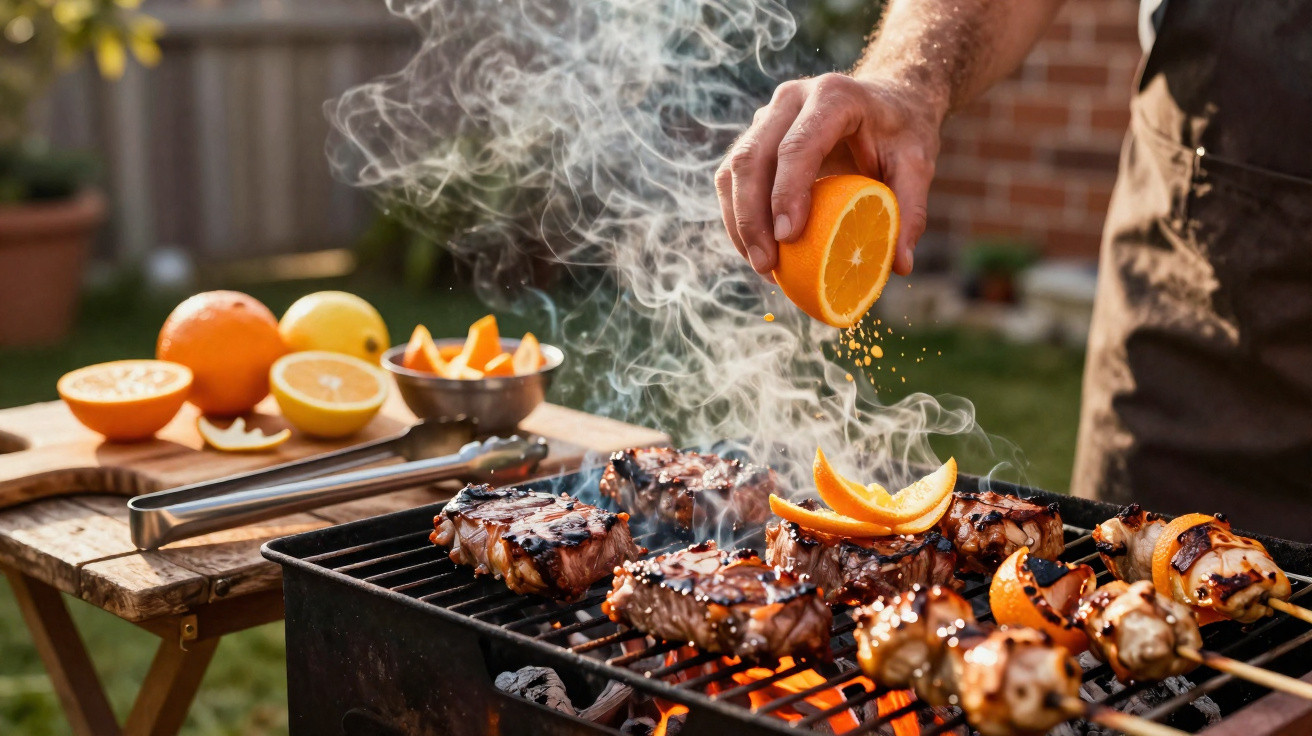
Using orange bagasse on hot coals is becoming increasingly popular with barbecue cooks who want to shift the smoke profile and aroma of their grill without relying on artificial seasonings. The method relies on the slow burning of still-damp bagasse, which releases essential oils and citrus aromatic compounds. These mingle with smoke from wood or charcoal and settle on the meat’s surface, leaving a gentle, distinctive fragrance.
How does orange bagasse change the smoke and the meat’s aroma?
When orange bagasse meets the intense heat of the embers, the pulp dries out quickly, while the white pith and peel give off vapours rich in limonene and other terpenes. Those compounds dissolve into the fat rendered from the meat, altering how aroma and flavour are perceived without covering up the natural taste.
Placed onto a brazier that is already glowing with live embers, the bagasse first dries and then begins to toast, producing a thin, pale, fragrant smoke. Unlike the smoke created when fat burns directly in the fire, this tends to be cleaner, with less bitterness and less of a burnt smell-ideal for anyone who prefers a barbecue that feels lighter.
Which types of meat work best with orange bagasse?
This approach is most effective with meats that have a moderate to high fat content, because fat readily captures and holds citrus aromas. Beef cuts such as picanha, flank steak, sirloin and ribeye (ancho), as well as pork pieces with a fat cap-such as coppa (copa lombo) and ribs-typically respond very well.
With poultry and fish, a little more restraint is needed so the original flavour is not overwhelmed. Marinated chicken (drumstick, thigh and wing) takes the smoke nicely, while fattier fish such as salmon cope better with a citrus lift than very delicate fish.
- Fatty beef: intensifies the citrus perfume while keeping the meat flavour prominent.
- Pork: pairs well with lightly sweet, fresh notes, especially ribs and bone-in cuts.
- Seasoned poultry: absorbs the smoke well when already marinated or pre-seasoned.
- Fatty fish: calls for a moderate amount of bagasse and a shorter time exposed on the grill.
When is the best point in the barbecue to add orange bagasse to the coals?
When you add bagasse to the coals directly affects both the strength and the character of the aroma that reaches the meat. The most common timing is once the fire is properly established, with glowing embers and almost no flames, because the heat is steady and there is less chance the bagasse will scorch too fast.
To avoid thick, dark smoke, drain the bagasse so there is no excess juice, then add it in small portions spread across the embers. Dumping in a large quantity at once can smother the fire, drop the cooking temperature and create heavy smoke, which removes the subtlety of the citrus effect.
Which other citrus peels can you use without making the meat bitter?
Beyond orange, other citrus peels can also reshape barbecue smoke with interesting results. Tahiti lime, lemon, tangerine and even grapefruit offer different aromatic directions-from sharper, fresher notes to softer, sweeter perfumes-driven by the oils in the peel.
To prevent bitterness, use peels sparingly, keep them positioned on the embers, and manage how long the meat is exposed to the smoke. Combining small amounts of different citrus types-using orange as the base, with lime or tangerine in smaller quantities-helps produce a balanced aroma that is noticeable without taking over the main flavour of each cut.
Comments
No comments yet. Be the first to comment!
Leave a Comment