
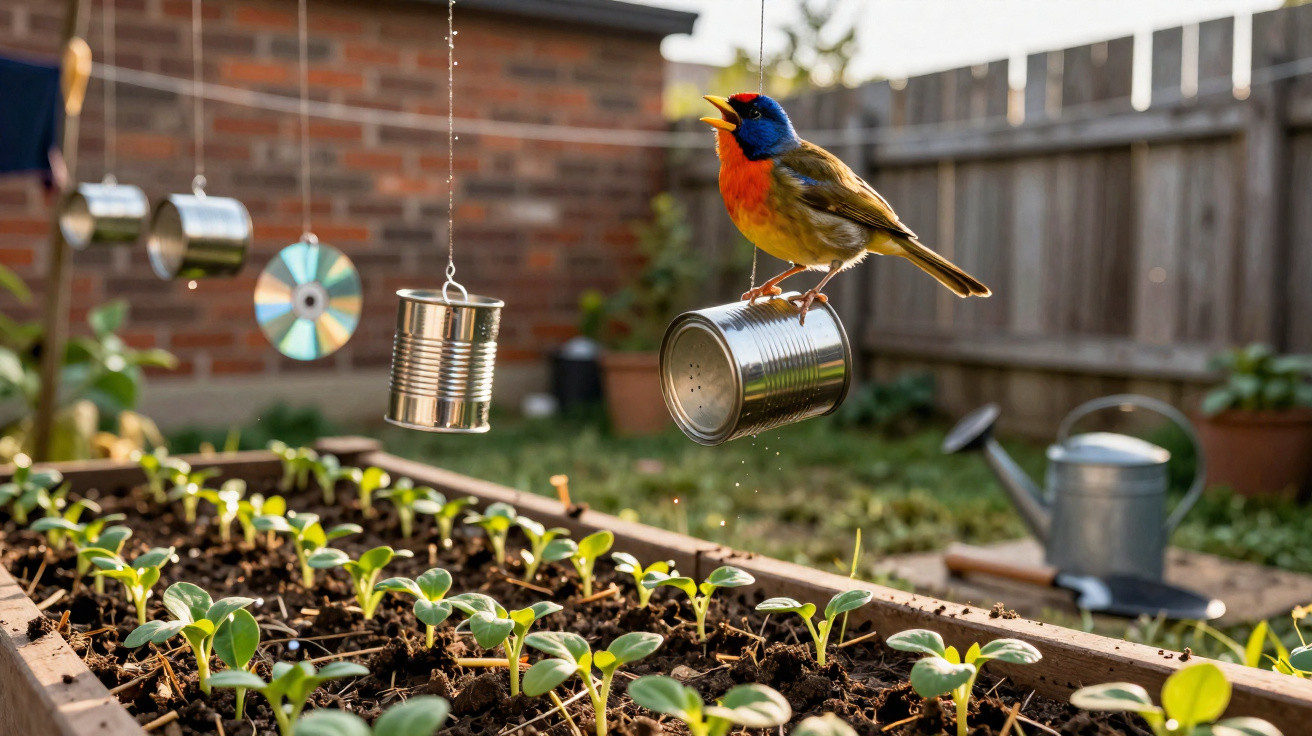
The unmistakable call of this bird can point to meaningful shifts around the home environment and bring positive energy that surprises many… Read more
Looking after a home vegetable patch takes steady effort, especially when it comes to keeping your raised beds safe. A classic, low-impact approach is to hang up aluminium cans, creating a brilliant homemade scarecrow that discourages hungry birds. It is a long-standing trick that protects your seedlings in a completely eco-friendly way.
How do empty cans work in raised beds?
When a breeze catches metal containers suspended near your plants, something very effective happens. As they swing, they create continuous movement, which makes flying animals think twice about landing. This straightforward action helps stop birds from ruining crops you have grown with such care.
On top of the physical swaying, the cans also make a gentle sound that interrupts the stillness of the garden. Birds interpret the metallic noise as a warning sign and change direction. It is a traditional method that drives off intruders without causing any harm.
The main triggers produced by this DIY system in your beds are:
- Ongoing motion created by the force of the wind.
- Strong flashes of light on the aluminium surface.
- Small clinking sounds caused when the items tap against each other.
Why does reflected light frighten animals?
Because the cans are shiny, they bounce sunlight back intensely, sending bright flickers across the vegetable patch. Those sudden flashes disrupt birds’ vision and make landing difficult. As a visual deterrent, this recycled material is extremely effective in domestic raised beds.
Small birds have very sensitive eyesight and tend to avoid places with sharp changes in brightness. When they notice the glare, they often treat it as a sign that a predator could be nearby. That is how the beds stay fully intact, thanks to clever use of this resource.
Below is a video from the Horta Mineira YouTube channel that explores the points covered in this topic in more depth:
What are the benefits of reusing materials?
Repurposing discarded cans cuts down on waste and supports a strong eco-conscious mindset in the garden. It turns everyday household leftovers into practical tools that actively protect local crops. Your budget also benefits from the real relief of free, make-at-home solutions.
Beyond saving money, the approach draws on traditional know-how that favours simple answers to common growing challenges. That link to the past reinforces sustainable management that respects living nature. In practical terms, you can see results within days, with a more healthy harvest.
Sustainable management in the garden
Recycled materials
Key elements for building protective visual and sound barriers:
- Clean, empty aluminium containers.
- Strong line or cord for hanging.
- Sturdy wooden or metal supports.
How do you install it properly in the garden?
Putting it together starts with choosing a smart spot where airflow is frequent. Hanging the set-up at higher points increases the reach of the sun’s reflections. With thoughtful placement, you cover a wider area and protect the whole space more effectively.
Using durable nylon line helps the system stand up to changing weather without snapping. Leaving the right gap between pieces allows light impacts that create the ideal metallic sound. In this way, your vegetable patch stays protected without complex repairs or extra costs.
Key points to watch during installation include:
- Choosing string or nylon line that is highly hard-wearing.
- Positioning the cans at the highest points of the plot.
- Tying everything securely to prevent falls during strong storms.
Why do new seedlings need protection?
New seedlings are particularly delicate and can be badly affected by wildlife in raised beds. A single peck can stop healthy growth and set back the entire planting. That is why applying this traditional trick helps preserve young leaves with complete safety.
Ensuring plants reach maturity without physical damage greatly increases your chances of a successful final harvest. Smart use of recycled materials keeps birds away while maintaining biological balance. As a result, your bed thrives with plenty of abundance and genuine harmony.
Comments
No comments yet. Be the first to comment!
Leave a Comment