
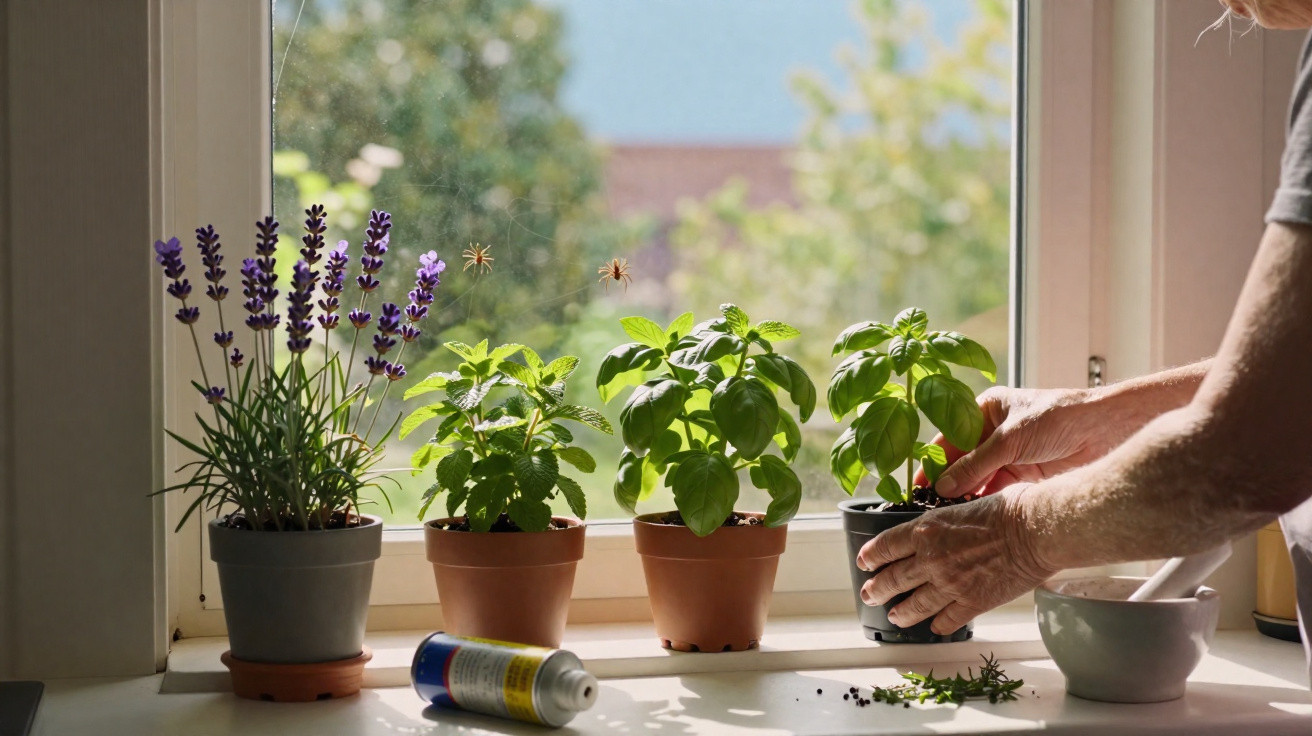
When spring sunshine starts to feel stronger, many people throw the windows wide open - and the fresh air often brings a few unwanted visitors with it. Spiders suddenly appear on the walls, spin webs in the corners and stubbornly stay put. While plenty of people now reach straight for insect spray, earlier generations relied on a surprisingly simple, eco-friendly trick: carefully chosen herb pots placed directly on the windowsill.
Old-fashioned home remedies instead of toxic spray: how herbs block a spider’s route
Shelves packed with sprays in DIY shops can make it seem as though nothing works without chemicals. Yet many of these products can affect indoor air quality, pets and even beneficial insects. By contrast, Grandma’s approach managed without hazard warnings or goggles - and it even smells pleasant.
"Certain herbs give off fragrance compounds that people find pleasant, but that spiders and many insects can’t stand at all."
Three plants have proved particularly effective:
- Lavender
- Mint
- Basil
Their leaves are rich in essential oils. As these disperse into the air, they create a kind of scented barrier. For us, it’s a hint of Provence or a summer garden - for eight-legged crawlers, it’s an unmistakable stop signal.
Why spring is the perfect time for the “spider barrier”
Towards the end of March and throughout April, many plants begin their main growth phase. That’s exactly when it makes most sense to pick up lavender, mint and basil. Days get longer and temperatures rise, but the really intense heat hasn’t arrived yet.
That means:
- enough light for strong growth on the windowsill
- a lower risk of roots drying out than in mid-summer
- protection in place before spiders become truly active in summer
If you buy a few sturdy young plants now (or grow them on yourself), you’ll have a dense, fragrant wall of herbs in front of the window within a few weeks - and noticeably fewer spider webs around the frames.
Lavender: Mediterranean fragrance, a clear message to spiders
How lavender leaves spiders disorientated
Most people know lavender as an ornamental plant or as scented sachets in a wardrobe. Behind its romantic look is a rather tough deterrent. The essential oils in lavender can act directly on the sensory organs of many insects and spiders.
"The intense lavender scent overrides the subtle smell and vibration cues that spiders use to orientate - they simply turn around."
That’s why many older people used to place pots of lavender right on the windowsill or out on the balcony. The aroma drifts outside, settles like an invisible veil in front of the opening and makes the route through far less appealing to the animals.
How to help lavender thrive in a pot on the windowsill
Lavender is tougher than many people think - as long as a few basics are right:
- Very free-draining compost: ideally mix potting compost with sand or perlite.
- Minimal watering: only water once the top layer of compost is genuinely dry.
- Lots of light: a sunny windowsill or a south-facing balcony is ideal.
If you raise the lavender pot slightly - for example on a saucer or a small stand - you improve air circulation. That helps prevent waterlogging and spreads even more fragrance towards the window opening.
Mint: a blast of freshness against crawlers
Why the menthol smell is so off-putting
You can smell mint from metres away - and that’s precisely the point. The leaves contain plenty of menthol, a compound that strongly irritates the sensors of many small creatures. To us it’s refreshing; to spiders it’s simply too much.
As soon as they enter the scented zone, the powerful smell works like a warning marker: this is not a suitable place to settle - better to retreat. In effect, the window frame becomes an invisible boundary.
Keeping mint under control - without losing its effect
Mint has a habit of taking over. On a windowsill it’s easy to manage, provided it gets its own pot.
- Choose a deep pot (at least 20 cm).
- Use standard potting compost and keep it lightly moist.
- Don’t place it right next to delicate herbs, as the shoots like to “wander” across.
If you harvest the tips regularly - for tea, flavoured water or cooking - you encourage bushier growth. More leaves mean more scent, which means a stronger deterrent effect.
Basil: kitchen favourite and a hidden spider deterrent
Why basil does more than improve tomatoes
Basil is seen as a classic pasta herb, but it can do far more. Its thick, glossy leaves contain complex aroma compounds that confuse many crawling insects. Combined with lavender and mint, it creates a varied scent mix that spiders find hard to make sense of.
"The slightly peppery basil scent completes the fragrance barrier and makes the window area finally unattractive to spiders."
Care tips for long-lasting basil on the windowsill
Basil may seem delicate, but it’s easy to keep going if you follow a few rules:
- Bright, but not scorching light: morning or evening sun is ideal.
- Water regularly: keep the compost slightly moist, but pour away water from the saucer.
- Pinch out the tips: this helps the plant branch and produce new leaves.
If you want basil to stay fresh over time, try to stop it from flowering. Once it does, the plant puts much of its energy into seeds; the leaves become smaller and tougher - and the fragrance strength drops.
The ideal anti-spider line-up on the windowsill
How to combine the three herbs for best results
The trio works best when it forms a genuinely continuous row in front of the window opening. One possible arrangement:
| Position | Plant | Benefit |
|---|---|---|
| Left | Mint in its own pot | Strong scent, quickly grows dense |
| Middle | Lavender | Long-lasting fragrance source, decorative flowers |
| Right | Basil | Aromatic addition, useful in the kitchen |
Keep gaps on the windowsill as small as possible so there’s no “hole” in the scent protection. With wider sills, it can be worth placing two to three rows, slightly staggered.
Practical notes, risks and added benefits
What to consider with children, pets and allergies
Essential oils may be natural, but in high concentrations they can irritate sensitive people or animals. If you have toddlers, cats or easily irritated airways at home, it’s sensible to test gradually which plant is well tolerated.
- If headaches or irritation occur, move individual pots further away.
- Watch pets: if they constantly lick the leaves, place the plant higher up.
- If there are allergy sufferers in the family, ask in advance whether they even like lavender and the rest.
Compared with chemical sprays, these risks remain low even when several pots are in the room. The fragrance compounds are released more slowly and disperse in a more natural way.
More benefits than spider protection alone
The herbs bring several advantages at once:
- a fresh scent instead of an artificial perfume note
- a free ingredient for cooking and tea
- a visual upgrade for both exterior and interior
- deterrence not only for spiders, but also some mosquitoes or ants
If you enjoy cooking, you’ll have herbs within easy reach right by the window. A few mint leaves in water, a little basil over pasta, a sprig of lavender to dry - it’s a way to get multiple benefits at once, without a spray can.
There’s also an interesting psychological effect: many people who line their windowsills with such herb combinations report feeling far more relaxed about leaving the window open at night in summer. The idea that a scented row of plants is standing guard in front of the glass takes a significant edge off any fear of spiders.




Comments
No comments yet. Be the first to comment!
Leave a Comment