
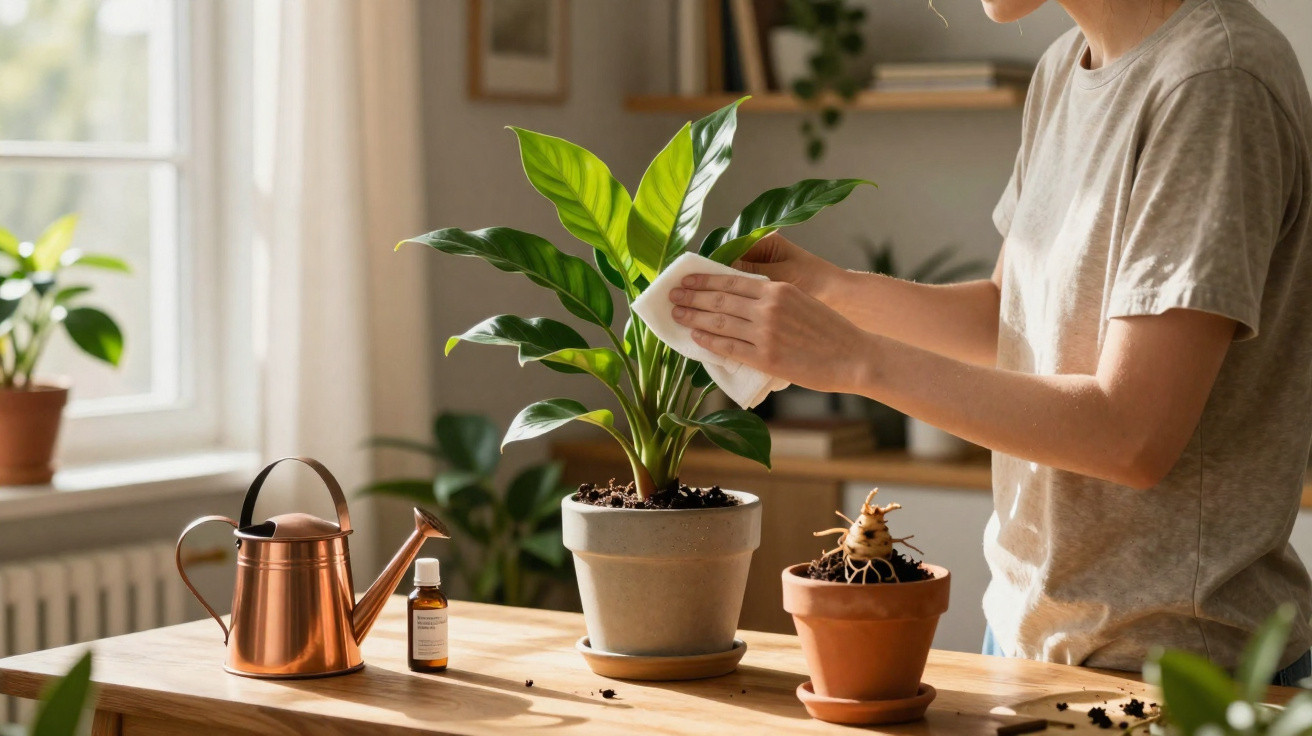
A modest-looking houseplant really comes into its own in March - if you act smartly now.
Zamioculcas zamiifolia, better known as the ZZ plant, has a reputation for being “indestructible”. That very reputation is why so many people underestimate it. Yet March is the month that determines whether it merely plods along until autumn - or produces a dense sea of glossy leaves. With a few targeted tweaks, you can set it up for strong, healthy shoots rather than limp, floppy stems.
What makes the ZZ plant so special
Zamioculcas comes from East Africa and is used to sparse conditions. Its thick rhizomes store water, and its leaves are tough, leathery and resilient. Indoors it typically reaches 50 to 100 centimetres in height and, even then, holds its shape remarkably well.
| Latin name | Zamioculcas zamiifolia |
| Common names | ZZ plant, Zamioculcas |
| Size | 50–100 cm tall, 40–60 cm wide |
| Position | Bright, indirect light to partial shade; no scorching sun |
| Temperature | At least 12 °C; strictly a houseplant |
| Leaves | Evergreen, thick, dark green, slightly glossy |
“Between February and the end of March, the ZZ plant switches from winter mode into growth - if you respond now, you’ll get the most out of it.”
1. More light - but without sunburn
Many people park a ZZ plant in the darkest corner. It will survive there, but it won’t put on much growth. For robust new shoots, it needs bright, indirect light.
- An east- or west-facing window is ideal, with a sheer curtain or a little distance from the glass.
- Move the pot closer to the window gradually - a small shift every two to three days - instead of relocating it all at once.
- Direct midday sun on a windowsill can scorch the leaf tips and cause brown patches.
You can spot stress from excessive sun when the leaves on the window side begin to fade or turn brown. If the foliage looks very dark yet the stems become long and thin, the plant is short of light - in that case, move it to a brighter spot slowly.
2. Clean the leaves - a free growth boost
Over winter, the finest dust settles on the leaves. It sits like a grey film on the surface and slows photosynthesis.
March is the perfect time for a quick care routine:
- Wipe each leaf with a soft microfibre cloth or a slightly damp (well-wrung) sponge.
- Avoid washing-up liquid and leaf-shine sprays - they can leave a residue and clog the pores.
- Check the undersides too, as that’s where most dust often collects.
“Clean leaves reflect light better - the plant looks fresher immediately and uses every ray of sunshine more efficiently.”
3. Watering in spring: check more often, water less
After winter, the soil surface dries faster, while the centre of the root ball often stays cool and damp. That’s exactly where the risk of root rot lies.
Here’s how to judge the right amount of water:
- Push a finger 2–3 centimetres into the compost. If it still feels damp, don’t water.
- Alternatively, insert a wooden stick (or a chopstick). If compost clings to it, there’s still enough moisture.
- Only water once the top layer has clearly dried out.
In a normally heated home, one watering every 10 to 15 days is usually enough. The ZZ plant copes with dryness far better than it does with constantly wet compost. Yellow, mushy stems are often a sign of overwatering, not thirst.
4. Start feeding in March - but with a light touch
As soon as the days lengthen, Zamioculcas gets going again. That’s when it benefits from nutrients - just not too much.
- A standard liquid feed for foliage (green) plants is perfectly adequate.
- Use only half the dosage stated on the bottle.
- Feed roughly every 3 to 4 weeks from March to October.
- Never apply fertiliser to bone-dry compost; water lightly first.
This plant originates from fairly poor soils. Overfeeding makes growth soft and overly long. The aim is short, sturdy, richly green stems - best achieved with small, regular doses.
5. Check the roots: does it really need repotting?
In spring, many people automatically reach for a bigger pot. With Zamioculcas, that can be a mistake, because it often prefers being slightly pot-bound.
How to tell whether it needs a new home:
- Gently squeeze the sides of the pot and ease the root ball out.
- Do the rhizomes look firm, pale and plump, with a bit of compost still between them? If so, put it back into the same pot.
- Have the roots become so vigorous that the pot is deforming, or does the compost dry out completely within two to three days? Then it’s getting tight.
If that’s the case, a slightly larger container makes sense:
“Choose only 2 to 3 centimetres more in diameter - oversized pots hold too much water and increase the risk of rot.”
A drainage layer of expanded clay pellets or coarse gravel at the bottom helps prevent waterlogging. On top, use a loose, free-draining houseplant compost mix, ideally with a little sand or perlite.
6. A small spring tidy-up instead of a drastic cut
The ZZ plant grows from its rhizomes, not from existing stems. Cutting stems back won’t trigger fresh growth - it simply ruins the plant’s shape.
In March, a gentle tidy-up is enough:
- Cut only yellow, soft or clearly damaged stems right at the base.
- Use clean, sharp tools to make smooth cuts.
- Rotate the pot by a quarter turn each month so all sides receive similar light.
With a bit of luck, you’ll spot delicate, pale green new shoots near the rim of the pot or between older stems. At first they can look slightly translucent - a clear sign the plant has shifted into growth mode and that your care is on track.
How to spot problems early
If you consciously check your ZZ plant once a month, you can avoid a lot of damage. Typical warning signs include:
- Long, thin stems: too little light - move it to a brighter position gradually.
- Yellow, soft shoots: usually too much water - let it dry out longer and check the pot.
- Brown patches on the sunny side: sunburn - move it a little further from the window.
- No new shoots for months: often insufficient light or a consistently cool spot below 18 °C.
Why the ZZ plant is ideal for busy people
This species suits anyone short on time. It tolerates missed watering, fluctuating humidity and even the occasional weekend with the blinds closed. If you travel a lot for work or you’re furnishing your first flat with plants, Zamioculcas is a tough, reliable housemate.
It also filters pollutants from the air, and its dark, glossy green looks calm and structured - a visual counterbalance to screens, cables and grey office furniture.
Extra tips for experienced growers
If you want to experiment more with Zamioculcas, you can divide older plants. When repotting, separate individual rhizome pieces with at least one healthy shoot and pot them up on their own. They grow slowly, but develop into exceptionally sturdy plants.
It’s also worth playing with placement: in a bright office, the ZZ plant grows dense and compact; in a slightly darker hallway, it tends to become taller and more elegant. That way, you can intentionally use light levels to shape the look - from a compact “green sculpture” to a slim, tall statement plant beside a sideboard.


Comments
No comments yet. Be the first to comment!
Leave a Comment