
For months it’s easy to miss when it stands bare, but then spring arrives and it suddenly hangs in the garden like a pale cloud – bringing life to every corner.
Many hobby gardeners hunt for plants that are low-effort, draw in insects, provide food for birds and, on top of that, add something to the kitchen. There is exactly such an all-rounder that has grown around our homes for centuries – yet it’s often dismissed as “dull shrubbery” and pushed to the far edge of the plot.
An old familiar with a new reputation: the black elder
This plant is the black elder, botanically Sambucus nigra. It’s a native shrub found across Central Europe almost everywhere: along field edges, behind old barns, beside railway embankments and in long-established gardens. Plenty of people recognise it in passing, but only a few make use of everything it can offer.
Through winter, elder is barely noticeable. It stands leafless, its twigs looking almost see-through, and it often disappears from view behind a shed or within a mixed hedge. Once it’s been planted there, it’s easy to forget about it.
"As temperatures rise, the ‘invisible shrub’ turns into a glowing cream cloud that magically attracts bees, butterflies and birds."
From late spring, elder decorates itself with large, creamy white flower heads with a gently sweet scent. These blooms are not only striking; they act like a beacon for wild bees, honeybees, hoverflies and butterflies. In the garden, the crown can look like a bright lamp, lifting even the darkest corner.
Quick profile: how black elder grows
| Feature | Details |
|---|---|
| Latin name | Sambucus nigra |
| Common name | Black elder |
| Size | about 3–6 m tall, 2–4 m wide |
| Position | sun to partial shade |
| Winter hardiness | down to about -20 °C |
| Foliage | deciduous |
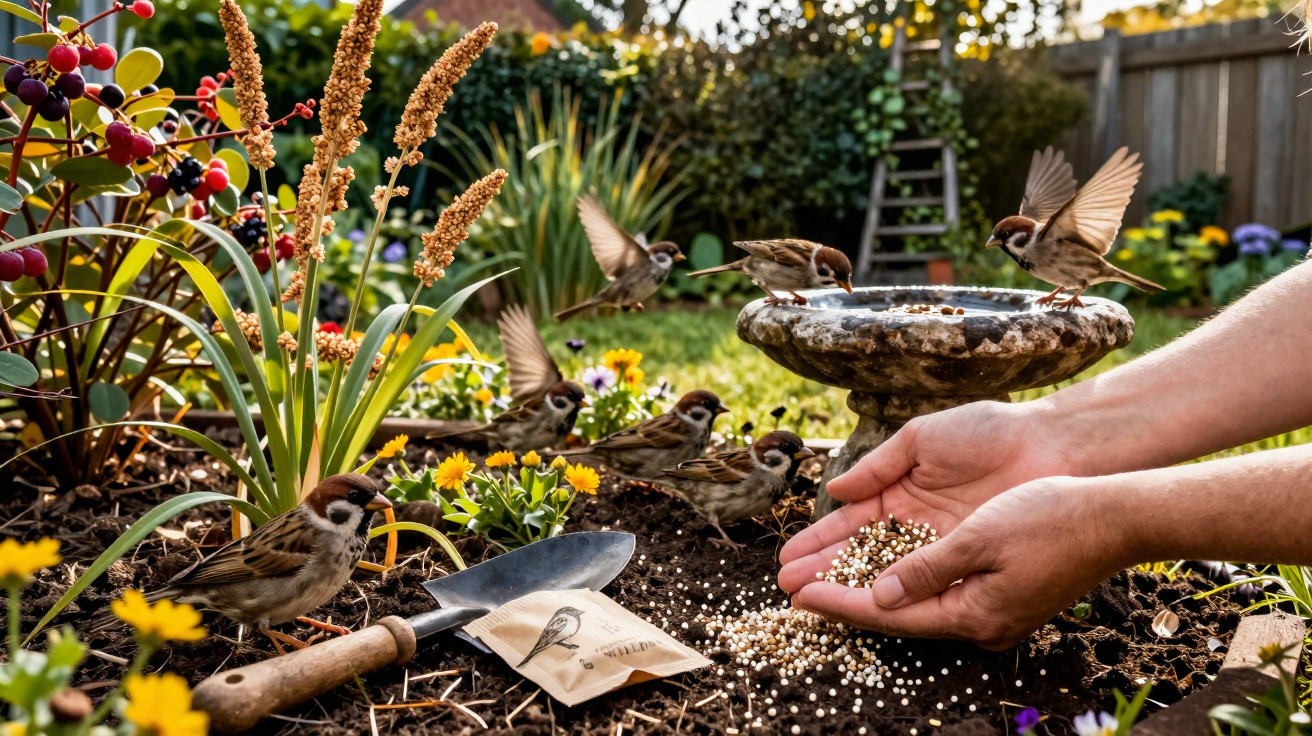
In summer, those flower heads become dense clusters of deep purple to black berries. For blackbirds, thrushes and many other bird species, it’s effectively a buffet. If you want more life in the garden, that alone is a strong argument for elder.
Why planting right now makes such a difference
The key to a vigorous, long-lived elder is a good start. When shrubs are dropped in “quickly sometime” into a hole that’s too small, they often limp along for years. Plant with intent in spring and you set the foundation for a healthy giant that can last for decades.
March or April is ideal, while the soil is still moist and not dried out. That gives the shrub time to build roots before the first hot summer arrives.
The perfect spot in the garden
- Plenty of light: Choose sun to partial shade so flowers and berries are produced generously.
- Enough space: Elder spreads; place it towards the edge of the garden, along a hedge or behind a seating area.
- A slightly moist start: Fresh soil that isn’t waterlogged helps it establish.
- Remember ornamental forms: Yellow- or purple-leaved varieties hold their colour better with sufficient sun.
Plant now and you’ll usually see clear progress in the first year. Elder grows relatively quickly, especially where the soil is well supplied.
How to plant elder properly
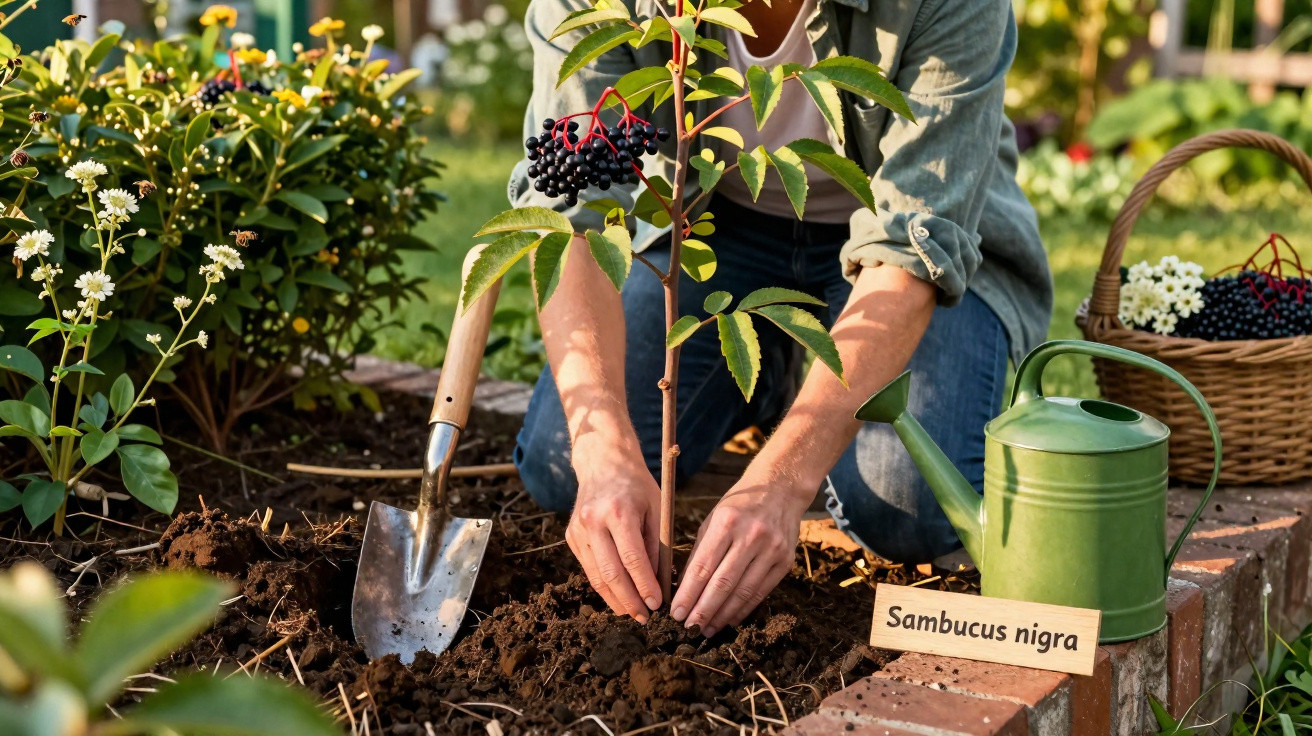
Planting itself is straightforward, but small details make a big difference. Use this step-by-step approach:
- Dig the planting hole: At least twice as wide as the root ball, and preferably a little deeper.
- Improve the soil: Mix in well-rotted compost to provide nutrients for a strong start.
- Set the shrub in place: Plant at the same depth as it was in the pot and gently loosen the roots.
- Water in well: Give it a thorough soak so soil and roots settle together.
- Add a mulch layer: Cover the surface with bark mulch, grass clippings or leaves to help retain moisture.
"If you plant thoroughly at the beginning, you save yourself labour-intensive care in later years."
In exposed, windy positions, a support stake can be worthwhile for the first few years so the shrub grows upright and young shoots don’t snap.
Low-maintenance, but not completely hands-off
Once established, elder is undemanding. It copes with frost, wind and periods of heat – particularly when its roots have reached deeper into the soil. Even so, it shouldn’t be left entirely to its own devices.
Sensible pruning
- In early spring, cut out dead wood.
- Remove branches that cross or grow inward.
- Every few years, take out a few older stems close to the ground to encourage fresh new growth.
If you prefer a more drastic approach, you can cut elder back hard in late winter. The shrub will respond with strong new growth from older wood. Heavy pruning delays flowering a little, but the crown later looks denser and fresher.
One shrub for insects, birds and the kitchen
Elder is more than a pretty spring display. It brings several benefits at once: habitat, food source and a pantry in one.
The flowers: fragrance, decoration and flavour
Harvest the large flower heads when most blossoms are open but still fresh – ideally in dry weather. That’s when the aroma is at its best.
- Elderflower cordial: A classic for water, sparkling wine or desserts.
- Fried flower heads: Dipped in batter and crisped up in hot fat – a nostalgic garden treat.
- Fragrant vinegar: Steep flowers in a mild vinegar to make a refined salad accompaniment.
"Elderflowers almost automatically give a garden a ‘handwritten touch’, because the scent becomes directly associated with your own home."
The berries: bird food and jars in the cupboard
When the berries turn very dark in late summer, the shrub effectively opens “bird season”. Blackbirds, starlings and other species can strip whole clusters, often within just a few days.
If you want to harvest for yourself, let the berries fully ripen and process them cooked, for example into:
- purée or jelly
- juice for hot drinks
- fruity sauces for sweet dishes
Raw berries should only be eaten in very small amounts, as they can be mildly unpleasant for the stomach. Cooking removes a large part of the problematic compounds.
Important caution: confusing it with a poisonous lookalike
If you’re planting elder, you’ll have identified it safely in the garden. When foraging in the wild, though, it pays to look closely because there is a dangerous plant that can be mistaken for it: dwarf elder, also known as a poisonous relative.
Typical differences:
- Growth habit: Black elder is a woody shrub or small tree; the lookalike is more herbaceous and lower.
- Where flowers appear: On black elder, flowers usually sit at the ends of shoots; on the poisonous relative they later tend to appear more from the sides.
- Smell: Rub the leaves or stems and the poisonous lookalike has a much more unpleasant odour.
If you’re unsure, it’s safer to pick only from your own shrub in the garden that you’ve identified with confidence. That keeps the risk low and makes using it far more relaxed.
Using elder effectively in garden design
Elder works brilliantly as a backdrop shrub: it takes centre stage in spring and summer, while in winter it leaves space for structure such as fences or walls. It combines particularly well with:
- flowering perennials such as phlox, coneflower or asters
- other native shrubs in a mixed hedge
- wild perennials and grasses for a natural, slightly untamed feel
If you enjoy watching birds, plant elder within view of the terrace or living room. By late summer at the latest, it turns into lively nature TV.
Getting more value from a native shrub
Elder is also ideal for family projects: children can gather flower heads, help make cordial or pick berries. That creates a direct link between garden and kitchen that goes far beyond ornament alone.
At the same time, a single shrub boosts biodiversity in your immediate area. Insects gain nectar and pollen, birds get food and cover, and people get flavour and shade. Planting now puts another building block in place for a more vibrant, resilient garden – and you’ll be rewarded as early as next spring with an unexpected cloud of blossom.
Comments
No comments yet. Be the first to comment!
Leave a Comment