
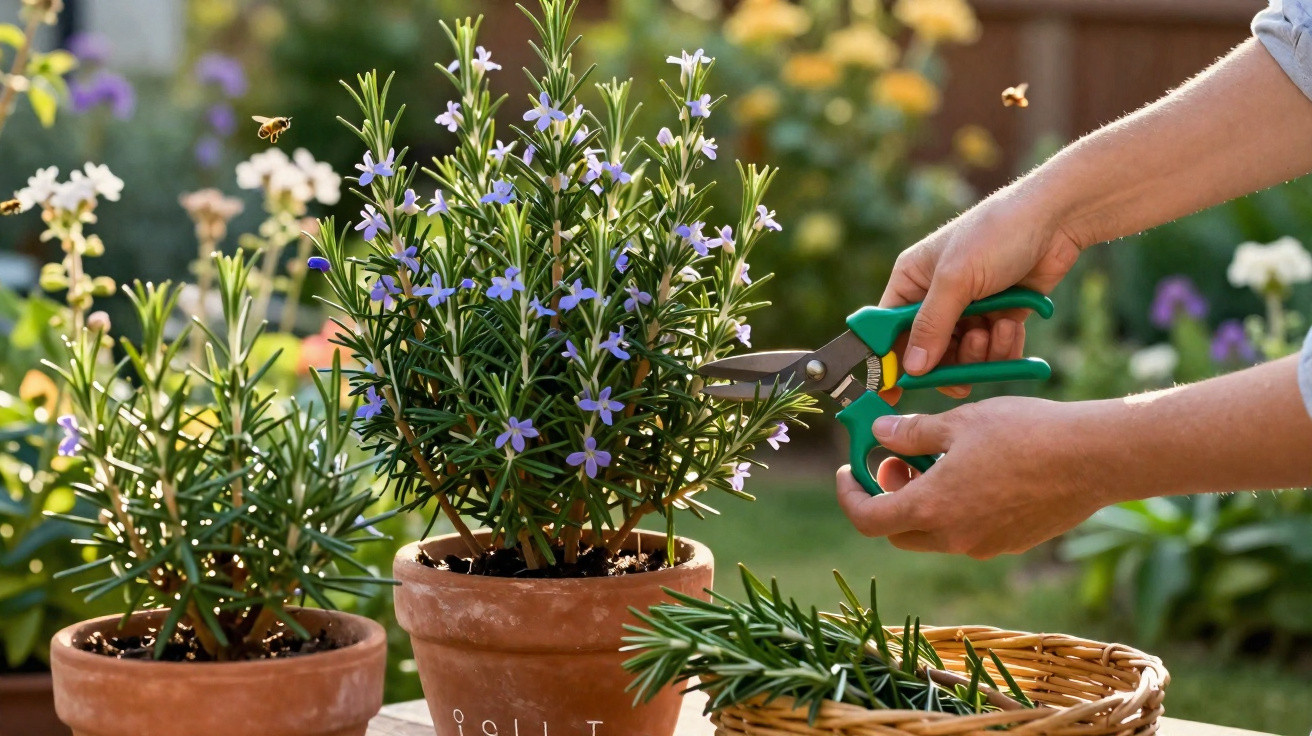
Once winter has passed, rosemary often looks ragged in the bed – and one single cut now can decide its fragrance, fullness and flowering.
Many amateur gardeners let their rosemary grow unchecked for years. The result is predictable: long, woody shoots, bare patches at the base, and flowers appearing only right at the top. March offers a one-off opportunity to turn the plant into a compact, aromatic, flower-filled shrub with a deliberate prune - as long as the shears go in the right place.
Why pruning rosemary in March matters so much
Between March and April, rosemary moves into a fresh growth phase. At this point it pushes out new shoots and seals pruning wounds quickly. In that exact window, the stems respond particularly well to being cut back.
If you prune now, you direct the plant’s energy into young, fresh growth. These younger shoots carry far more buds than older, woody material. That’s how you end up with a rosemary plant that doesn’t just shoot upwards, but produces flowers all over the shrub.
"A cut in March encourages masses of young flowering shoots - without weakening the rosemary."
If, instead, you wait until well into spring, the rosemary has already invested its reserves in long stems. The base becomes bare, the woody framework looks tired, and most flowering shifts to the tips. Visually the shrub becomes tall yet sparse - and bees find nectar only in the upper part.
In very cold regions, the ideal moment moves slightly later. There it’s better to start only when the worst frosts have passed. Newly cut shoots are more sensitive to cold, so a quick glance at the forecast can prevent a lot of frustration.
The ideal cutting height: how far back can you prune in March?
Cut rosemary back too hard and you risk a weakened plant and disappointing flowering. A simple rule of thumb, proven in many gardens, gives reliable guidance.
"Remove no more than one third of the total height in one go - rosemary rarely tolerates more than that without problems."
So if your shrub is about 60 cm tall, trimming around 20 cm is a sensible benchmark. Go much lower and the rosemary takes longer to reshoot, with fewer flowers in the current year. A gradual rebuild over two seasons is usually the better approach.
How much to prune, depending on the rosemary’s age
- Young plants: Only shorten the soft, green tips by about 5 to 10 cm. This encourages branching and shapes a compact, sturdy bush.
- Mature rosemary in the bed (80 cm to 1 m): Take 10 to 15 cm off the shoot ends - but only where there are still needles. This keeps the height steady while making the crown dense and free-flowering.
- Rosemary in a pot or tub: Keep it a little lower than plants in the ground. That reduces stress on the roots and lowers the risk of the plant toppling or snapping in wind.
- Very old, heavily woody rosemary: Cut only in the green zone, just above small side shoots. The shears should not go into the thick, brown wood.
With older specimens especially, patience pays off. It’s safer to shorten gently in the green growth each year than to risk losing the plant to one drastic cut.
The right technique for successful rosemary pruning
Before you remove the first stem, check your tools. Rosemary copes far better with a sharp, clean cut than with crushed, ragged wounds.
- Have sharp, disinfected secateurs ready
- Prune on a mild, dry day
- Never cut during frost or prolonged wet weather
Next, focus on hitting the correct point on each shoot. You cut in green, living wood - material that bends easily, carries needles and looks juicy. Place the blade just above a small side shoot or a clearly visible bud.
Each cut triggers new growth at that point. One shortened shoot can produce two or three new, flower-ready branches. Repeat that across the plant and you’ll build a dense, rounded shrub with plenty of flower spikes.
For appearance and plant health, a gently domed shape is worth aiming for. Keeping the centre a touch higher and the sides slightly lower lets light reach the inner parts, which helps prevent rosemary from becoming bare in the middle.
"Never cut into the old, brown wood - rosemary rarely reshoots well from there."
A common mistake is not pruning at all out of caution. The plant may look big, but it loses vigour. Late autumn cuts are just as problematic: freshly shortened shoots go into winter unprepared and react badly to damp and cold.
How the right cut spreads flowers and supports insects
A well-pruned rosemary doesn’t flower only at the top. Along the young shoots, clusters of blooms form all over, bringing colour for months. For insects, that’s a generous food source at eye level.
If you reduce the shrub moderately every March, it stays vigorous for a long time. The needles remain denser, the branches stay more flexible, and the plant is less likely to split under snow or in wind. At the same time, you’ll harvest more fresh, aromatic sprigs for the kitchen.
Practical check questions before and after pruning
| Question | How to tell |
|---|---|
| Is the timing right? | No hard frost forecast, first buds visible, days noticeably brighter. |
| Cut too low? | Many cut points are in brown, bare wood, with hardly any green growth left. |
| Thinned enough? | Light reaches the centre of the shrub and no dense, matted cushions form. |
Rosemary in a pot: what’s different when pruning
On a balcony or patio, rosemary is much more restricted at the roots. That means compost dries out faster and the plant has fewer reserves for a heavy prune. A gentler approach is worth it here.
It’s usually best to keep the plant a little lower, then water well after pruning and give a light feed after a few days. That helps it start new growth without stress. If you’re growing a column-shaped rosemary in a pot, trim mainly the side shoots lightly to maintain the slim form.
Risks many people underestimate - and how to avoid them
The biggest risk when pruning rosemary is old, dark wood. Once a branch is completely bare there, it often can’t form new buds. If you cut in that section, the area can stay brown and dead; in extreme cases the entire branch dies back.
Another issue is pruning in damp, cold weather. Wounds close slowly and fungal spores have an easy route in. Choose a sunny, dry day to reduce the risk. Afterwards, it’s worth removing dead, brittle twigs from the interior so air circulates more freely.
How pruning, position and care reinforce each other
Even the best pruning won’t help much if rosemary sits in permanent shade or has constantly wet roots. Sunshine and free-draining soil are still the foundation. In heavy, persistently damp compost, the shrub becomes woody more quickly and is more prone to disease.
If you prune in March, you can also tidy up the root zone at the same time: loosen old, compacted compost in pots, repot if needed, and add a drainage layer. In the bed, a thin layer of mineral mulch helps prevent waterlogging. In this way, pruning, position and routine care work together like gears - helping rosemary produce strong new growth and abundant flowers year after year.






Comments
No comments yet. Be the first to comment!
Leave a Comment