
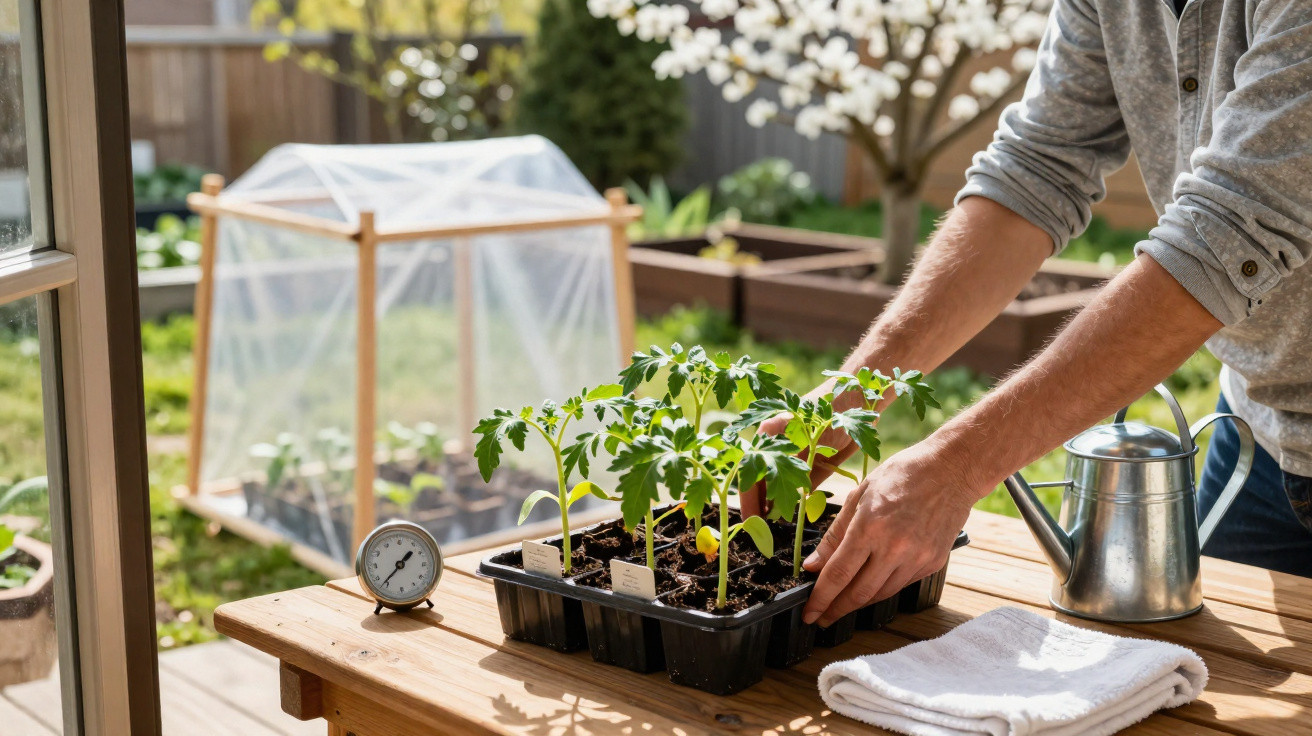
The beds are ready and the tomato plants are poised to go - yet one unglamorous step now makes the difference between a bumper crop and a frustrating flop.
Many home gardeners plant their raised tomato seedlings out far too early and with no transition period. The plants may look sturdy at first, but then they stall, sulk, or get wiped out by the first cold snap. Professional vegetable growers do it differently: they put young plants through a short “training programme” that makes them tougher, stockier, and more productive.
Why tomatoes suddenly struggle outdoors
Temperature shock between living room and garden
Tomatoes that have been started early are usually grown in a warm living room, conservatory, or greenhouse. For weeks, conditions sit at around 18 to 22 °C, with no wind and hardly any temperature swings. To the plant, it feels like permanent spring.
Move a pampered little plant straight into the bed on a bright spring day and the night often brings a harsh reality: 4, 5, or 6 °C - perhaps even a light frost. For a tomato, that’s a shock, and it throws the whole metabolism off balance.
“The abrupt change from consistently warm to changeably cool halts growth, weakens the immune system and opens the door to pathogens.”
You can see it from the outside: limp leaves, stems turning purple, or the plant simply “freezing” in place. Many gardeners assume it must be a nutrient deficiency or poor soil - but often it’s nothing more than severe temperature shock.
Soft stems that have never felt wind
Indoors there’s barely a breath of air; in a greenhouse, at most a gentle draught. Tomatoes shoot upwards quickly, their cells are water-rich, and stems stay thin and soft. It looks impressive, but it isn’t strong.
If a plant like that goes outside without preparation, a few stronger gusts can be enough for the stem to kink, or the whole plant to flatten and never really recover. In the worst case, it snaps off right above the soil.
It’s precisely this combination of temperature shock and wind stress that stops many carefully raised tomatoes from ever getting into their stride - or causes complete losses.
The professional trick is “hardening off” - and it’s simple
A few hours outside: the training programme for strong tomatoes
Vegetable growers swear by a ritual they repeat every year: they harden off their young plants. In practice, that means gradually acclimatising them to cooler air, wind, and real sunshine before they finally move into the bed.
It’s easy to fit into everyday life:
- Days 1–2: Put tomatoes outside for 1–2 hours in a sheltered, semi-shaded spot.
- Days 3–4: Increase to 3–4 hours, still protected from wind.
- Days 5–7: 5–6 hours outdoors, with a first cautious exposure to more sun.
- From week 2: In mild weather, leave them out for almost the whole day; bring them in overnight or place them under a protected cover.
During this period, the plant responds: it builds more supporting tissue, the stem becomes noticeably thicker, and the leaves develop a firmer structure. In other words, the tomato learns to handle stress without collapsing.
“Hardened-off tomatoes stand in the bed like little trees: short internodes, vigorous growth, and far fewer breakages.”
Gradually getting used to real sunlight
Light is a common and underestimated issue. Behind glass, sunshine is tame; outdoors it can be ruthless. Leaves that only know windowsill light can scorch after just one or two hours in strong midday sun.
That’s why tomato plants need light training. Helpful approaches include:
- starting with bright shade or a spot with morning sun rather than midday sun
- using a light horticultural fleece as sun protection for the first few days
- extending sun exposure step by step, based on how the leaves respond
If you go straight into full midday sun, you risk pale patches that later turn brown on the leaves - classic sunscald. The plant usually survives, but it loses energy and time.
Keep an eye on frost risk - not just for tomatoes
Check fruit blossoms in the morning
While the tomatoes are doing their training programme, quieter dramas often play out a few metres away in the garden - on cherry, plum, or apricot trees. If these trees are in full bloom, one cold night can be enough to wipe out the entire crop.
A quick early-morning walk is worthwhile. You can often tell from the flowers whether the night was too cold:
- intact flower: centre looks light and delicate, with no dark marks
- damaged flower: pistil or stamens inside are brownish to black
If you spot this kind of damage after a slight frost, take action next time there’s a cold warning: wrap small trees in fleece, protect sensitive shrubs with purpose-made covers, and water the soil under trees well in the evening to store warmth.
Take late frosts seriously
In many areas, the period around the so-called “Ice Saints” in mid-May still brings the odd night with temperatures just above - or even below - 0 °C. That’s dangerous for tomatoes, peppers, and many fruit varieties.
Experienced gardeners don’t just rely on a weather app; they watch for signs in the garden too: cold winds from the north-east, very clear nights, and rapid cooling after sunset. Staying alert lets you save a lot with simple measures: move pots closer to the house, pull tomatoes under a temporary roof, and cover beds with plastic sheeting or fleece.
Making hardening off work in everyday life
Build a temporary shelter for cool nights
Constantly carrying crates of plants in and out quickly becomes a chore. Much more practical is a small transitional shelter in the garden that stays open during the day and offers protection at night.
For a basic structure, you usually only need:
- a few wooden battens or old pallets
- clear plastic sheeting or an old window pane
- stones or boards to weigh down the cover
This creates a low box: open by day, closed at night. Tomatoes and other young plants can be grouped inside. The air still cools, but much more slowly than in an exposed bed. That gentle buffer zone strengthens plants instead of overwhelming them.
Daily routine: out, train, protect again
The key is a consistent routine over roughly 10 to 15 days:
- In the morning, as it warms up: open the cover and place plants outside in semi-shade.
- In the afternoon: depending on progress, allow more sun and a little more wind.
- In the evening before sunset: return plants to the sheltered area; close the box or move pots back against the house wall.
Only when no night frosts are forecast and the tomatoes are robust, compact plants with sturdy stems is the final move into the bed really worthwhile.
How to tell when tomatoes are truly ready to plant out
The key signals for the right moment
Rather than going by the date alone, it helps to check several factors. Good starting conditions include:
| Signal | What it means |
|---|---|
| Strong, thick stems | The plant is hardened off, wind-tolerant and less prone to snapping. |
| Short spacing between leaf axils | Compact, healthy growth rather than a leggy “houseplant”. |
| No frost warning over the next few nights | Lower risk of temperature damage and growth stalling. |
| Soil still feels slightly warm in the evening | Root zone stays steadier, helping the plant get going faster. |
Anyone who follows these points isn’t planting by the calendar, but by real conditions - and that’s exactly what separates confident self-suppliers from frustrated beginners.
Planting into the bed with confidence
When everything points in the right direction, tomatoes can finally go outdoors. Hardened-off plants can be set deeper because they form additional roots along the stem. That improves both feeding and stability.
Once the plants are established, worries about bending, collapse, or brown leaves soon fade. In their place you get a robust, vigorous-looking row of tomatoes that runs into fewer problems through the summer and, in the long term, delivers higher yields.
This small spring ritual shows just how much patience and observation pay off in the garden. Give your tomatoes two weeks of training and you’ll save yourself a lot of hassle later - and enjoy bowls of richly flavoured fruit rather than a disappointing last-minute fix from the supermarket shelf.

Comments
No comments yet. Be the first to comment!
Leave a Comment