
The first giveaway is usually the noise. A soft midday hiss from the sprinklers, droplets sitting on leaves that never needed a daily soak, and puddles appearing in spots where nothing much thrives anyway. You’re stood at the window with a coffee, watching the lawn swallow more water than the people in the house, yet by August the beds still look worn out. The water bill edges up. The ground starts to split. The plants look miserable.
Before long, you start to think it can’t just be the weather. It’s the design. Something about the way this garden was planned is quietly draining your water supply.
And you’re not the only one who’s noticed.
Your garden drinks like a leaky bathtub
Take a walk along almost any suburban street in midsummer and you can practically trace the waste without trying. Lawns cut as short as a golf green, borders stuffed with thirsty annuals, and skinny strips of grass wedged between driveway and pavement that nobody ever uses. All of it fed by the same timer, given the same long drench-regardless of the plant, regardless of the soil.
The plants don’t tell you straight away. They wait until the heat really arrives: brown patches, limp flowers, and mildew in places the spray never properly dries.
A landscape architect I spoke to described a common job: a 200-square-metre garden in a semi-arid city. Before any changes, the family’s irrigation was running at roughly 1,000 litres a day at the height of summer. The layout was simple-one flat green lawn, a few roses, and some clipped box balls pushed up against the fence. It looked great in photos, and it was painfully thirsty in real life.
Once the plan was reworked with shade trees, deeply mulched beds, and fewer high-demand plants, water use fell by almost half. Same plot. Same climate. Same family. A completely different design story.
The reasoning is frustratingly straightforward: when a garden is laid out like a showroom rather than an ecosystem, it ends up battling the climate it sits in. Shallow-rooted plants are placed in exposed positions. Lawns are stretched into full sun where groundcovers or gravel would cope better. Beds are raised where water disappears too quickly, or the soil is compacted so tightly that water can’t soak in at all.
So you make up for it with extra watering, longer cycles, and new sprinklers. What looks like a “thirsty garden” is often a layout that ignores how water actually travels through soil, shade, and roots.
Redesigning the garden so water does the work
The biggest water-saving change usually doesn’t begin with a hosepipe. It begins with a quick sketch. Grab a blank sheet and draw your plot roughly, then mark three things: areas in full sun, areas that are naturally shady, and the spots where water tends to sit after heavy rain. Don’t make it complicated-this is a five-minute map, not a technical plan.
Once those zones are visible, you can start shifting the thirstiest plants-at least on paper-into the shadier or naturally wetter areas, and keep the blazing hot spots for tough, drought-tolerant species or hard landscaping.
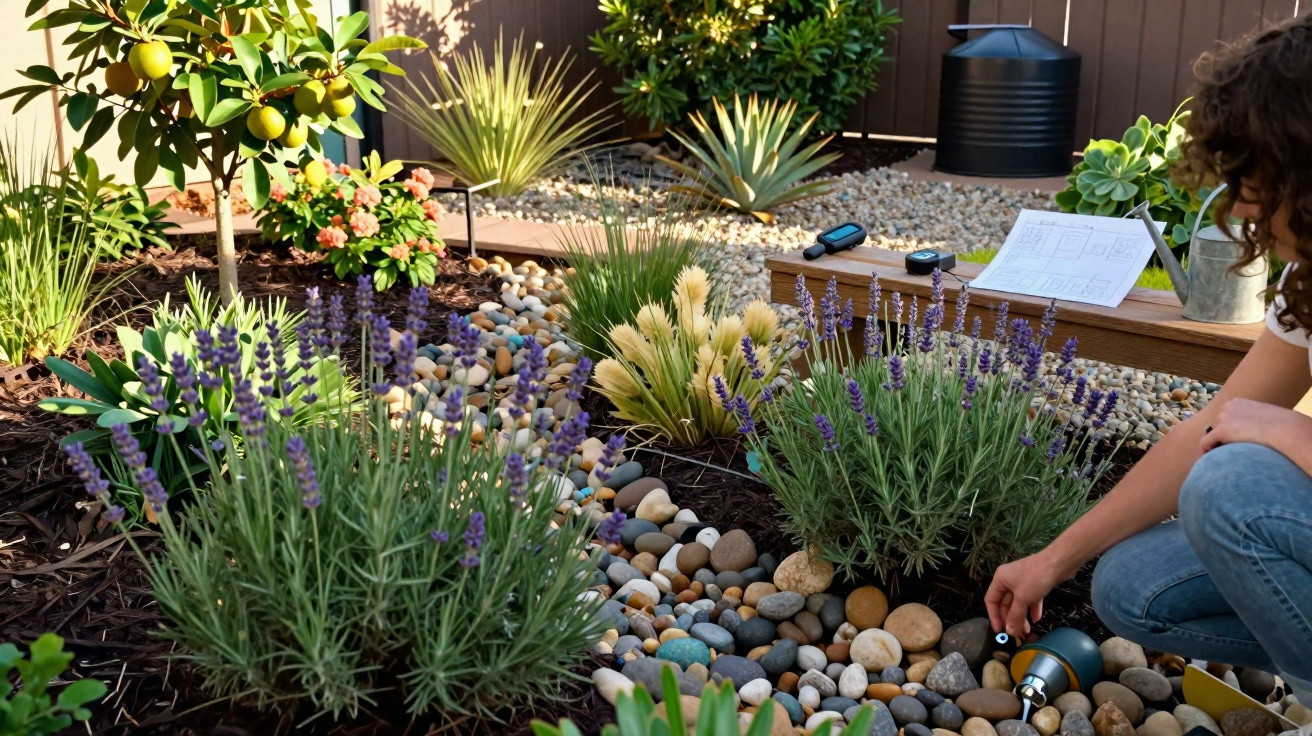
Here’s a small example from a reader near Madrid. She had a south-facing front garden that looked postcard-perfect: a bright green lawn, hydrangeas, and a line of lavender. It also used nearly as much water as her kitchen and bathroom put together. By July the hydrangeas were scorching, so she watered even more.
A designer friend suggested a bold change: reduce the lawn by half, remove the hydrangeas, and enlarge a gravel bed planted with Mediterranean perennials that genuinely enjoy heat. The footprint stayed the same, but the zoning became far clearer. A year later her lawn still looks green, the new plants are thriving, and the irrigation schedule is mostly “set and forget”.
This approach works because every plant comes with its own built-in water strategy. Some are designed for drought, with waxy leaves and deep roots. Others-hydrangeas, or roses in full sun-are drama queens. When the design lumps them all under one watering routine, something will always struggle.
So the real solution isn’t cleverer gadgets; it’s better grouping: deep-rooted trees together, sun-proof perennials together, shade lovers tucked into cooler pockets. Your hosepipe should follow the logic of your planting map, not the other way round.
The small, almost invisible habits that save thousands of litres
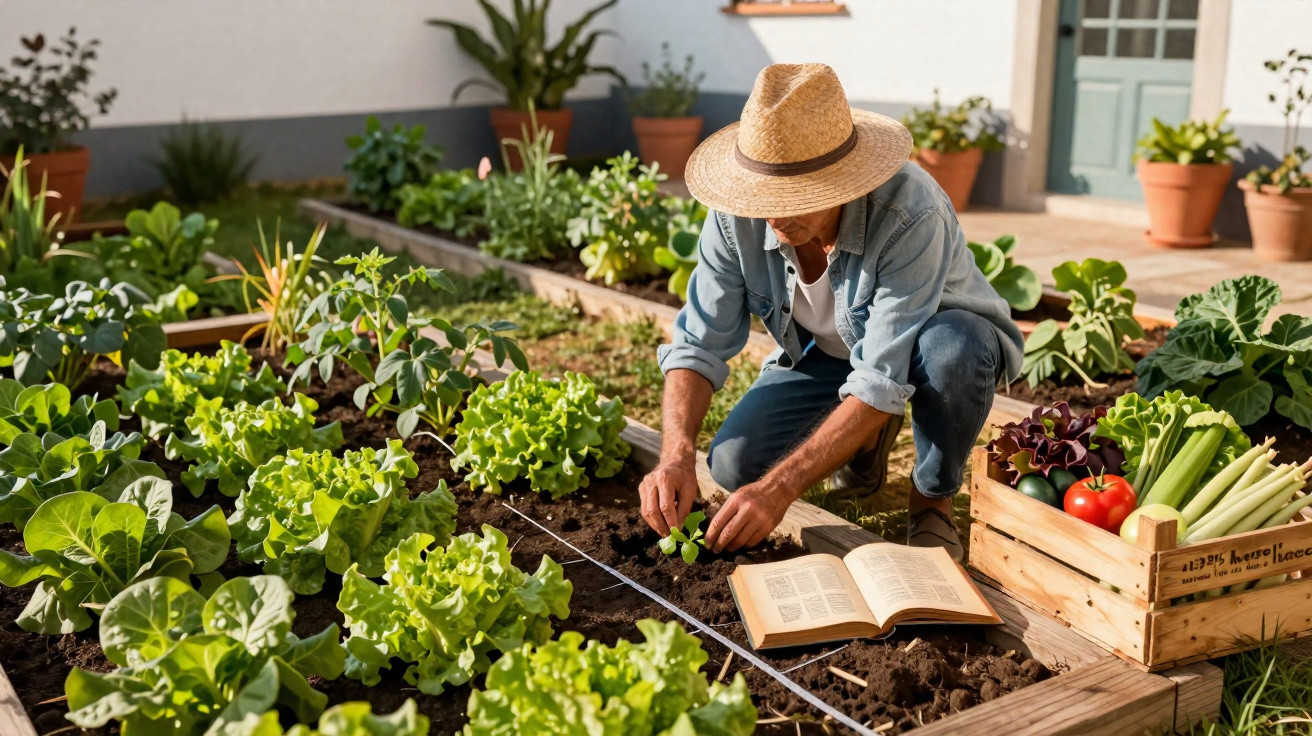
Once the overall layout is working with you, the next layer is very down to earth: soil, mulch, and roots. Think of soil as a sponge. A bare, compacted sponge sheds water. A crumbly, organic-rich sponge holds it, then releases it slowly to roots. One of the simplest ways to use less water is to feed the sponge.
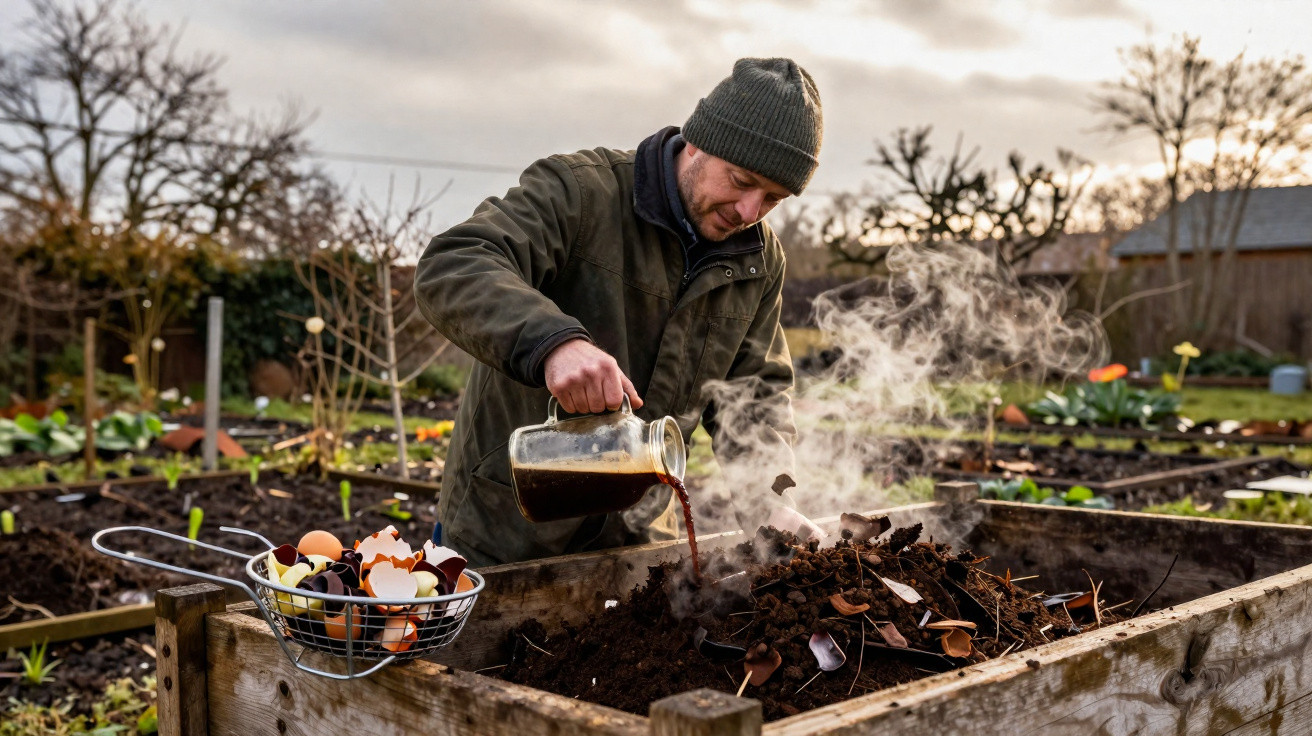
Add a thin layer of compost once or twice a year, then cover it with 5–8 cm of organic mulch: shredded bark, leaves, wood chips, even chopped-up prunings.
Plenty of gardeners skip this because mulch can look untidy or “unfinished” compared with clean, bare soil. We’ve all had that moment: you spend an afternoon weeding and you want the beds to look perfectly neat. And, honestly, nobody keeps that up every single day.
But bare soil is like leaving the fridge door open in August. Moisture escapes, the surface bakes hard, and plants are pushed into shallow rooting. Mulch keeps the ground cooler, slows evaporation, and encourages roots to go deeper-so plants can cope with longer gaps between waterings without going on strike.
“Think of mulch as your garden’s shade cloth,” says one sustainable landscaper I interviewed. “You wouldn’t sit in full sun at noon without a hat, but we expect our soil to do exactly that.”
- Mulch depth
Aim for 5–8 cm around most plants, leaving a small gap around stems and trunks. - Watering rhythm
Water less often but more deeply, so roots are trained to grow down rather than staying at the surface. - Plant choices
Choose species suited to your local climate, particularly natives that evolved with your rainfall patterns. - Smart irrigation
Drip lines laid under mulch lose less water to wind and evaporation than overhead sprinklers. - Hard landscaping swaps
Replace tiny, pointless strips of grass with permeable gravel or groundcovers that need less water.
A garden that sips, not gulps
Eventually the question shifts from “How much should I water?” to “What sort of garden am I asking this climate to support?” Water-wise design doesn’t mean giving up on beauty or living in a desert of stones. It means matching what you like aesthetically with what your weather, soil, and time can realistically sustain.
There’s a quiet kind of elegance in a border that still looks good in dry years and wet years-plants chosen because they fit the spot, not because they were discounted in spring.
You begin to notice different details: how a tree’s shade reduces evaporation, how rain gathers in a shallow swale and then seeps in slowly, how a patch of native grasses moves in the wind without needing a daily drink. The more you commit to this style of design, the less guilt you feel each time you turn on the tap.
Your garden might not look like your neighbour’s any more. That may be exactly the point.
| Key point | Detail | Value for the reader |
|---|---|---|
| Design by water zones | Group plants by sun, shade, and water needs instead of mixing everything | Reduces wasted irrigation and keeps more plants healthy |
| Improve soil & mulch | Compost and a 5–8 cm mulch layer turn soil into a better water sponge | Lowers watering frequency and protects roots in heatwaves |
| Swap thirsty areas | Replace part of the lawn or high-demand beds with climate-adapted plants or permeable hard landscaping | Cuts water bills while keeping the garden attractive and usable |
FAQ:
- Question 1 How can I tell whether my garden design is wasting water?
- Question 2 Can a water-wise garden still include a lawn?
- Question 3 Are native plants always the best option for saving water?
- Question 4 Is drip irrigation genuinely better than sprinklers?
- Question 5 What’s one change I can make this weekend to reduce watering?

Comments
No comments yet. Be the first to comment!
Leave a Comment