
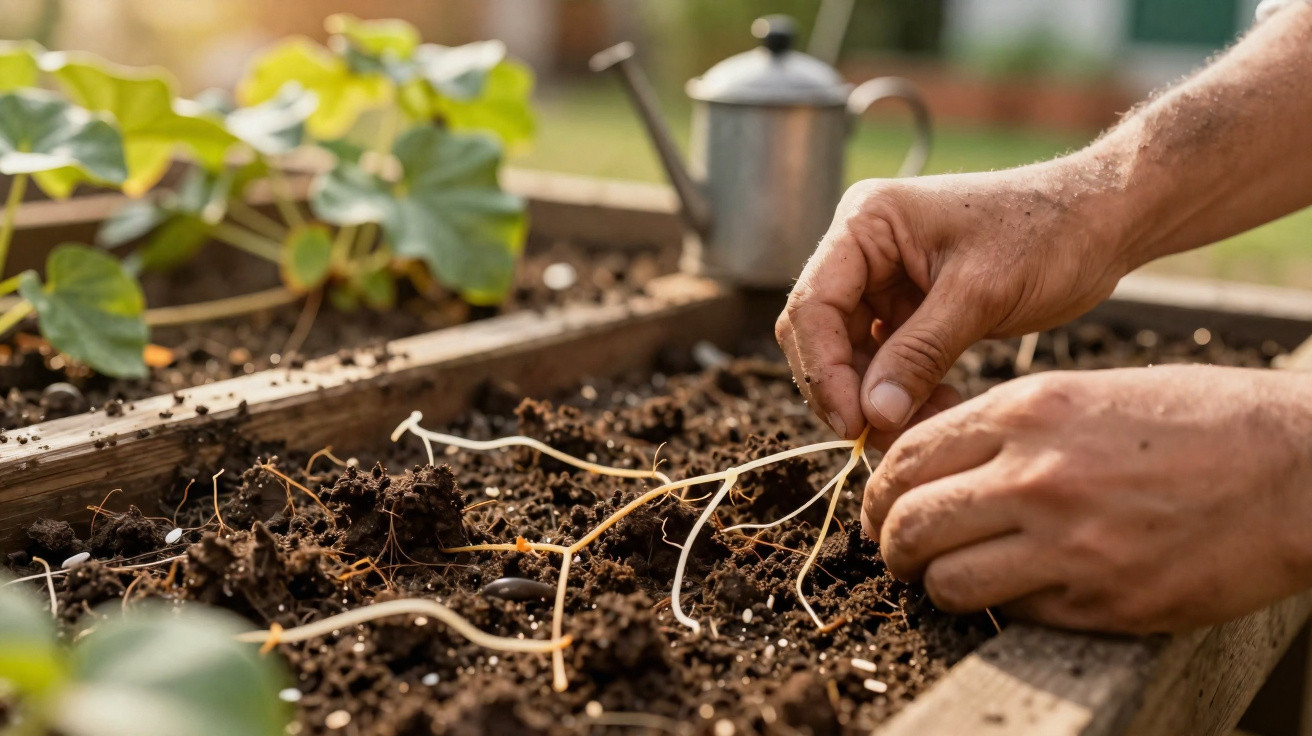
On a wet April morning, I saw my neighbour Lena standing over her vegetable beds the way you might hover over an envelope of medical results. Her tomato seedlings had a washed-out look, the spinach seemed listless, and the bag of fertiliser in her grip offered “solutions” she could barely justify buying. The soil itself appeared flat and tired - as though the garden had breathed out and had nothing left.
Just a few metres away, in a neglected patch nobody ever bothered to cultivate, nettles and clover were surging. The leaves were a dense, confident green; the stems upright; everything looked vigorous. No added feed, no special treatment - simply earth doing what it does when it’s allowed to.
Lena glanced from one area to the other, then asked the sort of question that permanently alters how you think about what’s beneath you.
“What’s happening in that soil that mine doesn’t have?”
The invisible workers: the mycorrhizal network under your feet
If you stand in a garden and peer down, you’ll notice only the surface: brown or grey ground, perhaps dry, perhaps split. Without looking closer, most soil appears similar. We usually decide whether it’s “good” by judging the plants above it, not by understanding what the soil is actually doing.
But beneath that thin crust, there’s an unseen system busy at work. Fungi and roots form a living web, quietly exchanging sugars for minerals and shifting nutrients from where they sit to where plants can use them. This isn’t a once-in-a-lifetime phenomenon; it’s happening in countless places where plants manage to survive in difficult ground.
A few weeks after that cold morning, Lena stopped tipping bag after bag of fertiliser onto her beds and tried a different approach. She still added a small amount of compost, but the real change was planting clover between rows and leaving the roots of harvested crops in the soil rather than pulling them out.
By mid-summer, the difference was plain. Tomatoes that had looked almost translucent now carried thick, dark foliage. Basil was noticeably more fragrant. It wasn’t only that the harvest improved; the whole plot seemed steadier and more in balance. What struck Lena most was that she hadn’t become a flawless gardener overnight. She had simply stopped battling the soil and started allowing the underground system - the bit she couldn’t see - to function.
That hidden system is called the mycorrhizal network. Fungi link themselves to plant roots and then push fine threads through the soil, acting like an extra set of roots. Those threads can access nutrients trapped in tiny pores and deliver them to plants, even when a soil test suggests available nutrients are low.
Plants pay for this service with sugars produced from sunlight. Thanks to that exchange, plants can succeed in places that look “poor” on paper. The soil doesn’t suddenly acquire new nutrients; instead, the living network uses what already exists much more effectively - making every bit of phosphorus, every small amount of nitrogen, and each trace mineral count rather than staying out of reach.
How to support this quiet process in your own soil
The first step is almost frustratingly straightforward: reduce how much you disturb the ground. This doesn’t mean you can never touch it, but it does mean easing off deep digging and heavy cultivation. Each time you turn the soil, you tear through parts of the fungal web - like ripping out wiring and hoping the lights will still work.
For routine jobs, use a small hand fork rather than a spade. Spread a light layer of compost on the surface once or twice a year instead of burying it. Roots will push down into it, fungi will move up into it, and the boundary between established soil and fresh organic material becomes a busy exchange point. That’s where the quiet work starts to multiply.
The second habit is to avoid leaving soil bare for long. Exposed ground dries, overheats in sunshine, and quickly loses the living community within it. A thin cover of straw, shredded leaves, or even grass cuttings creates a steadier habitat for fungi and roots and helps protect the tiny channels that carry water and nutrients.
Most of us recognise the pattern: you clear a bed “for a week” and, somehow, it stays empty for the whole season. The surface forms a crust, weeds appear fast, and the following year feels like harder work from the start. Realistically, nobody keeps perfect cover every day - but even a quick, ten-minute layer of mulch can keep the underground network going between crops.
When I asked a soil ecologist which single habit helps plants cope best in lean ground, she answered immediately.
“Feed the soil life, not the plant. The fungi know how to share better than we do.”
You can back that up by building a few reliable anchors into how you garden:
- Grow at least one deep-rooted or perennial plant in each bed so fungi have a host throughout the year.
- Rotate and mix crops and cover plants, rather than repeating the same single species again and again.
- Aim to keep a living root in the soil for as many months of the year as possible.
- Add modest, regular inputs of organic matter instead of a single large “nutrient shock”.
- Steer clear of harsh chemical inputs that wipe out soil microbes and fungal threads.
None of these steps sounds dramatic. Still, they’re precisely what enables the hidden network to keep supporting your plants when laboratory nutrient figures look disappointing.
Rethinking what “poor soil” really means
After you’ve watched a patch of thin, pale soil produce vigorous wildflowers, it becomes difficult to talk about “good” and “bad” soil in the old, simple way. Yes, some ground is genuinely depleted, compacted, or contaminated. But much of what gardeners label “poor soil” is really soil that has lost its connections - where the fungal web has been broken too often to keep doing its quiet work.
The question shifts from “How do I add more?” to “How do I help what’s already there move better?” That change affects more than your beds. It alters how you relate to time itself: seasons start to feel like collaboration rather than a battle you must win before autumn arrives. You may still buy fertiliser, add compost, and fuss over plants - but the deeper confidence begins to settle less in what you carry home and more in the living ground beneath your feet.
| Key point | Detail | Value for the reader |
|---|---|---|
| Mycorrhizal networks boost growth | Fungi extend root reach and unlock bound nutrients even in low-fertility soils | Explains why plants can thrive without heavy fertilizing and guides smarter care |
| Gentle soil handling protects life | Less tilling, more mulching, and shallow disturbance keep fungal threads intact | Offers practical steps that improve yields and soil health over time |
| Living roots keep systems active | Cover crops and perennials host fungi all year and stabilize nutrient flow | Helps readers design gardens that stay productive in tough conditions |
FAQ:
- Question 1Can plants really grow well in low-nutrient soil just by relying on fungi?
- Question 2Do I need to buy commercial mycorrhizal products for my garden?
- Question 3How long does it take for the soil network to recover once I stop tilling?
- Question 4Will mulch and cover crops attract pests or create more work?
- Question 5Can this approach work on a balcony or in containers, not just in the ground?


Comments
No comments yet. Be the first to comment!
Leave a Comment