
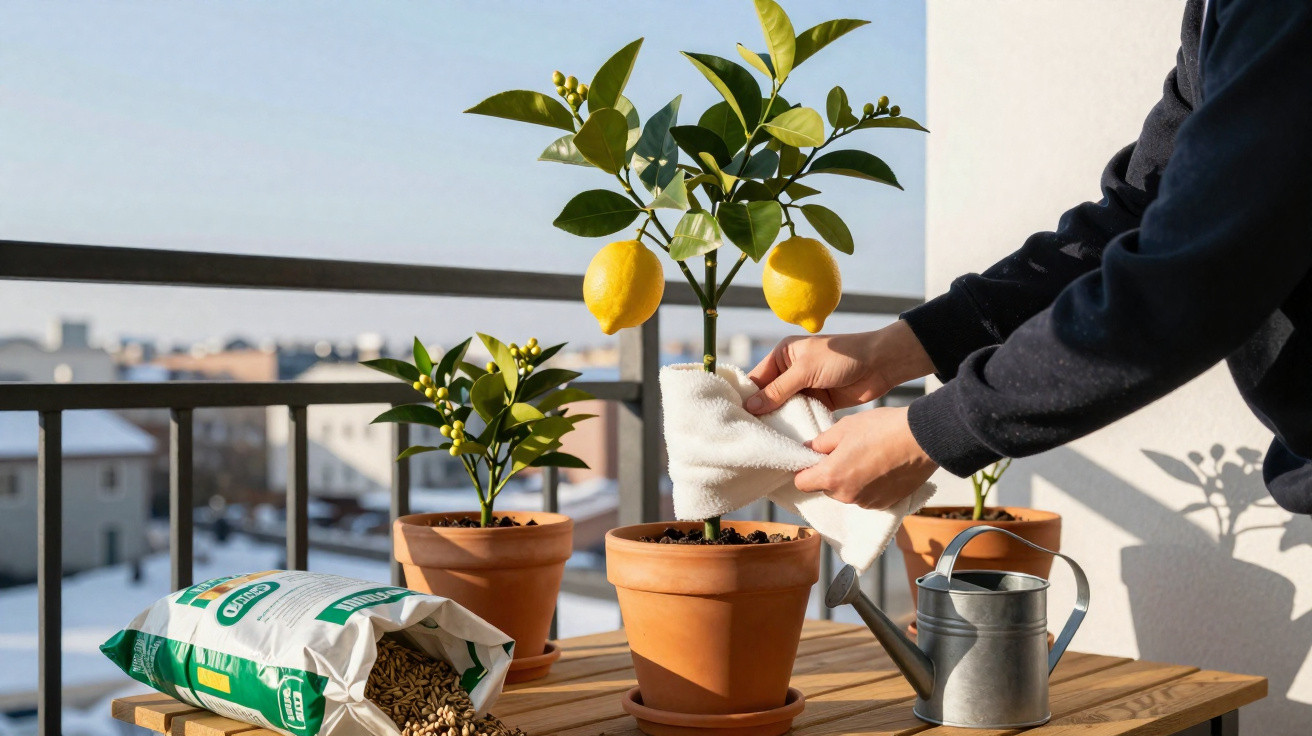
As the weather cools, plenty of gardeners hurriedly wrap up their lemon trees without being sure what these tender evergreens actually require. One simple action, done at the right time and supported by a handful of targeted tweaks, can turn a tired container citrus into a vigorous, fruit-filled tree by the time spring arrives.
Why one winter gesture changes your lemon harvest
Lemon trees occupy an awkward middle ground: part houseplant, part Mediterranean shrub. They cannot stand freezing nights, yet they also struggle in centrally heated homes. That tension is exactly why so many homegrown lemon trees shed leaves or fail to flower after the winter months.
What matters most isn’t adding extra attention, more water or more fertiliser. The real difference comes from guiding the tree into a cool, bright resting period, rather than letting it drag itself through winter in warm, gloomy conditions.
The simple move: shift your lemon tree into a cool, very bright spot - between 3 °C and 12 °C - before serious frost arrives, and keep it there with drier soil until spring.
This kind of managed pause mirrors the gentle winters of coastal regions. The tree slows its pace, but it doesn’t fully stop. Buds develop steadily, next season’s flowers are prepared, and the plant stores energy instead of wasting it on weak, light-starved winter growth.
Understanding how cold your lemon tree can really take
Lemon (Citrus limon) is quick to react when temperatures fall. Once you understand the thresholds, it becomes far easier to decide what to do - and far less nerve-racking.
| Temperature | What happens to the tree |
|---|---|
| Around 0 °C | Growth halts, and the tree begins to strain if the compost is wet or the site is windy |
| –2 °C | Leaves can yellow and drop, particularly on young plants or container-grown trees |
| –5 °C | Fresh shoots and tips may die back, and bark damage becomes a risk |
| 3 °C to 12 °C | Ideal “resting” zone, where future flowering and fruiting are encouraged |
As soon as nights repeatedly edge towards freezing, that’s your cue to intervene. Keeping the tree outdoors for “one more week” is often what triggers leaf drop - and that can slow its spring bounce-back.
Creating the perfect winter home for potted lemons
Away from mild coastal belts, many people grow lemons in pots so they can be moved when frost is on the way. That mobility is your biggest advantage for getting them through winter in good shape.
Choosing the right spot: cool, bright, not cosy
A warm living room is the wrong aim. In a 22 °C lounge with dry air and weak winter light, a lemon tree usually deteriorates and becomes more attractive to pests. What it needs instead is a cold, bright setting.
- A cold greenhouse that remains frost-free is an excellent option.
- A bright, unheated conservatory or veranda is close to perfect.
- A porch, garage or stairwell with a window can work, as long as it stays between 3 °C and 12 °C.
- Cellars or windowless sheds are unsuitable; lemons require strong light.
Aim for a winter space that feels chilly to you, but flooded with daylight for the tree.
Once you’ve settled on a location, try not to shift the pot repeatedly during winter. Regular swings in temperature and light levels can stress the plant and lead to bud drop.
Improving the potting mix so roots stay healthy
Even the best shelter won’t help if the roots sit in cold, waterlogged compost. Lemon trees do best in a mix that drains freely, remains slightly acidic, and still supplies enough nutrition.
A practical recipe for containers:
- 60% quality potting compost for structure and organic matter.
- 30% garden soil to add weight and minerals.
- 10% coarse, non-calcareous sand to improve drainage.
They generally perform best at a pH between 5.5 and 6.5. In that band, iron and other micronutrients are taken up properly, helping prevent chlorosis (pale leaves with darker veins). If your tap water is very hard, watering with rainwater now and then can help steady the balance. Peat or elemental sulphur can also lower the pH gradually, and mature compost helps refine the texture.
Water less, far less, once the cold settles in
More lemon trees are lost to overwatering in winter than to frost itself. When it’s cool, roots slow down and drink less, and wet compost chills faster around them.
Let the top 5 to 7 cm of the potting mix dry fully before watering again, which often means only once every two to three weeks in winter.
Use your fingers as the guide rather than a strict schedule. If the pot still feels heavy and cool, hold off. Frequent small drinks keep the compost constantly damp, which encourages fungal issues and root rot.
Stop any strong feeding during the coldest months. When fresh growth starts in spring, you can reintroduce a mild, citrus-specific fertiliser, typically every two to three weeks during the active season.
Keeping lemons outside: microclimates and smart covers
In gentler areas, some gardeners keep lemon trees planted out year-round. If you do, success depends on choosing the right spot and acting quickly with protection when forecasts turn severe.
Finding or creating a microclimate
Walls absorb warmth during the day and release it slowly overnight. A south- or south-west-facing wall can create a sheltered nook that’s a few degrees kinder. Planting near such a wall reduces wind exposure, limits radiative frost, and smooths out temperature fluctuations.
Mulch helps too, in a subtle way. Straw, shredded bark or dry leaves around the base can slow evaporation and cushion the soil against rapid temperature changes. In wetter regions, opt for a lighter mulch so moisture doesn’t sit against the trunk.
Using winter fleece and covers the right way
When a cold snap is predicted, timely protection can be decisive. Plastic may seem tempting, but it can trap condensation and then overheat on bright days.
- Choose breathable winter fleece or horticultural fabric so light and air can pass through.
- Drape it loosely over the crown, keeping a small pocket of air around twigs and leaves.
- Fix the bottom so wind cannot lift the cover and chill the branches.
- For pots, insulate the container with bubble wrap or straw to shield the roots.
Think of the cover as a wind-blocking, temperature-softening jacket, not a sealed plastic bag.
On mild, dry days, open or remove covers to reduce the risk of mould, then put them back on at night if frost is likely. That straightforward routine is the “one gesture” repeated at the moments that matter throughout winter.
Varieties that cope better with a cool rest
Not every lemon behaves identically during a cool winter pause. Certain varieties handle slight neglect and fluctuating temperatures better than others.
- ‘Meyer’: A hybrid often described as sweeter and slightly more cold-tolerant; suitable for patios and balconies.
- ‘Four Seasons’ (Quatre Saisons): Able to flower several times each year when managed well.
- ‘Eureka’: Widely used in commercial orchards, and can crop almost continuously in the right climate.
- ‘Valentina’: A reliable producer with regular pruning and controlled watering.
Even with these more adaptable types, the same rule applies: cool, bright, and slightly dry. Choosing a variety can help, but it never fully replaces good shelter and careful watering.
Common winter mistakes that ruin spring fruit
Many issues that show up in May or June are rooted in decisions made back in November or December. This quick list helps you sidestep the usual pitfalls.
- Moving the tree into a hot room and leaving it beside a radiator.
- Watering as if it were summer, without checking the compost.
- Pruning in mid-winter, which removes wood that would have carried flowers.
- Storing the pot in a dark garage where the tree can’t photosynthesise.
- Using plastic film that steams the foliage on sunny days.
If your lemon sheds most of its leaves over winter, ask yourself three things: Was it too warm? Was the light insufficient? Was the compost kept continually damp? Tweaking those three factors is usually enough to improve the following season.
Going further: planning your spring revival
When nights remain above roughly 8 °C and the forecast shows no hard frost, begin hardening the tree off. Put it outdoors for a few hours on calm, bright days, then return it to shelter overnight. This gradual transition helps prevent scorch and shock.
At the same time, move back towards more regular watering and restart light feeding with a balanced citrus fertiliser. Don’t rush into heavy pruning; restrict cuts to dead or clearly damaged wood. More structural shaping is best left until later, once strong new shoots are growing.
Why this winter strategy also helps other citrus
The same method suits other container-grown citrus such as oranges, limes, kumquats and hybrids. All of them benefit from a cool, bright rest rather than being made to “survive” on a windowsill above a heater. The precise details vary - some cope with lower temperatures, others need a tighter range - but the principle stays the same: protect the roots, maximise light, and keep watering under control.
Gardeners who treat winter as a quiet, purposeful stage of citrus care often notice the same results: steadier flowering, improved fruit set and better flavour at harvest. It begins with one timely step - moving the tree to the right place before frost bites - and then letting it rest there under a watchful, lighter touch.




Comments
No comments yet. Be the first to comment!
Leave a Comment