
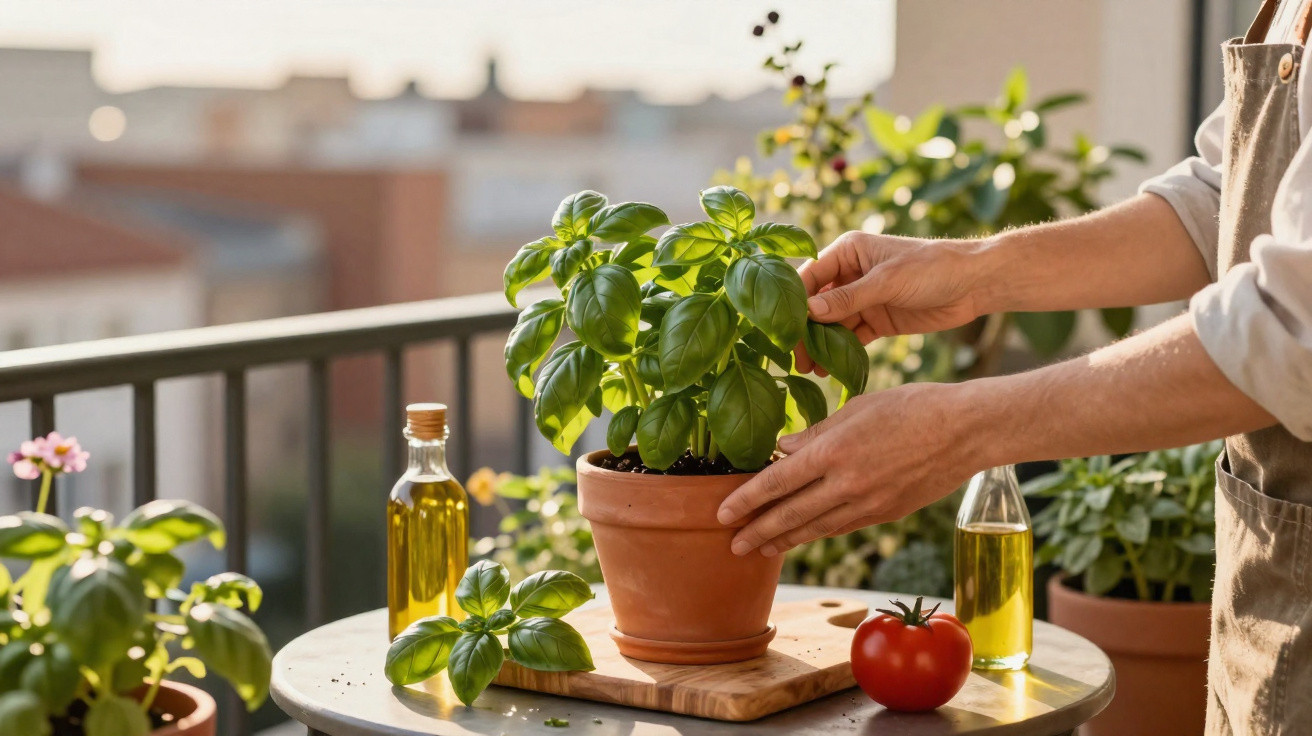
Keeping an aromatic herb in a pot on the balcony is becoming increasingly common in urban areas. Among the choices available, basil stands out thanks to its intense fragrance, straightforward cultivation, and versatility in the kitchen. It can thrive even in small outdoor spaces, provided it gets the basics right: suitable compost, correct watering, and enough light.
Why is basil ideal for growing in a pot on the balcony?
Basil is one of the most adaptable herbs for outdoor container growing. It enjoys mild to warm temperatures and good airflow, as long as it is not exposed to overly strong winds. It also grows quickly, which makes it easy to harvest leaves regularly.
Its roots suit medium-sized pots well, ideally around 20–30 cm deep with reliable drainage. Because many varieties have a relatively short growing cycle, it is common to replace plants from time to time to keep a steady supply of fresh, aromatic leaves.
How to prepare the potting mix and manage watering for basil in a pot
To keep basil vigorous, you need a mix that is light, nutrient-rich, and free-draining. Blending good-quality compost, organic matter, and a component that improves aeration helps prevent waterlogging-an issue that often damages this plant’s roots.
A practical, well-balanced mix can follow the approximate ratio below, which works for most balconies and everyday containers:
- 1 part sieved topsoil
- 1 part organic compost or worm castings
- ½ part coarse sand, perlite, or a similar material to improve drainage
Basil likes consistently moist compost, but not excess water. On sunny, warm balconies, watering may be needed 1–2 times a day. Always check whether the surface feels dry to the touch and whether water drains freely from the pot’s holes-both signs that surplus water is not being trapped.
How much light does basil need to be more fragrant?
Basil’s aroma is closely linked to how much light it receives. As a rule, 4–6 hours of direct sun per day is recommended to encourage the production of the oils responsible for its distinctive scent, while avoiding extreme heat during the strongest part of the day.
In very hot locations, it can help to place the pot where the plant gets morning sun and partial shade in the afternoon. Where light levels are lower, basil tends to grow weaker and smell less pronounced, so moving the pot closer to windows or brighter spots can help balance its development.
How to harvest, prune, and use basil day to day
The way you harvest directly affects how well the plant regrows. It is better to snip the tips of stems just above a pair of leaves rather than picking individual leaves from the base. This approach encourages side shoots, makes the plant bushier and more productive, and also extends its lifespan-especially when you regularly remove flower stems.
In everyday cooking, fresh leaves go far beyond pasta sauces, turning up in salads, soups, sandwiches, pizzas, marinades, pestos, and infused drinks. If you add basil at the end of cooking hot dishes, its fragrance stays stronger, lifting even simple recipes-particularly for anyone growing just a single pot on the balcony.
Comments
No comments yet. Be the first to comment!
Leave a Comment