
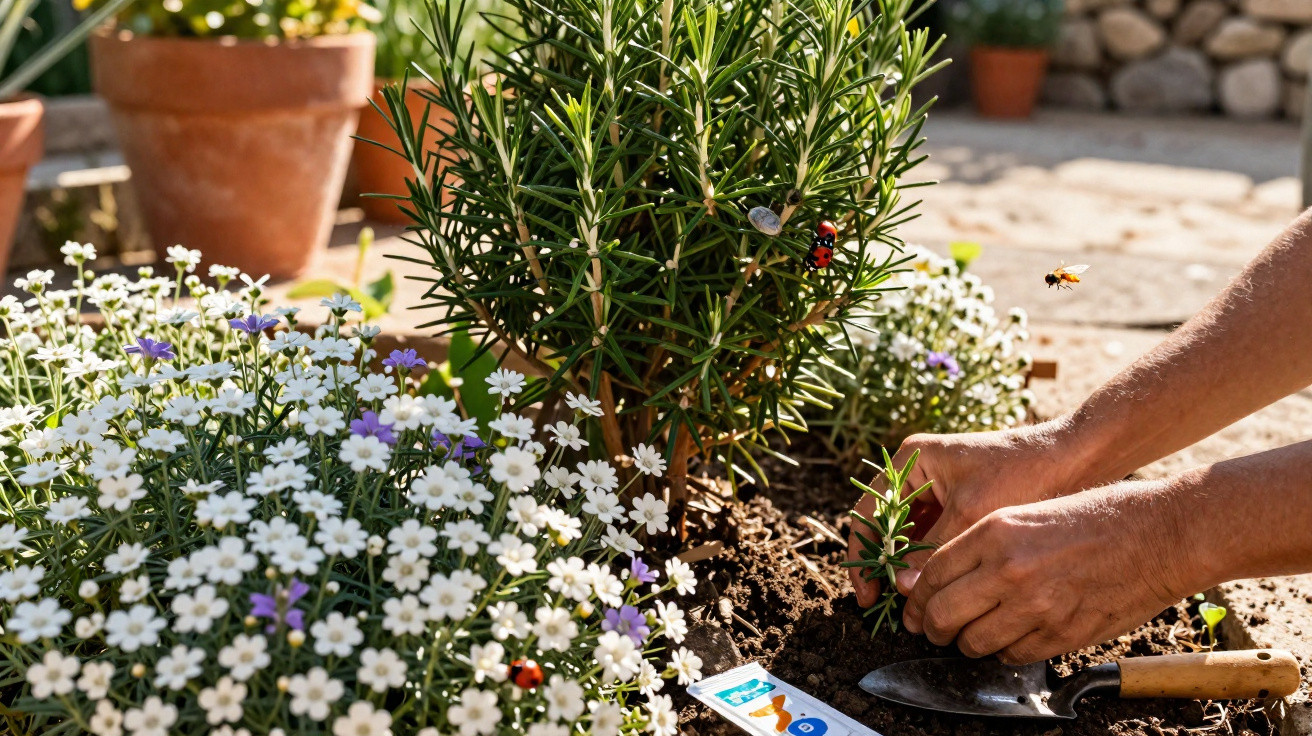
A Mediterranean shrub, an easy-care carpet of flowers - and suddenly aphids, whiteflies and the rest are kept firmly at bay.
Plenty of gardeners plant rosemary to protect their veg patch in a more natural way. Its aroma does deter certain pests, but after mild winters aphids and other nuisances often show up again all the same. Things get far more interesting when you add a small annual flowering plant at the shrub’s base - one that attracts exactly the right beneficial insects.
Why rosemary on its own doesn’t stop an outbreak
Rosemary comes from dry, sunny regions and does best in light, free-draining soil. The essential oils it produces can unsettle some insects, such as particular beetles or mosquitoes. And, of course, it smells wonderful in the kitchen.
For plant protection, though, that effect rarely holds long term. Rosemary offers little nectar and only limited pollen. As a result, helpful insects such as hoverflies or ladybirds don’t stay in your garden consistently - they tend to drop in briefly and then move on. That’s the key issue: if the “fuel” for your helpers isn’t there, pests have an easy time of it.
If you also have heavy, wet soil, rosemary struggles. The roots dislike waterlogging; the plant grows poorly and produces fewer aromatic compounds. Under that kind of stress, aphids and other sap-suckers can multiply especially quickly.
“Rosemary is a good start in a wildlife-friendly garden - but without a flowering partner it can rarely stop a wave of pests for good.”
The secret heroine: sweet alyssum at the base of rosemary
The fix is surprisingly straightforward: sweet alyssum, botanically Lobularia maritima. This annual stays low - around 10 to 20 centimetres tall - and forms tight cushions packed with tiny flowers.
From April or May right through to the first frosts, it provides an almost uninterrupted food source for beneficial insects. The flowers have a light honey scent and act like a beacon for garden allies, including:
- Ladybirds, which practically “harvest” aphids
- Hoverflies, whose larvae devour huge numbers of aphids
- Lacewings, also with “aphid-hungry” larvae
- Small parasitoid wasps, which parasitise caterpillars and whiteflies
Where rosemary mainly works as a deterrent, sweet alyssum supplies the steady diet your helpers need. Together they function as a unit: the shrub reduces the incoming pressure from some pests, and the flowers keep beneficial insects well fed and on site.
How to combine rosemary and sweet alyssum in a bed
The basic principle is simple: rosemary remains the striking focal plant, while sweet alyssum forms a looser flowering frill at ground level. That combination creates a small, resilient micro-habitat.
The right position
- Light: Full sun to very bright conditions; ideally at least six hours of sun per day.
- Air: Good airflow; avoid still corners where damp lingers.
- Soil: Loose, fairly lean and very well drained - not a dip where rainwater collects.
Plant spacing and soil preparation
Don’t place sweet alyssum right against the stem. Leaving 20 to 30 centimetres between the rosemary base and the flowers is enough to keep the sensitive crown dry and airy.
For a small bed, a practical mix is:
- about 60% standard garden soil or herb compost
- roughly 30% sand or fine gravel to improve drainage
- around 10% well-rotted compost for a modest nutrient top-up
If you regularly get heavy rainfall or have clay soil, you can also work in a thin layer of gravel as drainage.
Sowing and planting sweet alyssum
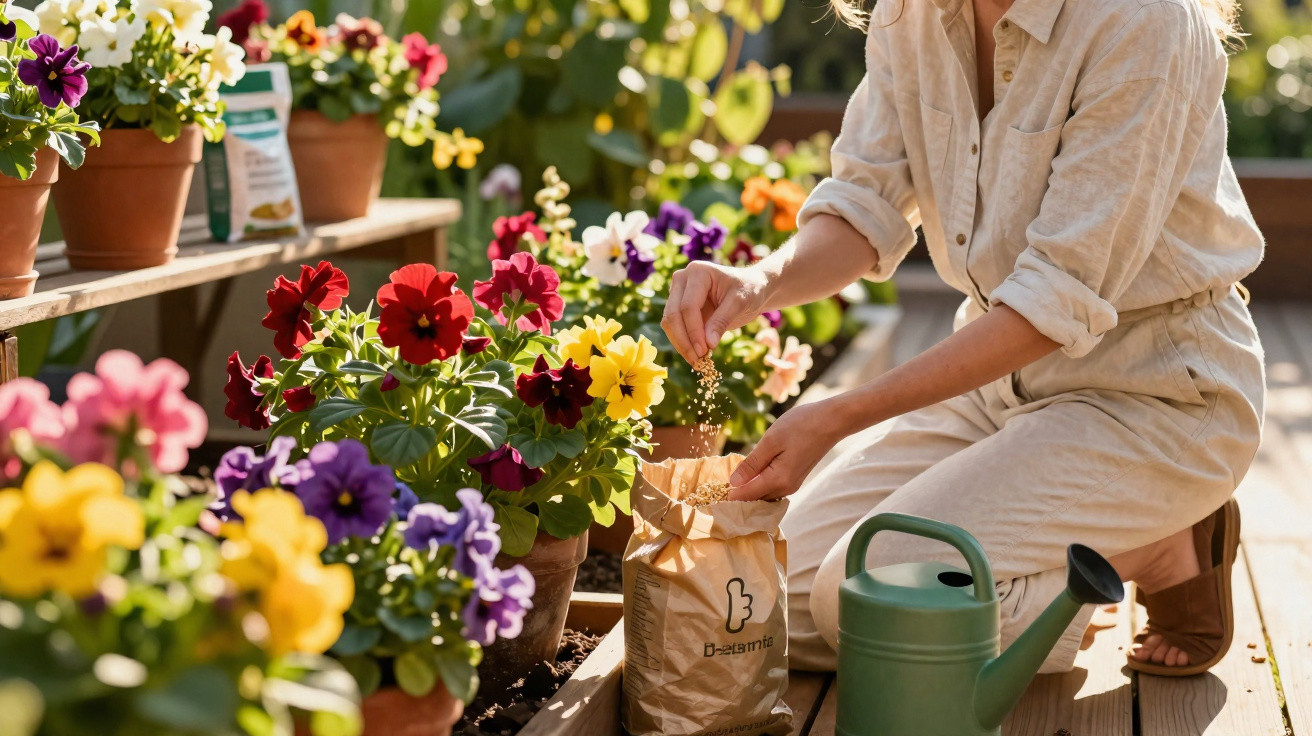
The seeds are tiny and need light to germinate. Scatter them on the surface, press them in gently, but don’t cover them with soil. At temperatures of around 15 to 18 °C, they usually germinate quickly.
If you’re planting young plants, keep 15 to 20 centimetres between each cushion. That way they’ll knit together without matting.
“The combination of a fragrant shrub and a flowering ground cover creates a lasting ‘beneficial-insect buffet strip’ - right where pests would otherwise love to strike.”
Using the duo in a pot or on a balcony
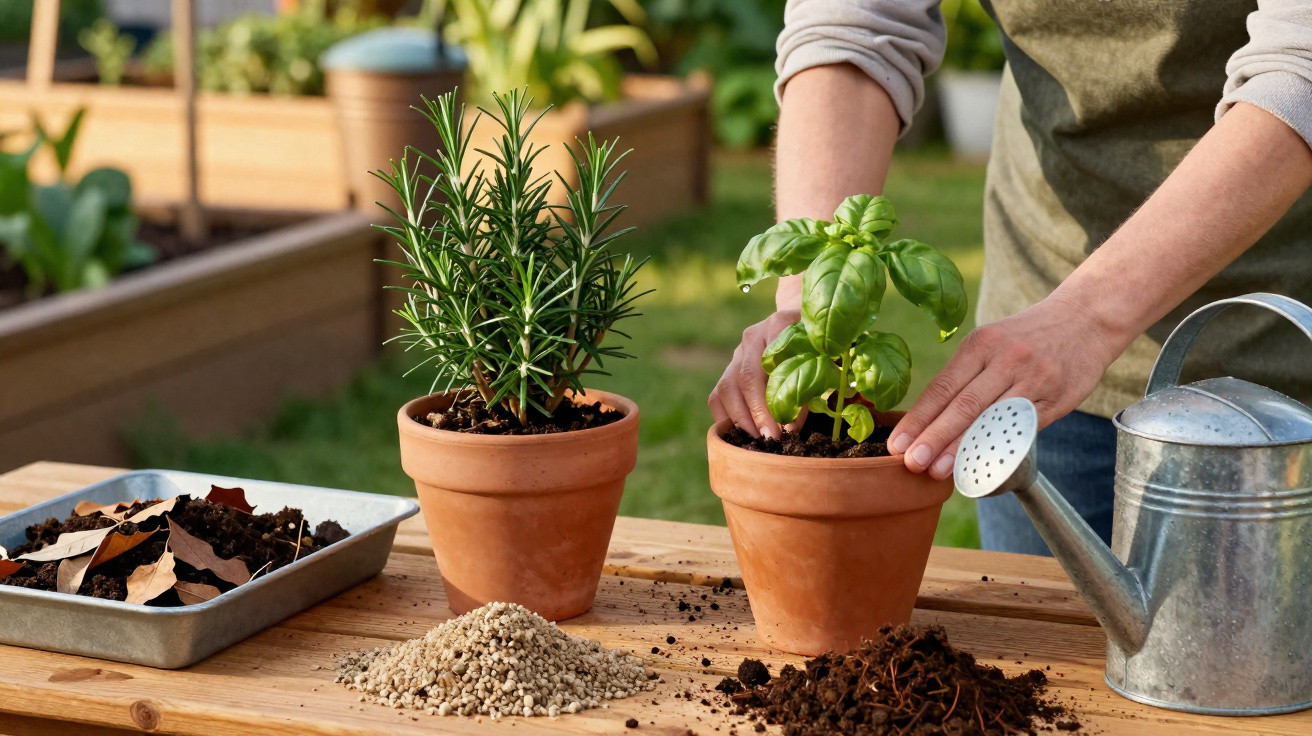
This approach also works if you only have a balcony or terrace. Rosemary and sweet alyssum are easy to grow together in a larger container.
- Container: Terracotta pot with a drainage hole, about 35 to 40 centimetres in diameter for a young rosemary.
- Growing medium: Herb compost mixed with a little sand or expanded clay so water never sits.
- Layout: Rosemary in the centre, with 6 to 8 small sweet alyssum plants spaced loosely around the edge.
Water sparingly. Let the top layer of compost dry out before watering again. Don’t leave a saucer permanently full of water - rosemary in particular will suffer.
Care: little effort, big impact
- Watering: Keep rosemary on the dry side; water sweet alyssum moderately during drought. In hot spells, one thorough watering every 10 to 14 days is usually enough.
- Cutting back sweet alyssum: After a heavy flush, trim back by a third to a half. It will branch again and keep flowering longer.
- Pruning rosemary: Lightly trim in spring, focusing only on the fresh growth. Avoid cutting into old, heavily woody stems, as it reshoots poorly.
- Mulch: A thin layer of gravel around the shrub keeps the surface clean and dry without trapping water.
- Frost protection: In pots, move rosemary against a sheltered house wall. Re-sow sweet alyssum each spring if needed.
Practical examples in the vegetable garden
If you grow veg, you can see the difference clearly. A few tried-and-tested pairings include:
- At the edge of a cabbage bed: One rosemary plant at the row end, with sweet alyssum as a border. Aphids on cabbages are noticeably less likely to build into mass infestations.
- Around peppers and chillies: Planted between rows, the flowering cushions draw in hoverflies and lacewings. These also reduce thrips and whiteflies.
- With strawberries and carrots: The flower carpet works as a living edging and brings in pollinators at the same time. Harvests are often more generous.
Common mistakes that disrupt the partnership
- Too close to the stem: If sweet alyssum is pressed right up against rosemary, the base stays damp - increasing the risk of rot and fungal disease.
- Thirsty neighbours: High-water plants such as mint next to rosemary put the shrub under stress, because rosemary prefers drier conditions.
- Over-rich soil: Heavily fertilised, heavy soil doesn’t suit rosemary. It then grows soft, becomes more vulnerable, and loses its characteristic aroma.
Why sweet alyssum works so well
Many flowering plants attract insects, but sweet alyssum has a few advantages. It blooms for a long time, needs very little attention, and copes with dry conditions far better than, for example, pot marigold or nasturtium. The low cushions also warm up quickly, which is especially attractive to beneficial insects on bright spring days.
On top of that, the tiny flowers offer fine droplets of nectar that small parasitoid wasps and hoverflies can take up with ease. Larger insects such as bees will use the flowers too, but the key players here are the helpers that specifically reduce aphids and other sap-suckers.
What else you can add
If you fancy more variety, you can extend the idea. Small creeping thymes or lavender - planted with a bit more space - work well between rosemary and sweet alyssum. The result is a small “dry bank” effect that needs minimal watering and doubles as an insect magnet.
If you’re new to it, try a test bed with one rosemary plant and a narrow strip of sweet alyssum in front - perhaps with one or two rows of vegetables alongside. That makes it easy to compare pest pressure from one season to the next, and to see just how much impact a modest cloud of flowers at the foot of a culinary herb can have.



Comments
No comments yet. Be the first to comment!
Leave a Comment