
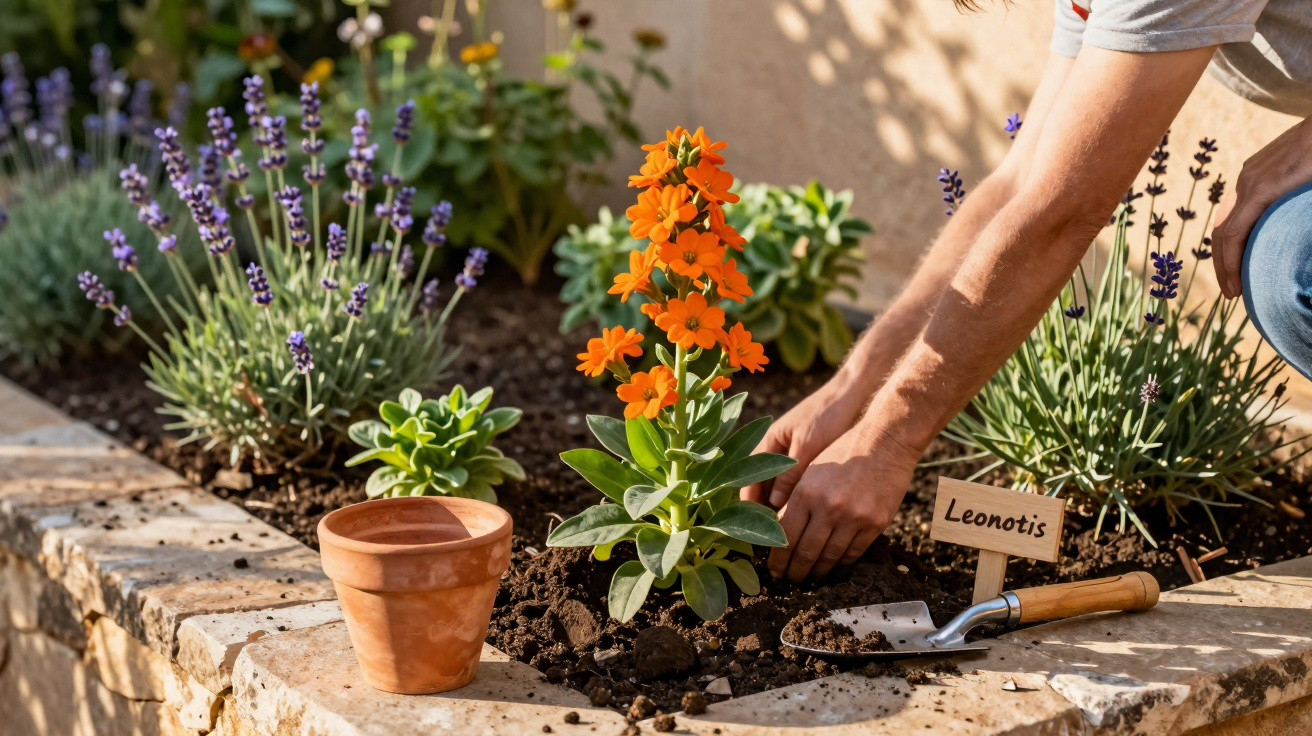
A plain-looking border, a sunny spot – and one single plant that changes everything: colour, height and a holiday feel, with next to no effort.
Plenty of gardeners know the issue: the bed is neatly planted, yet it still lacks that real wow factor. This is exactly where a perennial comes in that remains something of a hidden gem, even though it has long been a designer-garden secret weapon: Leonotis leonurus, often called lion’s ear. Plant it in spring and, in its very first summer, it can put on a display that feels more like a Mediterranean show garden than an ordinary front border.
Why this perennial instantly makes borders more exciting
In a planting scheme, Leonotis leonurus behaves almost like a living sculpture. It grows upright, produces long, sturdy stems, and forms horizontal rings of vivid orange flowers along those stems. The result is a striking, tiered look you rarely see in typical perennial borders.
With its orange flower rings, Leonotis leonurus builds real “storeys” in a border – your eye automatically stops there.
If you want height and structure without fiddly clipping or fussy, tender exotics, this is an exceptionally low-maintenance choice. It brings:
- clear vertical lines within the bed
- strong, warm colour from summer into autumn
- a lightly exotic, Mediterranean character
- plenty of nectar-rich flowers for insects
In summer the plant is busy with life: bees, bumblebees and butterflies use the tubular blooms as a reliable nectar bar. In places where hummingbirds live, it can be a true magnet for them too – here, butterflies largely take over that show-stealing role.
The key characteristics at a glance
Before you add it to your basket, it helps to check the basics so you can judge whether you can offer the right conditions.
| Feature | Characteristic |
|---|---|
| Height | up to around 1.80 metres, and a little taller in very warm locations |
| Flower colour | intense orange, in dense, rounded rings along the stems |
| Flowering period | usually from mid/late summer into autumn |
| Foliage | narrow, elongated leaves; a graphic effect; rather sparse |
| Frost hardiness | down to about -8 °C with good winter protection in the ground |
| Water needs | drought-tolerant once established; dislikes waterlogging |
This plant comes from warmer regions, and it shows in its preferences: sun, relatively dry conditions, and no wet winter – and it will perform reliably. In harsher winters it may die back in the border, but with good protection it often survives from the roots.
The ideal spot: sun, warmth and free-draining soil
With Leonotis leonurus, lack of sun means you miss almost everything. It needs several hours of direct sunlight each day; otherwise it stays stunted and flowers reluctantly.
Give this perennial a hot, fully sunny position and you’ll get the most spectacular flower heads – part shade steals the show from it.
Key points for siting it well:
- Light: at least six hours of sun daily
- Soil: light, free-draining and on the lean side rather than overly rich
- Moisture: avoid waterlogged ground, especially in winter
- Spacing: 60 to 80 centimetres from neighbouring plants
Spacing matters more than many people expect. The plant needs air around it so its distinctive structure can be seen. If it is squeezed in among other perennials, it quickly looks cramped and loses its impact as a focal point.
How to plant it successfully in spring
Spring is the ideal time in the UK. Once the risk of hard frost has passed and the soil has begun to warm, you can get started. Method:
- Choose the position and remove all weeds thoroughly.
- Loosen the soil deeply, taking out large stones and old roots.
- Work in well-rotted compost to help it settle in.
- If your soil is heavy, mix in sand or fine grit so excess water can drain away.
- Plant so the top of the root ball sits level with the soil surface.
- Water in well, then reduce watering gradually.
It prefers a soil that can dry slightly between waterings. Constant damp slows it down and raises the risk of root rot.
Five golden rules for strong plants year after year
- Pick a very sunny site and, if possible, one that is sheltered from wind.
- Use compost at planting time, but avoid heavy-handed feeding.
- Prevent standing water; if needed, add sand or grit to improve drainage.
- In colder areas, apply a thick mulch around the root zone in autumn.
- Water sparingly in winter, especially for plants grown in pots.
Follow these basics and you’ll have a surprisingly tough perennial that looks more dependable and more impressive with each season.
Care through the year: minimal work, maximum impact
Ongoing care is straightforward. The main task is how you handle the flowering stems.
After the main flush, cut back the spent tiers to just above a pair of leaves. This encourages fresh buds and helps prevent the plant becoming woody and bare at the base. In spring, a light prune can help it branch into a bushier shape.
If you consistently remove spent stems, you significantly extend the flowering period and keep the plant in shape.
For feeding, a thin layer of organic fertiliser in spring is enough – for example, well-rotted compost or an organic slow-release feed. Too much nitrogen pushes leafy growth, but at the expense of flower power.
How Leonotis leonurus gets through winter
In the ground, it pays to add a thick mulch around the root area from autumn onwards – for instance leaves, straw or bark chippings. In milder regions, that is often enough for the plant to reshoot the following spring.
In a pot, it is different: move the container to a frost-free, bright place, or at least protect it well beside a sheltered house wall. In a container, the root ball chills far faster than it does in garden soil.
Which plants make this perennial look its best
On its own, Leonotis leonurus can dominate an entire section. In a mixed border, however, it looks strongest when paired with the right companions.
- Blue and purple sages (Salvia): a bold contrast to orange that feels modern and almost graphic.
- Ornamental grasses: soften the strict tiers and add movement, especially in late summer.
- Dahlias: reinforce the late-summer and autumn mood with large flowers and intense colours.
- Cannas: heighten the tropical feel, particularly alongside darker foliage.
In modern, more naturalistic gardens, it works well as a fixed point among looser, long-flowering partners such as coneflower, gaura or Perovskia. Your eye naturally follows the glowing orange column, giving the border a clear visual anchor.
Propagation and potential risks in the garden
If you take to this plant, you do not have to buy new specimens every year. Two methods work well: seed sowing and cuttings.
Sowing is most reliable in a warm propagator indoors or in a greenhouse. The seeds need warmth and even moisture to germinate consistently. After a few weeks, the seedlings can be potted on and later planted out.
Take cuttings in summer from shoots that have started to become slightly woody. Place them into a free-draining compost mix, keep them moist, and set them somewhere bright but not in fierce sun. They usually root quite quickly, and within a few weeks you’ll have an independent young plant.
In very mild areas, Leonotis leonurus can have a tendency to self-seed. If you want to limit spread, remove the seed heads before they fully ripen and split open when dry. That keeps things under control without sacrificing the display.
Why it’s worth choosing this perennial right now
Many garden owners want plants that do more than look “quite nice” – they want something that gives a border real character. Leonotis leonurus fits that brief precisely. It bridges the gap between low, ground-hugging perennials and taller, often bulky shrubs, while delivering colour that instantly evokes late-summer holidays in the south.
It is also an interesting choice in the context of increasingly hot summers. Once well rooted, it copes with extended dry spells far better than many classic bedding perennials. In low-rainfall areas or on warm, urban balconies, that becomes one of its strongest assets.
So if you are planning to reshape your border in spring, this plant offers a genuine design tool that delivers both visually and practically: low effort, high ornamental value, and an appeal to insects that makes the garden feel more alive at the same time.


Comments
No comments yet. Be the first to comment!
Leave a Comment