
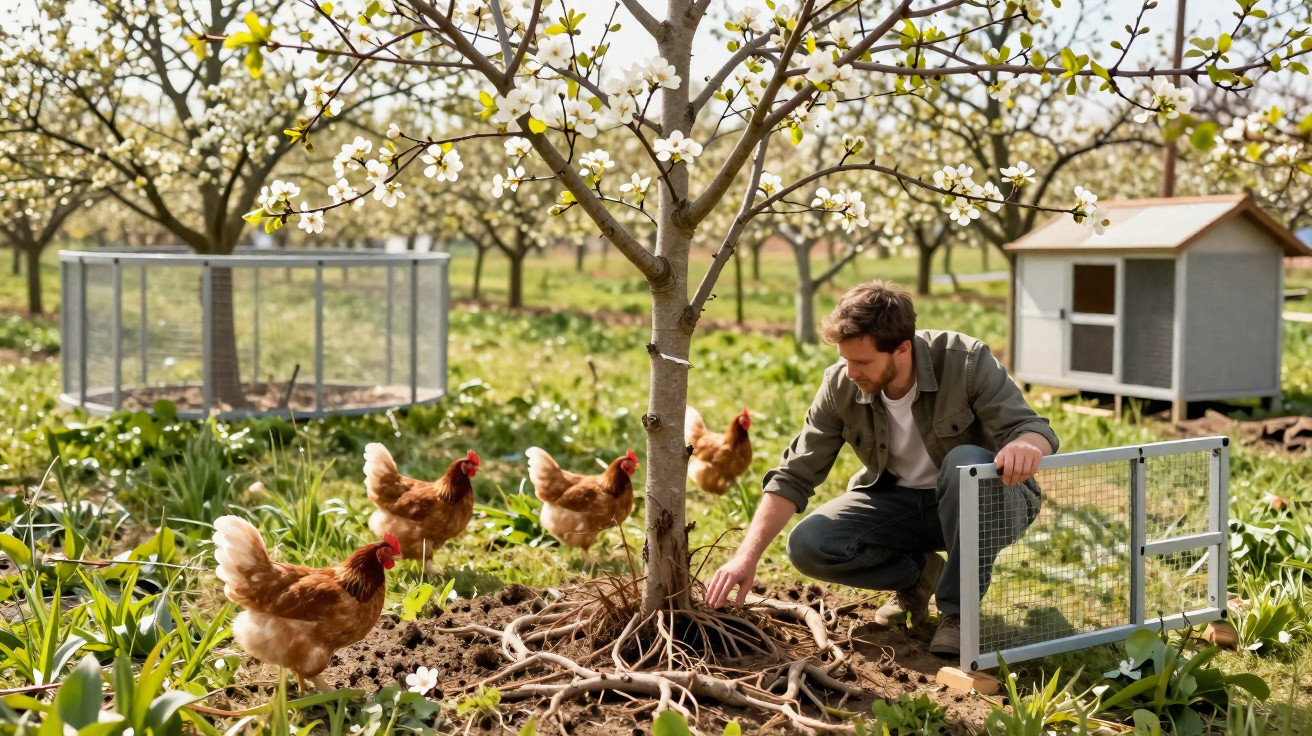
Chapo: A fruit enthusiast happily lets their hens roam beneath apple and cherry trees - until a basic beginner’s mistake wrecks the entire crop.
What begins as a clever organic plan often ends in pure frustration for many gardeners: chickens in the orchard are meant to eat weeds, cut down pests and fertilise as they go. In reality, this supposed dream setup frequently turns into a nightmare because one crucial - and rather strict - rule gets overlooked.
Why chickens in the orchard feel like a brilliant idea at first
At first glance, it looks like a perfect partnership: fruit trees provide shade and the odd fallen fruit, while chickens keep the grass moving and scratch at the soil. They strip back growth around the trunk, peck up insects, slugs and larvae, and loosen the top layer of ground.
For many hobby gardeners, that means less back-breaking weeding and no need to reach for chemical sprays. Instead of herbicides, the chickens simply patrol the grass - it doesn’t get much more eco-friendly than that. Then there’s the manure: chicken droppings add plenty of nitrogen and phosphorus, exactly the nutrients fruit trees use for growth and leaf development.
"In moderate amounts, chicken manure in an orchard works like a natural turbo for soil life - earthworms, micro-organisms and trees all benefit."
Especially through autumn and winter, this mix of soil aeration, insect hunting and natural fertilising can be invaluable. Many trees come out of dormancy looking noticeably stronger, push harder in spring, and set more blossom.
The turning point: when spring changes everything
Just as the orchard is at its most beautiful, the trouble starts. As soon as the first buds open and the trees move into blossom, chickens reveal a side many keepers didn’t anticipate.
Chickens are inquisitive, highly driven foragers. They can jump surprisingly high, flutter onto low branches and peck at anything that seems tender, fresh and easy to reach. Blossom buds, young leaves and newly formed fruitlets can quickly end up in their beaks.
You usually only feel the impact months later - right when the crates for harvest should be coming out:
- many blossoms on the lower branches disappear completely,
- far fewer fruits develop,
- some of the still-small fruits get pecked or drop off early.
Once the first unripe fruit starts falling, the situation escalates. What began as minor losses turns into an all-you-can-eat buffet directly under the trees. The hens peck at damaged fruit, scatter leftovers, and the sweet smell attracts wasps and other insects.
The strict basic rule almost nobody knows
If you want to combine chickens and fruit trees sensibly, one clear requirement is non-negotiable: during the sensitive period, the chickens must be kept out of the orchard.
"From the moment the first buds visibly swell, chickens must no longer have free access to the fruit trees - and that remains the case until after the final harvest."
In practical terms, that means:
- no chickens near the trees during blossom,
- no chickens while fruit is forming and ripening,
- they only return once every fruit has been picked or removed.
If you stick to this time separation consistently, you protect blossom and young fruit without giving up the birds’ benefits for the rest of the year. The calendar is the key: autumn, winter and the early part of late winter are ideal for running chickens in the orchard zone. As soon as nature signals it’s ready to go, it’s time to fence them off.
How to organise chickens and fruit trees without the stress
The good news is you don’t have to choose between keeping chickens and having an orchard. With a bit of forethought, both can work long-term - without your harvest paying the price.
How many chickens per tree actually makes sense
Beyond timing, stock numbers matter too. Too many chickens in a small space create heavy foot traffic, excessive manure and a cratered, barren patch beneath the trees.
A practical guideline:
| Number of fruit trees | Recommended number of chickens in the orchard area |
|---|---|
| 1–3 trees | 2–6 chickens |
| 4–8 trees | 6–16 chickens |
| larger traditional orchard meadow | based on area, not just the number of trees |
As a rough rule of thumb, two to four birds per tree is perfectly adequate for a typical garden. That way, the trees and soil benefit without the ground being scorched by droppings or turning into a muddy mess.
Mobile runs: guide the chickens rather than banning them
Instead of blocking the orchard off completely for months, a flexible system is often the better option. A movable fence or shiftable run lets you control both the area and the timing.
- Lightweight step-in posts and poultry netting can be repositioned in minutes.
- Every one to two weeks, move the run along slightly so the ground can recover.
- In spring, consistently exclude the areas with fruit trees and only open them again after the final harvest.
This keeps the hens occupied, gives them fresh foraging spots, and prevents the garden from becoming worn out. At the same time, it lets you stop blossom and fruit from being nibbled with pinpoint accuracy.
Practical tips for less hassle and a better yield
If you want to limit damage, you need to watch the orchard more closely in spring. Bud development and blossom progress at different speeds depending on the type of tree and your region. Even a delay of a few days can be enough for the birds to leave obvious signs.
"If you check the trees twice a week, you’ll spot the critical moment in time - and keep the chickens out before the first blossoms disappear."
Small everyday habits also help:
- collect fallen fruit regularly so it never becomes a constant feed source,
- feed the chickens more often in the alternative run during the critical months,
- plant shrubs or herb strips that provide shade and distraction away from the fruit trees.
Common mistakes that ruin the dream of a natural garden
The same issues crop up again and again in gardens that mix chickens and fruit trees. Three pitfalls are especially common:
- Chickens permanently in the orchard area: the birds have year-round access under the trees, so blossom, young growth and windfalls suffer continuously.
- Overstocking in a small space: too many chickens compact the soil, droppings build up, grass dies back, and even tough fruit trees become stressed.
- No rotation of areas: the same corner gets used until not a blade of grass remains, making it easier for diseases and parasites to persist.
If you keep these points in view and assess your flock honestly, you can adjust before the damage to trees and soil becomes irreversible.
When the system works: turning the problem into a real win-win
Once the schedule is right and the flock size fits, the routine becomes surprisingly stable. Chickens reduce pests, make use of fallen fruit later on, return nutrients to the ground and keep the soil lively. The trees repay that with vigorous growth and dependable harvests.
In wildlife-friendly gardens, this pairing is particularly appealing: less plastic netting, fewer sprays, and more natural cycles. If you put in the effort to set up a mobile fencing system, you gain lasting flexibility - and you can respond each year depending on when blossom starts.
For beginners, starting small is worthwhile: try a few chickens with one or two fruit trees first and see how the soil, trees and birds respond. Later, you can adjust the number of trees and, potentially, the size of the flock. That way you keep control, rather than ending up with bare canopies, muddy patches and disappointing harvest baskets.
If you accept the strict separation between blossom time and chicken access, you’ll experience the orchard differently: the birds work in the background, the soil visibly comes alive, and when you pick in late summer you’ll see whether the plan truly paid off.
Comments
No comments yet. Be the first to comment!
Leave a Comment