
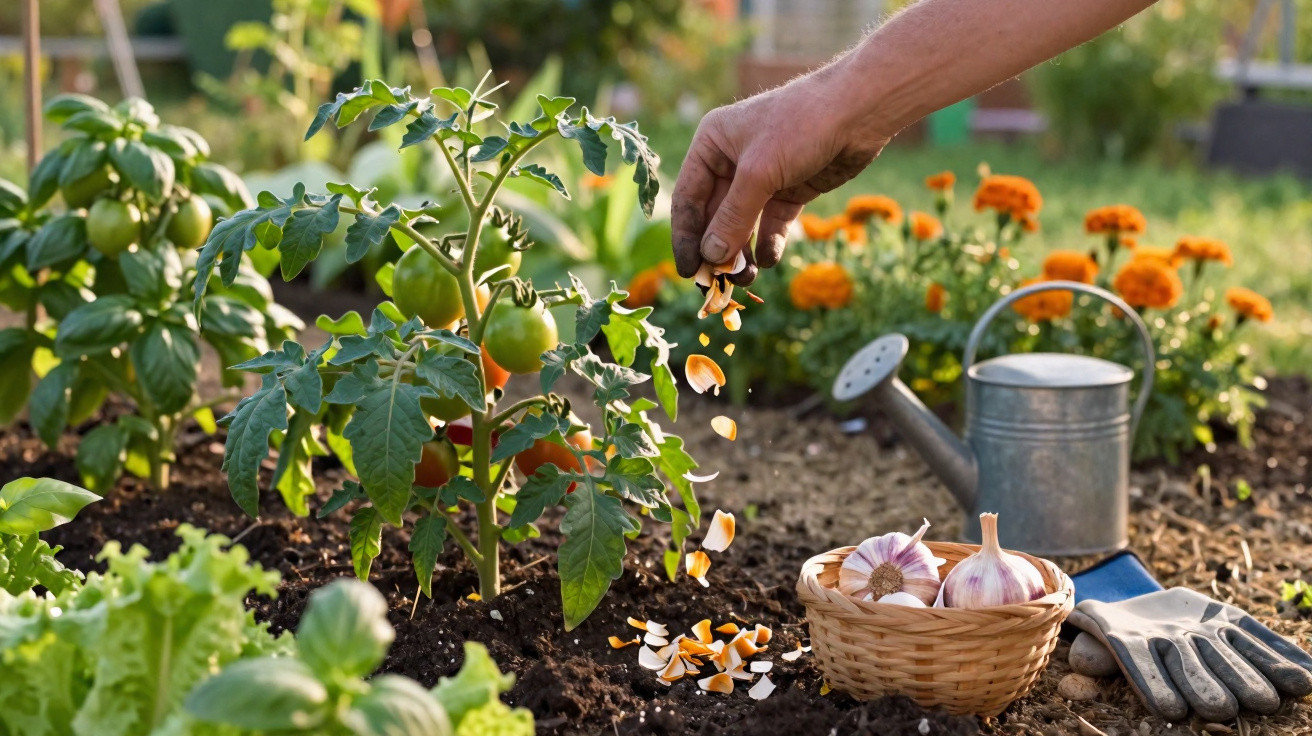
One of the most talked-about tricks in home gardening is scattering garlic skins over the bed as a form of natural protection. This easy approach-making good use of a kitchen leftover-is often used by seasoned gardeners to cut down pest activity on vegetables, whether in pots or small growing spaces, acting as an eco-friendly boost to everyday care.
How do garlic skins deter insects and protect the soil?
Garlic skins contain sulphur compounds that create the strong smell many insects steer clear of. When you spread them on the soil surface, they form a barrier that makes it harder for crawling pests to reach the plants, and can also disrupt insects that rely on scent to find food.
As well as repelling pests, this thin layer works like a light mulch, shielding the bed from harsh direct sun and helping to reduce moisture loss. Over time, some of the material breaks down gradually, releasing small amounts of nutrients and providing a subtle lift to overall soil health.
How to use garlic skins in the garden safely and practically
To get the benefit without harming your plants, it’s best to place a ring of skins around the stem while leaving a small gap right next to the base. This helps prevent excess damp building up and creates a “belt” that can slow certain crawling insects before they reach tender new leaves and delicate shoots.
A straightforward routine makes it easier to use the skins regularly, keeping them clean and effective over time:
- Set the material aside: keep clean skins only, with no food residue, salt, or grease.
- Dry them slightly: leave in a well-ventilated spot for a few hours to reduce the risk of mould.
- Spread over the soil: lay a thin, continuous layer around the plants.
- Top up as needed: replace when you notice they’ve broken down or the layer has thinned.
Which plants benefit most from garlic skins?
Garlic skins are commonly used in vegetable patches with crops that are vulnerable to chewing and sap-sucking insects. Leafy vegetables such as lettuce, kale, cabbage, rocket, and spinach are often protected this way, as are tomatoes, peppers, and aubergines grown in beds or containers.
In smaller spaces-like pots and window boxes-you can apply smaller amounts around herbs such as parsley, spring onions, basil, and coriander. In these situations, the layer can help the compost retain moisture, but it’s important not to pile it on too thickly, so you don’t reduce airflow at the surface.
Why do experienced gardeners reuse garlic skins in the vegetable patch?
More experienced gardeners value garlic skins because they’re inexpensive, convenient, and fit well into a more natural approach to pest control. They’re typically used alongside crop rotation, other repellent plants, and regular leaf checks, rather than relying solely on chemical products.
Reusing the skins also supports the idea of sustainable growing: it cuts kitchen waste, makes use of what you already have to hand, and adds an extra layer of protection in the garden. While it isn’t a miracle fix, when paired with balanced watering, good sunlight, and organic feeding, the method can help produce healthier harvests and encourage a garden that defends itself more naturally.

Comments
No comments yet. Be the first to comment!
Leave a Comment