
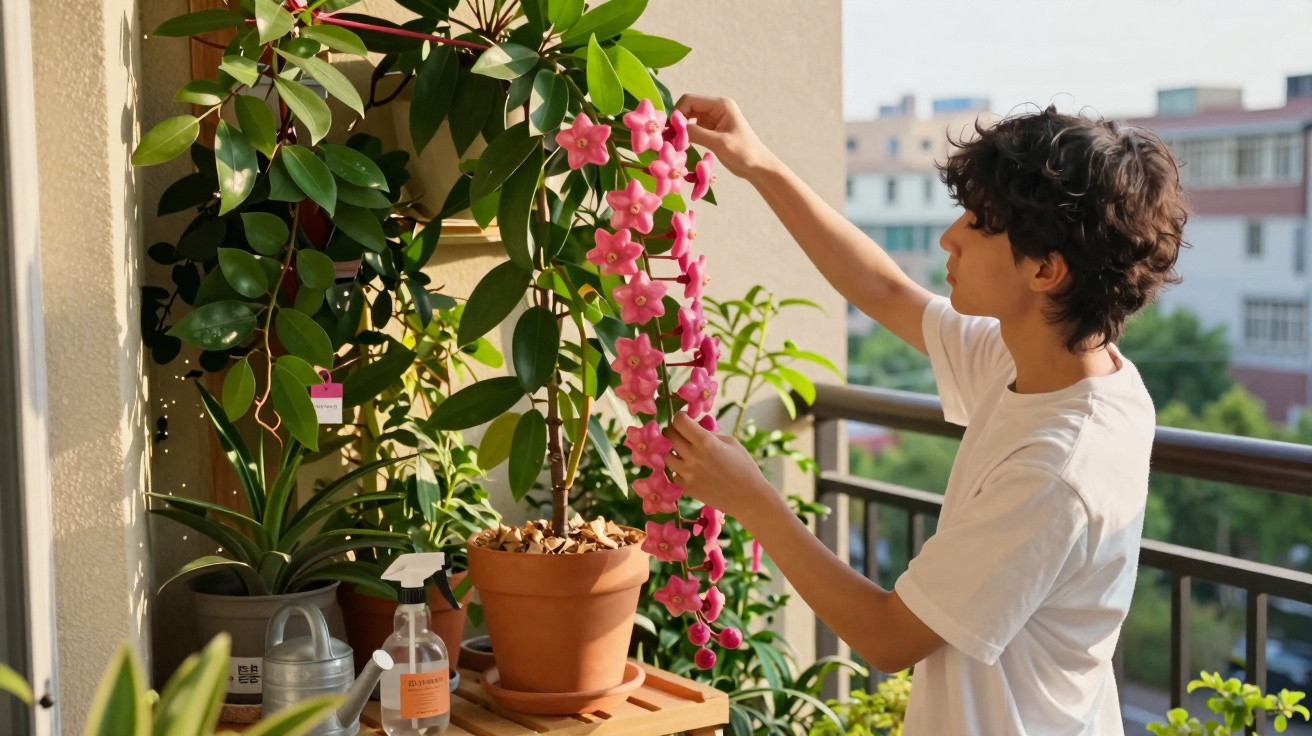
Growing aromatic plants in small flats adds energy and a sense of cherished memories to everyday city life. The beautiful wax flower is also a brilliant decorative choice, because it thrives in hanging pots and scents the whole home environment.
How does the wax flower behave in nature?
This striking species is an epiphytic climber native to tropical areas of Asia and Australia. In its natural habitat, it develops attached to tree trunks or rocks, producing aerial roots to take up nutrients.
As time goes by, its long stems begin to trail elegantly, creating a wonderful visual effect like a lush green cascade. Understanding this natural habit is essential if you want to recreate the right conditions for successful cultivation at home.
How to make the wax flower bloom intensely?
To ensure your balcony becomes wonderfully fragrant, there’s a simple secret linked to the pot size that… Read more
What is the ideal growing medium for this plant?
Because it is an epiphytic variety, its roots need excellent air circulation and cannot tolerate excess water sitting around them. Using ordinary compact potting soil makes the medium dense, which encourages rotting in the root system of this lovely plant.
The key is to put together a loose mix using porous ingredients such as pine bark and crushed charcoal. This blend provides ideal drainage and closely imitates the airy setting it finds in its original natural habitat.
Below, we recommend an excellent video made by the well-known YouTube channel Spagnhol Plantas, which shows-step by step-the main practical techniques for correct planting and for getting beautiful flowers at home:
How do you plant it correctly in pots?
Unlike many other ornamental climbers, the wax flower performs far better when grown in smaller, snug containers. Choosing a compact pot reduces the chance of too much moisture building up in the growing medium, helping to prevent harmful fungal issues.
To guide upward growth, you can make a cylindrical support using metal mesh fixed directly inside the pot. This clever structure allows the stems to climb securely and then form a decorative living totem.
Materials for the Perfect Planting
Essential items to set up your pot
Gather these basics to support healthy development of your plant:
- 1 Expanded clay for an effective drainage layer;
- 2 Synthetic drainage mesh to keep the loose growing medium in place;
- 3 High-quality slow-release fertiliser with micronutrients.
What daily care is needed?
Correct light is the deciding factor for this vine’s health, and it does best in spaces with plenty of bright, indirect light. Do not place the foliage in harsh daily sun, as strong rays can cause severe scorching and an overall yellowed appearance.
Watering must be very restrained-only when the surface of the growing medium is completely dry. Controlled moisture prevents root rot and helps the climber grow steadily and strongly on your small, bright balcony.
To make everyday care much easier for flat dwellers, we’ve set out below the three essential pillars of practical management that ensure complete success in the full development of this beautiful, vigorous indoor climber:
- Plenty of indirect light, with no exposure to strong sun;
- Moderate watering only when the growing medium is dry;
- Periodic foliar feeding to encourage continuous flowering.
How can you encourage abundant flowering?
Regular use of foliar bloom fertilisers is the key to producing clusters packed with flowers. Misting this nutrient solution onto the leaves and roots once a month activates the plant’s internal processes in an efficient and fast way.
Alongside the liquid feed, applying a slow-release fertiliser every three months supplies the necessary micronutrients. With this straightforward feeding schedule, your pot will produce fragrant flower clusters that refresh the look of your home.
Comments
No comments yet. Be the first to comment!
Leave a Comment