
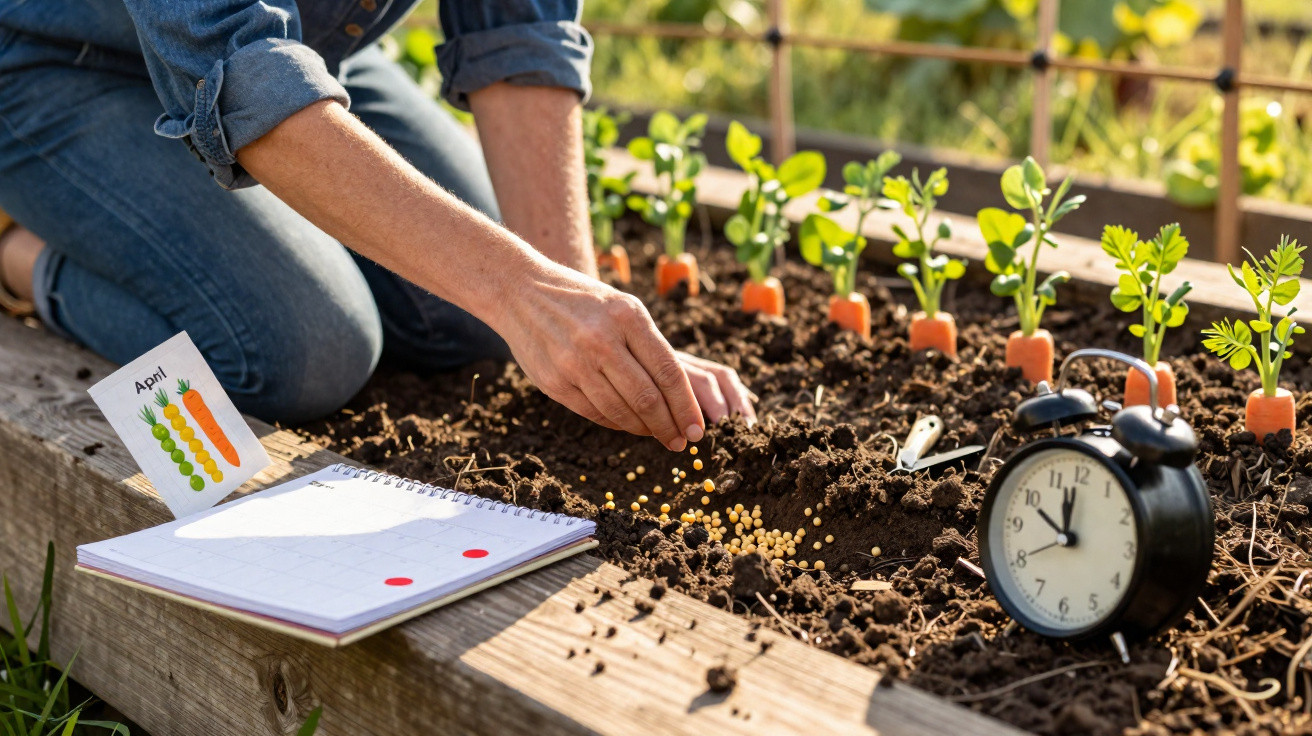
In the vegetable patch, the clock is ticking: miss the right moment and you may be cursing thin rows and tiny veg come summer.
Plenty of home gardeners are raring to go in spring, then still put sowing off “until next week”. That procrastination tends to backfire with two much-loved classics: peas and carrots. Both crops need a cool start - and April, in particular, often determines whether you end up with crisp pods and sweet roots in the basket, or a disappointing harvest.
Why April is the key moment for peas and carrots
Peas and carrots thrive in soil that’s fresh and not yet dried out. In April, the ground in most areas is still cool, holds plenty of moisture, and warms only gradually - ideal for steady, even germination.
“Anyone who sows peas and carrots by the end of April makes the most of spring moisture and lays the foundations for a reliable, generous harvest.”
In spring, the plants’ priority is root growth and anchoring themselves firmly. When that happens in a loose, lightly moist seedbed, they go on to produce strong shoots and resilient foliage. Late sowings into already-dry soil, by contrast, are fighting for survival from day one.
What goes wrong in the bed in May
May can look perfect in the garden: plenty of sunshine, pleasant temperatures, and everything bursting into green. But for fine vegetable seed, the conditions down in the soil can be far less forgiving.
Common issues from May onwards include:
- The top layer dries out quickly in sun and wind
- A hard crust forms that delicate seedlings struggle to break through
- Temperatures spike and cold nights become rarer - plants become stressed sooner
Carrot seed is extremely fine and is usually sown just beneath the surface. If a hard layer develops there, many seedlings quite literally get stuck. The result is patchy rows and crooked, stunted roots.
Peas suffer in a different way: if they face early, ongoing heat and drought stress, they produce fewer flowers. Fewer flowers inevitably means fewer pods. Even consistent watering can only compensate for that poor start to a limited extent.
What a late sowing date actually costs
If you only reach for the seed packet in May, you’re gambling - even with well-prepared soil:
- Uneven germination, or none at all
- Weak, spindly plants that are more vulnerable to diseases and pests
- A later harvest and a noticeably smaller yield
- Wasted seed, water, and time
“With peas and carrots, every day you delay in late April can end up costing you a whole bowl of vegetables.”
Many gardeners wonder why the very same variety looks so much better in a neighbour’s plot. Surprisingly often, the difference is the calendar - not the fertiliser.
The ideal timetable for home gardeners
As a rough rule of thumb for central Europe, peas and carrots are best sown outdoors during April wherever possible. In milder areas, that often works from the start of the month; in cooler locations, it’s more likely to be mid to late April.
A practical guide:
- Early April: get going in sheltered spots and lighter soils
- Mid-April: the sweet spot for most gardens
- Late April: the final chance, especially in drier regions
If you want to play it extra safe, use the forecast: when a wet weather front is on the way, sow just before it arrives. Natural rainfall then helps the seeds swell evenly.
How to grow carrots successfully from seed to harvest
Prepare the soil and make sowing drills
Carrots are fussy about soil structure. Stones and big clods later cause misshapen, forked roots.
- Loosen the soil deeply, removing stones and hard lumps
- Rake the surface to a fine, crumbly tilth
- Draw shallow drills 1 to 2 cm deep
- Keep roughly 25 to 30 cm between rows
Sow as thinly as you can - around one seed every 2 to 3 cm. If you sow too densely, you’ll need heavy thinning later, which puts unnecessary stress on the young plants.
Thin correctly after germination
Carrots are slow to sprout, often taking two to three weeks. Throughout that time, the surface must never dry out completely.
As soon as the first seed leaves appear, begin thinning:
- Gently tease seedlings apart with your fingers
- Aim for 3 to 5 cm between plants
- On very fertile soil, leave slightly more space
“Enough space between carrots is the decisive step towards straight, strong roots that look the part in the pan and on the plate.”
Sowing peas: from the first seed to full pods
Site and sowing distances
Peas prefer a sunny position, but they cope with cool air far better than with heat. Soil should be loose, but not freshly manured - too much nitrogen encourages leafy growth with few pods.
- Place seeds 3 to 5 cm deep
- Leave 5 to 8 cm between seeds
- Keep 35 to 50 cm between rows, depending on the variety
For dwarf varieties, a simple twig support or wire fence is often enough. Climbing types need sturdy supports of around 1 metre in height.
Care in the first few weeks
Water the rows thoroughly after sowing so moisture moves down into the soil. Over the next days, light but regular watering is usually enough to keep the surface from drying.
Once the plants reach about 10 to 15 cm tall, it helps to earth them up slightly. This adds stability and encourages additional side roots.
These simple tricks deliver a harvest bonus
If you want to give your peas and carrots a little extra help, a few small habits can make a big difference:
- A thin layer of grass clippings or fine mulch helps retain moisture
- Lay rows across the prevailing wind direction so the soil dries less quickly
- Feed carrots with slow-acting, relatively lean compost - no fresh manure
- With peas, keep watering consistent during flowering
“The gap between ‘perfectly fine’ and ‘wow, is this really my own veg?’ often comes down to small routines like these.”
Quick explanations for beginners
Many gardening guides use technical terms that can confuse newcomers. Two crop up again and again when it comes to sowing:
- Germination: the point at which the seed ‘wakes up’, swells, and the first seedling becomes visible.
- Seedbed: the top layers of soil where the seed sits - ideally finely crumbed and free of stones.
When you understand these basics, you plan beds more deliberately and quickly see why a sowing has worked - or hasn’t.
Why sowing early pays off more than once
Starting on time in April doesn’t just increase yield; it brings the whole vegetable season forward. Peas can often be picked while other crops are only just getting into their stride. After that, the bed is free for a second crop, such as bush beans or lettuce.
Carrots benefit from the head start too: early-sown rows usually produce crisp roots by high summer. Later sowings can then carry you into autumn. That way, your kitchen stays independent of the supermarket for longer and the vegetable patch remains productive for months - provided the seed goes into the ground now, in April.
Comments
No comments yet. Be the first to comment!
Leave a Comment