
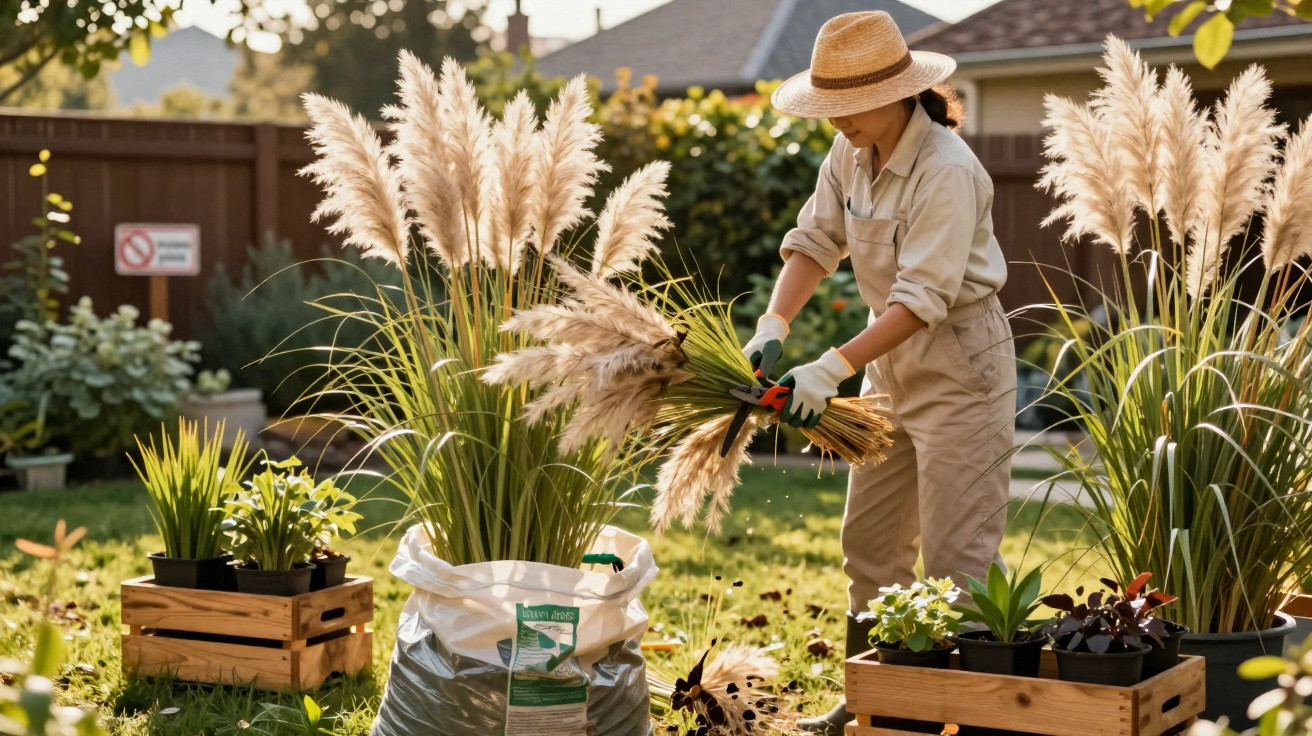
Pampas grass was, for years, the must-have plant for front gardens, patios and a dried arrangement in the living-room vase. Since a change in French law, however, this striking perennial is now tightly controlled. The reasons have nothing to do with fashion and everything to do with environmental damage and everyday safety. Many amateur gardeners are therefore asking the same thing: if the plant is already in the garden, could it cause trouble - and does it really have to go?
Why pampas grass is tightly regulated in France
Pampas grass (botanical name: Cortaderia selloana) originates from South America and forms dense clumps that can grow to more than 2 m tall and almost as wide. Its gently swaying plumes may look harmless, but specialists view the species as a genuine problem.
Each flower head can produce hundreds of thousands of tiny seeds, which the wind can carry for several kilometres. If a seed lands on a roadside verge, a dune system or unused land, a new plant can establish quickly. In this way the species colonises open ground, pushes out native plants and alters entire habitats.
Pampas grass is classed as an “alien invasive species”: it spreads on its own and harms native nature in the process.
In France, environmental authorities have documented the grass spreading aggressively in dunes, along road embankments and in nutrient-poor wetlands. These are precisely the places where rare plants adapted to harsh conditions depend on minimal competition. Once pampas grass arrives, it forms thick stands and takes light, water and space.
There are also additional risks that are often underestimated in day-to-day life:
- Risk of injury: the leaves have razor-sharp edges and can cut skin deeply.
- Issues for allergy sufferers: the pollen can trigger irritation or make symptoms worse.
- Fire load: in summer the clumps dry out significantly and, close to homes, can increase fire risk.
Against this backdrop, France added the grass to its list of banned invasive plants in 2023. The measure is based on European rules on invasive species, supplemented by national regulations.
What the ban in France actually prohibits
Since the relevant decree came into force, there are clear limits on living pampas grass. What used to be entirely normal for years is no longer permitted - particularly when it comes to trade and new planting.
Living plants, young plants, seeds and divisions of pampas grass may no longer be put into circulation in France.
Among other things, the rules prohibit:
- deliberately releasing pampas grass into the natural environment,
- planting it anew in private gardens or on public land,
- selling or giving it away, whether commercially or privately,
- transporting it if it is still capable of reproducing,
- using it for new plantings, for example by dividing old clumps.
Garden centres and nurseries have had to remove the plant from their ranges. For professionals, penalties can be severe: in certain cases, custodial sentences and substantial fines are possible. In practice, inspections focus mainly on businesses, imports and newly established plantings.
One important exception applies: dried decorative bundles made from cut plumes remain permitted, provided there is no longer any viable plant material. In strict terms, the law targets any form in which pampas grass can still reproduce.
Can pampas grass stay in a private garden?
For many home gardeners, the key question is whether an existing clump has to be removed. In France, the practical approach is to distinguish between plants already in place and new ones.
If pampas grass was planted in your garden before 2023, you are not automatically required to dig it out immediately. There is no blanket obligation to remove it straight away - but that does not mean owners have no responsibilities.
Garden owners are expected to prevent the grass from spreading further - for instance by seed drifting onto neighbouring land or into the wider countryside.
Several precautionary steps are recommended:
- Cut off flower heads early: remove the plumes before seeds ripen, to stop seed dispersal.
- Do not divide the clump: it must not be split and replanted elsewhere.
- Wear protective gear: because of the sharp-edged leaves, long clothing and sturdy gloves make sense.
- Dispose of it correctly: cuttings, roots and plumes should not go on the compost; put them into sealed bags for a recycling centre or municipal waste facility.
In sensitive areas - such as riverbanks, dune landscapes or protected wet meadows - environmental bodies advise removing existing clumps fully, step by step. Large, mature plants are extremely well anchored. In such cases, hiring a specialist contractor may be worthwhile to mechanically lift out the root system.
How to remove pampas grass safely
Anyone choosing to get rid of the plant should plan ahead, because taking out a fully grown clump is physically demanding. The work generally succeeds in a few stages:
- Cut all plumes down close to the ground to access the centre.
- Use a spade or crowbar to expose the root ball in a ring around the plant.
- Split the rootstock into sections and lever them out - for big specimens, it is better done by two people.
- Seal all plant material airtight in robust sacks and take it to an approved collection point.
Even a small piece left in the soil can regrow. For that reason, it is sensible to monitor the area for a few months and remove any regrowth immediately. Chemical treatments are usually neither necessary nor desirable in private gardens, as they add further strain to soil and the environment.
Safe alternatives for the decorative look
For many garden owners, the appeal of pampas grass is its relaxed, Mediterranean feel. A similar effect can be achieved quite easily with other plants, without encouraging an invasive species.
Popular alternatives include:
- Mexican feather grass (Stipa tenuissima): a delicate ornamental grass with a fine, flowing habit, ideal in pots and borders.
- Moor grass (Molinia): forms elegant, airy clumps and suits wildlife-friendly gardens.
- Blue fescue: compact blue-green grasses that combine well with other planting.
- Chinese silver grass (suitable cultivars): retailers offer site-appropriate, less problematic varieties with impressive stems.
| Species | Height | Visual effect |
|---|---|---|
| Pampas grass | to over 2 m | large, cream-coloured plumes, very dominant |
| Mexican feather grass | 40–60 cm | light, soft movement, ideal at the front |
| Moor grass | 80–150 cm | upright stems, natural meadow character |
| Blue fescue | 20–30 cm | blue cushions, very low maintenance |
If you already have dried plumes from earlier years decorating your home, you do not have to throw them away in France. Indoors or in a sheltered interior space, there is very little chance that viable seeds will escape and establish in nature. The key point is simply not to propagate any new living material.
What gardeners in German-speaking countries can take from this
Even though the ban itself applies specifically to France, it highlights a broader issue: ornamental plants can become a threat to nature in certain regions. Species that look harmless in a DIY store can cause serious damage in coastal areas, bogs or dry grasslands.
Before buying, a quick check can pay off: does the plant come from a different climate zone? Does it reproduce via large numbers of seeds? Are there signs it has already spread aggressively elsewhere? Asking these questions helps prevent problems before planting begins.
Neighbours are often easy to bring on board, too, if you explain why a fashionable plant can be problematic. Working together, a street or neighbourhood can be planted in ways that benefit bees, butterflies and native wildflowers - while still looking modern and decorative.
If you particularly like pampas grass, you can stick to safe alternatives in the garden and create the familiar boho look with dried flowers, grass bundles and other textures. That way the style remains - without dunes, embankments and wetlands gradually being taken over by a single species.


Comments
No comments yet. Be the first to comment!
Leave a Comment