
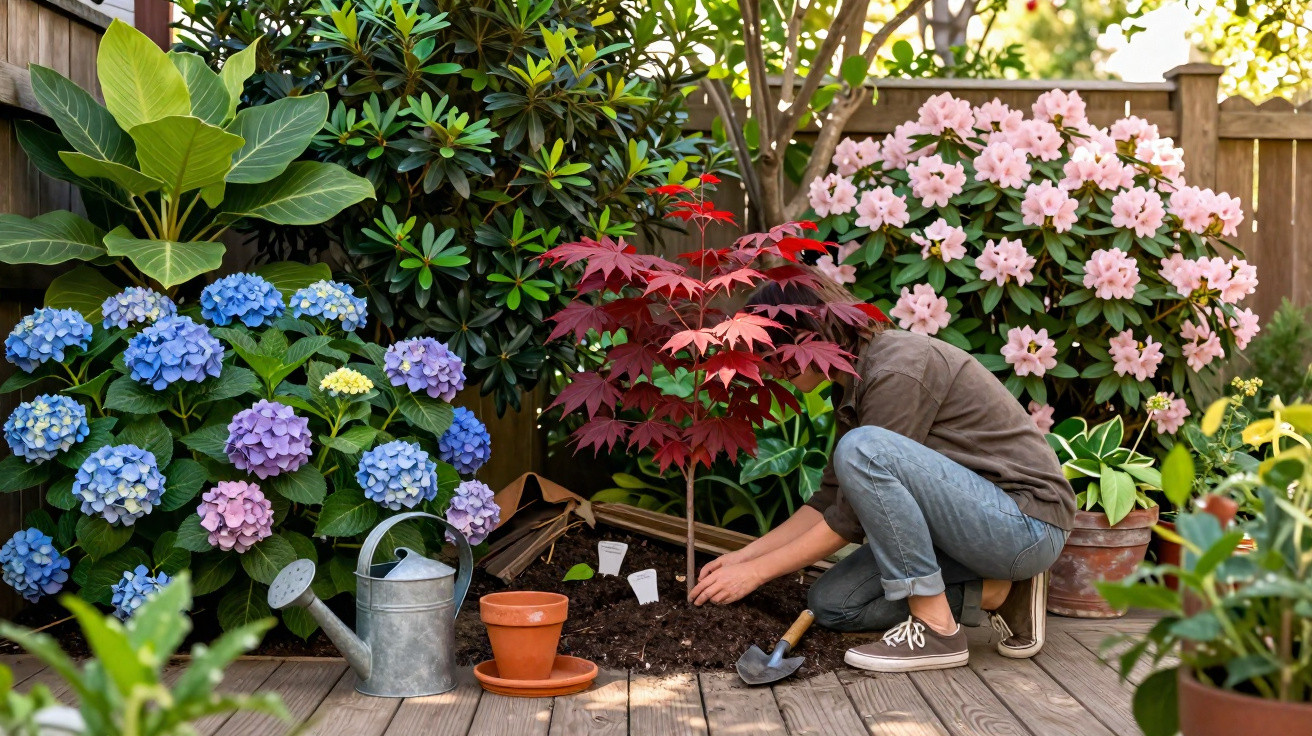
Shade beds are often written off as dreary leftover spaces: bare, awkward to plant up and short on colour. Yet with the right shrubs, a supposed trouble spot can become a calm, lush retreat. Five hardy species show how even north-facing corners, areas beneath trees or along house walls can be turned into genuine eye-catchers.
Why shade in the garden doesn’t have to be a flaw
It helps to start by rethinking what many see as the downside: a lack of sun. In reality, this creates a distinctive design opportunity. Shade planting relies less on the typical fireworks of sun-loving perennials and more on structure, foliage colour, texture and the interplay of light and shadow.
"With carefully chosen shrubs, the ‘dead corner’ becomes a peaceful, cool garden space that stays wonderfully pleasant, especially on hot summer days."
When you accept the conditions a site offers and pick suitable species, you avoid a lot of disappointment and unnecessary maintenance. Rather than constantly watering sun plants that scorch, you get a largely stable, long-lasting planting scheme.
Cherry laurel: fast screening for dark corners
Cherry laurel (Prunus laurocerasus) is among the most popular hedge shrubs across German-speaking Europe - and for good reason. It grows rapidly, stays dense all year thanks to its evergreen leaves, and copes surprisingly well with everything from partial shade to deeper shade.
It is particularly useful because cherry laurel can quickly shield narrow, rather gloomy boundaries or north-facing patios from prying eyes. Many people underestimate just how well it performs in these conditions.
- an ideal shrub for tall, dense hedges
- handles low light far better than many other hedge plants
- tolerates hard pruning and is easy to shape
That said, it isn’t maintenance-free. If left to its own devices, it soon becomes a wide, heavy-looking hedge. Two cuts per year - one in late spring and one in late summer - keep it neat and compact. A free-draining soil matters too, as waterlogging can damage the roots.
Hydrangeas: a burst of colour in the shade bed
For abundant flowers in shade, it’s hard to beat hydrangeas. Their large, rounded or more open flower heads bring colour to places where green foliage would otherwise dominate.
Choosing the right hydrangea for each shade level
A hydrangea is not just a hydrangea. If your spot stays genuinely dark, mophead hydrangeas (Hydrangea macrophylla) or velvet hydrangeas (Hydrangea aspera) are usually the best choices. Both manage well with little direct light, provided the soil remains consistently moist.
Slightly brighter locations - for example, dappled shade beneath an open tree canopy - are well suited to:
- oakleaf hydrangea (Hydrangea quercifolia)
- panicle hydrangea (Hydrangea paniculata)
These can cope with a few hours of sun each day, particularly in the morning or late afternoon. Harsh midday sun combined with dry soil, however, tends to show quickly in drooping leaves.
"If you plant hydrangeas, remember one thing: they are real ‘drinkers’. Without evenly moist soil, it won’t work."
A humus-rich, slightly acidic soil and a thick mulch layer help hold moisture in the ground. At the same time, the blooms attract plenty of bees and butterflies - an important boost for biodiversity, especially in densely built-up residential areas.
Japanese maple: delicate elegance for shady spots
Japanese maple (Acer palmatum) is something of a design star among shade shrubs. Its finely cut leaves - depending on the cultivar, green, red or even bi-coloured - create striking focal points even without flowers.
Many varieties actually prefer bright shade to full sun. The foliage is sensitive and can scorch when exposed to intense sunlight for long periods. Under a high tree canopy, on a north-facing aspect or in partial shade between buildings, the shrub shows its best qualities.
Japanese maples also perform excellently in large pots. This makes:
- north-facing balconies
- shady roof terraces
- covered front doorways
into stylish mini-gardens. Use a free-draining growing medium, choose a sheltered position out of strong winds, and provide some winter protection for the root ball when grown in a container.
Fatsia: a tropical feel in the city garden
If you want something more exotic, fatsia (Fatsia japonica) is well worth considering. Its large, hand-shaped leaves evoke rainforest plants and instantly add a holiday atmosphere to a back courtyard.
Fatsia thrives in partial shade to shade, copes remarkably well with urban heat, and is also very well suited to containers. Beneath tall trees or beside walls where light is limited, it can make a real statement.
"With just one well-placed fatsia, a dark front entrance or courtyard can be noticeably improved - almost like a natural sculpture."
One important note for households with children or pets: the black berries that appear in autumn may be popular with birds, but they are considered poisonous to people and animals. If you want to be cautious, prune off the flower heads in good time or place the plant somewhere small children cannot easily reach.
Rhododendron: clouds of blossom with little sun
Rhododendrons have long been established in the Central European climate. They favour cool, slightly acidic soils and dappled shade. They are especially happy beneath tall trees that are not too densely planted.
Many modern cultivars are impressively frost-hardy. They keep their glossy leaves through winter and produce striking “clouds” of blossom in spring in white, pink, red or purple. In the shoulder season, when little else is flowering, they provide powerful splashes of colour.
Like hydrangeas, rhododendrons benefit from a loose, humus-rich growing medium that holds moisture without becoming waterlogged. A layer of bark mulch or leaf mould protects their shallow roots and helps keep the soil cool.
How this shade strategy improves the whole garden
Using shade shrubs deliberately allows you to make far more effective use of your garden. Instead of cramming sunny areas with plants while leaving darker zones empty, you can create a tiered plan: sun lovers towards the front, and shade specialists along the house wall, fence line or beneath trees.
| Shrub | Ideal position | Main benefit |
|---|---|---|
| Cherry laurel | Partial shade to shade, boundary line | fast, evergreen screening |
| Hydrangeas | Shady borders with moist soil | plentiful flowering, good for insects |
| Japanese maple | Bright shade, sheltered from wind | refined leaf colour and autumn colour |
| Fatsia | Partial shade, protected courtyards | exotic look, large leaves |
| Rhododendron | Under tall trees, acidic soil | early, abundant spring flowers |
Beyond appearance, there is also an ecological upside. Shrubs filter fine dust, bind CO₂ and help stabilise the soil. Flowering species such as hydrangeas and rhododendrons provide food for pollinators, while evergreens like cherry laurel offer birds shelter and nesting opportunities.
Practical tips for successful shade planting
If you are planting in shade, prepare the soil thoroughly first. Compacted, dry ground beneath mature trees often needs:
- generous additions of leaf compost
- deep loosening with a garden fork
- a permanent mulch layer to reduce drying out
Patience matters as well. In shade, many shrubs establish a little more slowly than they would in full sun. A gentle start is rewarded with longevity and reliably stable shapes. Targeted watering during the first two years after planting helps plants settle in; after that, most of the species listed above manage well with normal rainfall.
How to combine shade shrubs with other plants
Things become particularly interesting when shrubs are paired with suitable perennials and ground cover. Beneath hydrangeas and rhododendrons, for example, hostas, ferns and barrenwort work beautifully. They fill gaps at ground level and reinforce the calm, almost woodland-like mood.
Japanese maple looks excellent with delicate ornamental grasses or low, evergreen plants such as cotoneasters. Fatsia is most effective when the surrounding planting is understated - for instance, simple green ground cover - so its large leaves can take centre stage.
Used thoughtfully, these five shrubs can completely change how you see shady areas. Places once treated as problem zones become quiet retreats with surprising variety, enhancing the garden in visible, climatic and ecological ways.
Comments
No comments yet. Be the first to comment!
Leave a Comment