
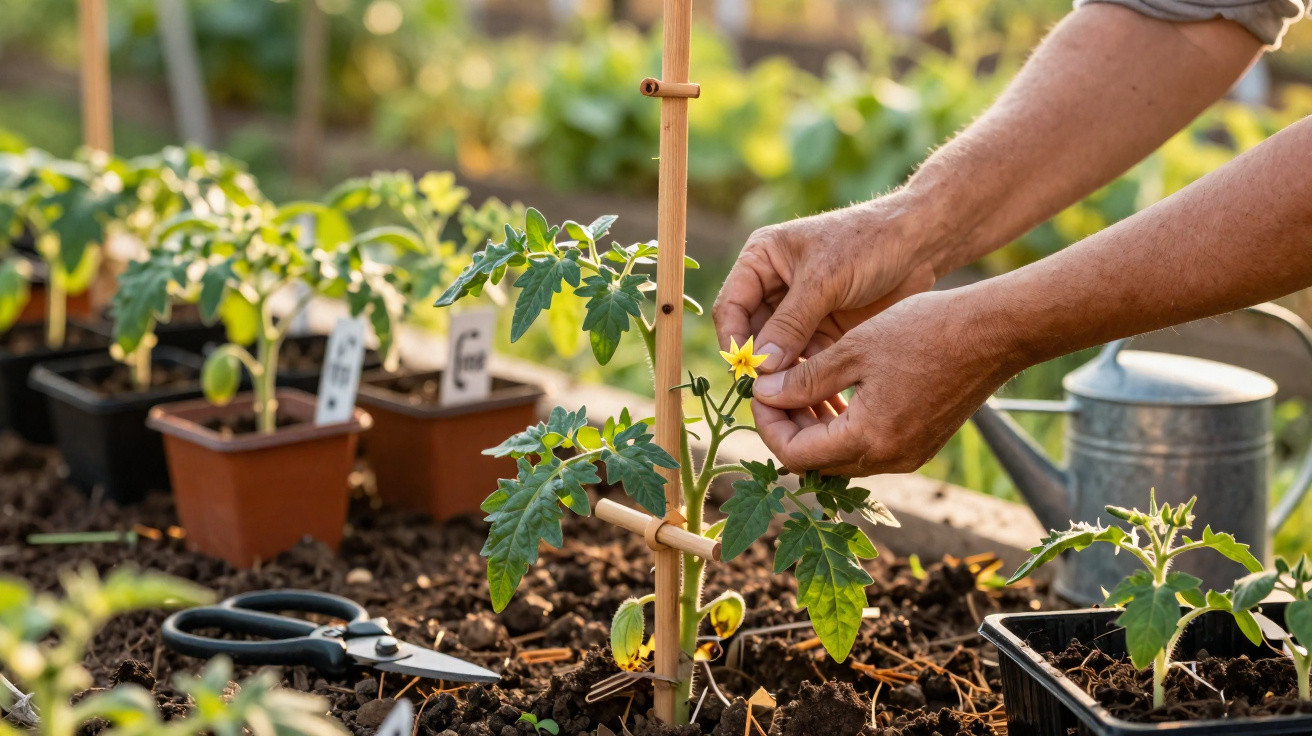
Many amateur gardeners are delighted to spot the first flower on a tomato plant - and, without realising it, make their first mistake of the season.
When people plant young tomatoes, they usually focus on the variety, the position and the fertiliser. One tiny detail is overlooked almost every time: that very first flower. Yet this small bloom plays a real part in whether your tomatoes go on to crop heavily - or whether you end up with just a handful of weak, undersized fruits.
Why the first tomato flower can become a problem
Transplanting is stressful for any tomato plant. It moves from loose compost in a pot into a firmer garden bed, often with different temperatures and more wind. At that moment, every bit of energy the plant can access matters.
If you simply leave the first flower in place, this is what happens: the tomato immediately starts supporting a developing fruit set. Instead of putting its effort into building deeper roots and steady, vigorous growth, it begins “feeding” a future tomato. That slows the plant’s establishment.
"Whoever removes the first flower directs the young tomato’s full strength into roots and shoots - the foundation for a strong harvest."
If you keep the bloom, the downsides often only become obvious weeks later:
- the young plant struggles more to settle in
- those first fruits are frequently smaller and less aromatic
- the overall structure looks weaker, and both yield and consistency suffer
It may sound harsh, but for the plant it is more like relief: it doesn’t have to cope with moving house and forming fruit at the same time.
The right time to plant out tomatoes
The best moment to plant tomatoes outdoors depends heavily on where you live. Frost and cold nights are the biggest enemies of young plants.
Rough guidance by region
- Warmer regions / south-facing areas: often from mid-April
- Coastal areas with a mild climate: early to mid-May
- Cooler regions, northern areas, higher ground: usually only after the “Ice Saints”, so late May to early June
More important than the date on the calendar are two temperature thresholds:
- soil temperature at least around 15 °C
- night-time temperatures consistently above 10 °C
Even a single night dropping to 6 °C can noticeably set the plant back. It will establish more slowly and tend to remain more vulnerable.
Harden plants off instead of giving them a shock
Tomatoes raised in a warm living room or greenhouse meet sun, wind and cooler air outdoors. Without preparation, that change is a direct stress trigger.
- put the plants outside each day for about a week
- begin with a few hours in shade or partial shade
- extend the time outside and gradually increase exposure to sun
By “hardening off” in this way, plants adapt to real conditions. They become tougher and the transplant shock when you finally plant them out is much reduced.
Exactly which flower you should remove
What matters is the very first flower on the lowest truss - usually the first small cluster on the main stem. On bought tomato plants, you can often already see a bloom that is open or just about to open in this spot.
Do it like this:
- hold the flower gently between thumb and forefinger
- pinch it off with a clean, firm motion
- alternatively, use small garden scissors that have been disinfected
- make the cut right at the base of the flower
Take care not to damage the main stem. A tear or crush on the stem gives fungi and rot an easy route in.
Flower or side shoot - which is which?
Many gardeners confuse flowers with so-called side shoots (often removed by “pinching out”). These are shoots that appear in the leaf axils - in other words, right in the angle between the main stem and a leaf.
- Flower trusses: sit on the stem and carry small buds or already-yellow, star-shaped flowers
- Side shoots: look like extra little stems with leaves, but without flowers
Side shoots are removed later in the season, especially on tall, indeterminate varieties. The first flower, by contrast, is taken off before or as you plant the tomato into the bed.
"Rule of thumb: remove the flower before planting, manage side shoots during the season."
How to support the tomato after planting
Once planted, a tomato typically needs ten to fifteen days to properly settle its roots into the new soil. Care during this window makes a big difference.
Water correctly for strong roots
- water thoroughly once or twice a week rather than little-and-often
- avoid daily light sprinkling
- keep the area around the root ball moist, but not waterlogged
- keep leaves as dry as possible to reduce fungal disease
Deep watering encourages roots to grow downwards. Later on, that makes the plant less dependent on short spells of rain.
Use flower numbers to influence fruit size
As soon as your tomato has established well, it will quickly form new flower trusses. If you simply let everything develop, you often get lots of fruit - but smaller ones. With a little control, you can improve quality.
Practical rule for home gardeners:
- leave around three to four flowers per truss
- limit the total number of trusses per plant to five to six
This helps the plant focus its energy on fewer tomatoes that are larger, more flavoursome and better structured.
Use side shoots as free new tomato plants
If you throw side shoots away, you are binning potential. Many of these shoots can be grown on as separate plants.
- choose a healthy side shoot about eight to ten centimetres long
- place it in a glass of water in a bright spot, but out of full sun
- wait a few days until the first roots appear
- pot it up into compost or plant it straight into the bed
In this way, you can raise new plants at no extra cost, though they usually crop a little later. With long-cropping varieties, this can extend the harvest season because younger plants can still produce strongly later in the year.
When the first-flower rule doesn’t apply
Tomatoes broadly fall into two types: bushy varieties that reach a limited height, and tall-growing varieties that keep stretching upwards all season.
Bush tomatoes: a bit more forgiving
With determinate (height-limited) varieties, upward growth stops after a short period. They branch more and form compact, bushy plants. These types produce fewer side shoots, and removing the first flower is less critical. They are often grown in pots or on balconies.
Tall-growing tomatoes: removing it pays off most here
Indeterminate varieties keep growing upwards throughout the season. With them, taking off the first flower has the biggest impact: they build a stronger root system and develop sturdier shoots that can carry many trusses later.
Well-known examples in this group include fleshy oxheart types, classic cordon tomatoes, and many darker heritage varieties. If you grow these high-performing types, you benefit noticeably from consistent pruning decisions right at the start of the season.
Why this small early snip pays off again and again
It only takes seconds, but it brings several advantages:
- stronger root growth in the first weeks
- a better start after planting out, with less of a “stalling phase”
- sturdier shoots that cope better with wind and rain
- more even fruit size and often a more intense flavour
In years with changeable weather, that head start is particularly noticeable. Plants that prioritised roots instead of the first fruit tend to cope better with cold spells and dry periods.
If you are unsure, you can run a simple test in your own garden: remove the first flower from one plant, and leave it on the plant next to it. Differences in growth, fruit size and total yield will give you the most convincing answer - straight from your own bed.

Comments
No comments yet. Be the first to comment!
Leave a Comment