
While plenty of amateur gardeners prefer to stay cosy indoors over winter, an ideal window often slips by unnoticed: the chance to build a loose, nutrient-rich soil with very little effort. A lesser-known permaculture approach avoids digging entirely, makes use of kitchen and garden waste, and can turn even compacted problem patches into fertile beds by spring.
What “lasagne gardening” is really about
The name sounds like something from a cookbook, but it describes the method surprisingly well. Just as a baked lasagne is built in layers, this garden bed is assembled in layers too-only using organic materials rather than pasta sheets. Built directly on top of the existing ground, the pile acts like a shallow, in-place compost system that gradually becomes humus-rich, living soil.
“Lasagne gardening means you feed the soil first, not the plants-and the plants benefit twice later on.”
The idea mirrors nature. In woodland, nobody loosens the soil and nobody clears away leaves. Leaf litter, twigs, dead herbs and animal manure collect, break down slowly and form a thick layer of humus. Lasagne beds bring that same process into the vegetable garden-sped up and placed exactly where you want to harvest.
If you begin in January or February, rain, frost, thaws and soil life have several months to transform the materials. By spring, you have a loose, richly dark bed ready for planting straight away-no spade and no rotavator.
The foundation of every lasagne bed: cardboard knocks back weeds
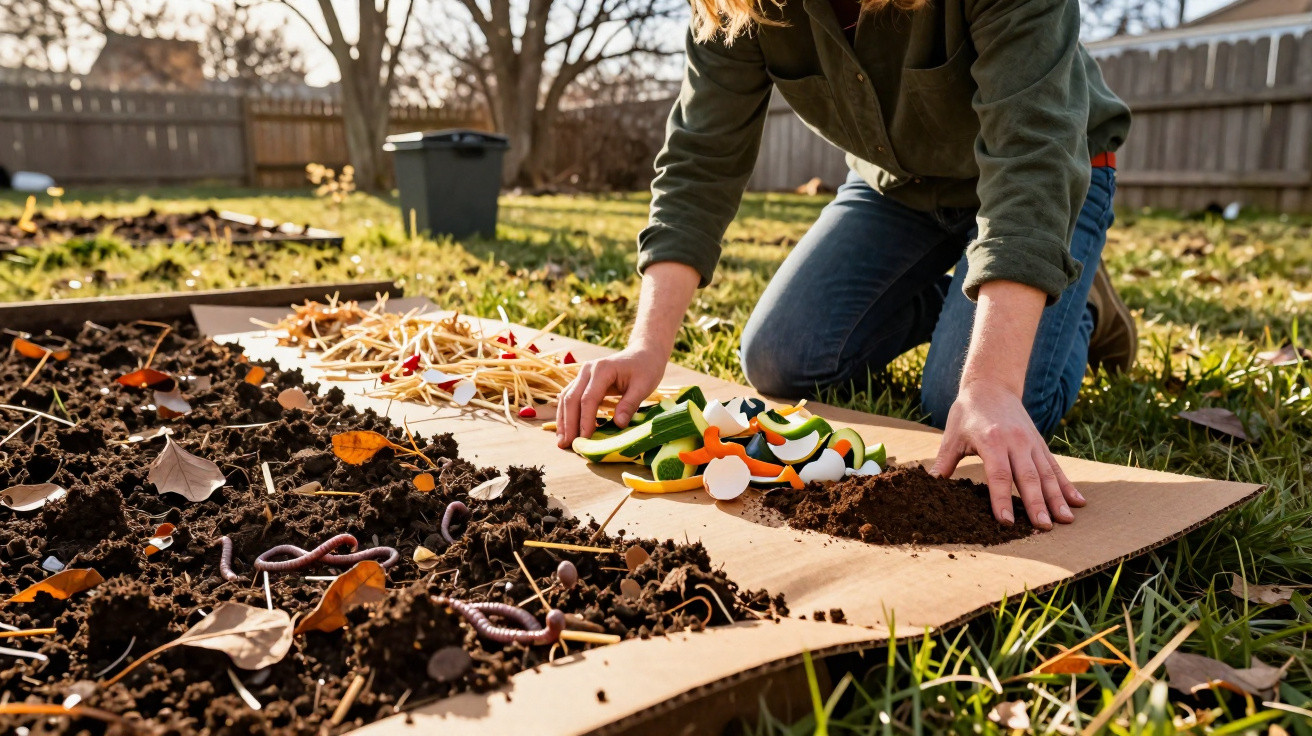
The first step may feel unusual, but it matters: instead of digging, you lay a layer of plain, brown, uncoated cardboard directly onto the ground. That could be a lawn, a weedy strip, or even bare, crusted soil.
The cardboard has two jobs:
- Blocking light: the ground beneath is fully shaded, so existing grasses and weeds die off and rot in place.
- Food for soil life: cardboard is high in carbon; once damp it softens and becomes attractive to earthworms and bacteria.
It’s important to remove anything plastic: parcel tape, labels, window film. Then overlap the pieces closely-leave at least 10–15 cm of overlap so there are no gaps.
“Water well after laying it: only thoroughly soaked cardboard hugs the ground and begins breaking down quickly.”
This also lets you mark out the bed area precisely, creating a clearly defined footprint to build on layer by layer.
The carbon–nitrogen trick: layering in the right order
Above the cardboard comes the real “lasagne build”. The method relies on alternating two groups of materials-so-called “browns” and “greens”. The logic is a chemical balance between carbon (C) and nitrogen (N).
Brown layers: structure and water storage
“Brown” means dry, more fibrous materials with lots of carbon. Typical winter options include:
- straw or hay
- collected, dry autumn leaves
- woodchip or shredded branches
- a small amount of sawdust or wood wool
- non-glossy newspaper torn into strips
These layers can be relatively thick. They keep the structure airy and act like sponges, holding water and releasing it evenly to future roots.
Green layers: the engine of decomposition
“Green” covers nitrogen-rich materials that are usually soft and moist. In winter, the most practical choices are:
- vegetable and fruit peelings from the kitchen
- coffee grounds and tea bags with no plastic content
- leftover grass clippings, if you have them
- fresh or partly rotted farmyard manure
- wilted kitchen herbs, potted herbs, and faded houseplant trimmings
These ingredients fire up the microorganisms that break everything down. Too much can quickly lead to smells and rot; too little slows the process.
“A simple rule of thumb: layer roughly two parts brown material to one part green material.”
On top of the wet cardboard, start with a coarse, loose layer such as twigs or straw. Add a thinner green layer, for instance kitchen scraps or manure. Then put on a noticeably thicker brown layer-leaves work well. Repeat that pattern until you’ve built a mound about 30–50 cm high.
It looks enormous at first, but it settles significantly over the following months-often down to about half the height.
Winter turns into your own mini recycling centre
Starting lasagne beds in January also tackles household waste almost automatically. Instead of putting food waste into the general bin or repeatedly driving to the local recycling centre, it goes straight to where it will do its job: the bed.
Typical winter leftovers that are particularly useful:
- peelings from root vegetables, squash and beetroot
- small amounts of citrus peel, roughly chopped
- stalks from cabbage, broccoli and cauliflower
- remaining perennial stems from autumn tidy-ups
- old, spent potting compost or balcony planter soil
Old potting compost in particular gets a second life this way. It still contains minerals and microorganisms that help colonise the fresh layers. Chores like “clean the kitchen” or “clear the beds” gradually become a step-by-step building project for the next harvests.
Invisible helpers: earthworms as free soil workers
Once the lasagne is assembled and well watered, the real work starts-below the surface. Cold and wet conditions don’t stop soil life entirely; if anything, the organic mass attracts earthworms, woodlice, springtails and countless bacteria.
“Earthworms create vertical channels, mix cardboard, soil and compost, and leave castings that plants can use immediately.”
Earthworms in particular constantly move between the original ground and the layers above. They draw fine particles down, loosen the soil, create air channels and improve drainage and water movement. What used to take hard work with a digging fork, they do quietly and continuously.
Slow decomposition also generates warmth. On frosty nights, the temperature inside a lasagne bed stays slightly higher than in undisturbed ground. This keeps biology active for longer and helps the bed warm up faster in spring.
The moment of truth in spring: planting without digging
In April or May you can see what the winter months have done. The tall mound has sunk, and the layers are barely recognisable. Instead, you’re left with a dark brown, crumbly material that looks like woodland soil and smells pleasantly earthy.
Planting now requires no heavy garden labour. Most of the time, you only need your hand or a small trowel to make a planting hole. For young plants, you can add a little fine compost or seed compost into the hole, set in the root ball, and cover again with the lasagne mix.
Even if there are still visible scraps in the top few centimetres, plants are rarely bothered. In fact, continued breakdown acts like slow-release feeding and a mulch layer at the same time, reducing drying out.
Another advantage: far fewer weeds germinate under the cardboard and thick layers. The classic surface “capping” after heavy rain is reduced; the soil stays open, water soaks in, and roots find an easy path.
“Less weeding, less watering, less hauling-the real effort happens months earlier, while others are still taking a winter break.”
What to watch for-and what pays off most
A few basic rules help lasagne beds work well long term:
- Avoid coated cardboard, glossy leaflets and heavily coloured packaging.
- Don’t add meat, cheese or cooked leftovers, as they attract unwanted animals.
- Roughly chop large pieces-such as thick cabbage stalks-so they rot faster.
- After dry spells, water the lasagne occasionally, especially on light soils.
- For sensitive vegetables, start with young plants rather than sowing directly into the lasagne at first.
The approach is especially worthwhile on difficult ground: heavy clay soils that otherwise form clods, or compacted lawn areas. The thick organic layer brings life up to the surface, loosens and improves what’s underneath, without you having to break it open beforehand.
How to keep using the system year after year
A lasagne bed isn’t a one-off. After the first season, you can add new layers in autumn and winter-thinner this time, more like a blend of mulch and a light compost top-up. Kitchen scraps, leaves and a bit of straw on top keep the soil covered throughout the year.
Over the years, this builds an ever-deeper, humus-rich layer. Water needs drop, plant roots reach further down, and yields become more reliable. If you like, you can combine the method with mixed planting or other permaculture elements-for example supports for climbing beans or small fruit bushes around the edges.
Many hobby gardeners who start with one lasagne bed gradually add more areas: a strip for squash and courgettes, a sunny section for tomatoes, a small snack garden for children. Initial scepticism often gives way quickly to the realisation that “no digging” isn’t laziness-it’s using natural processes intelligently.
Comments
No comments yet. Be the first to comment!
Leave a Comment