
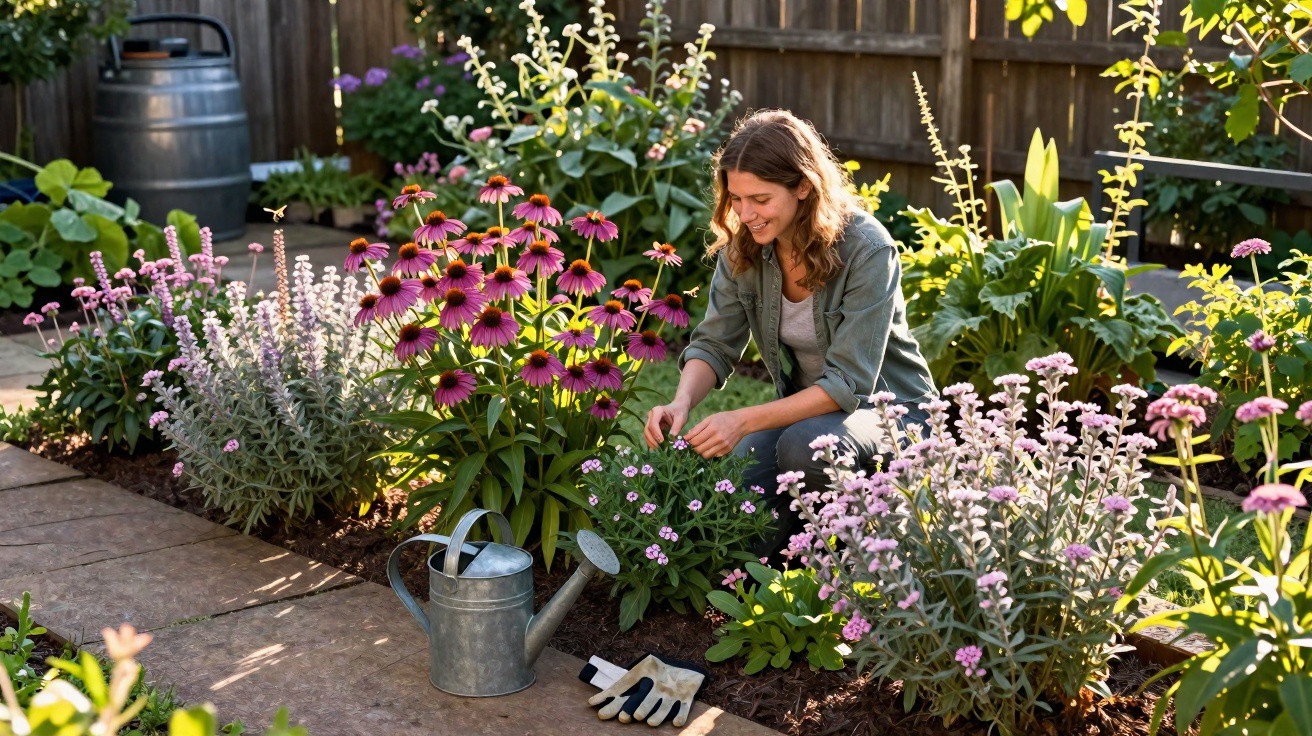
Many hobby gardeners know the cycle: you plant with enthusiasm in spring, everything dries out in high summer, and by autumn you are starting again from scratch. Yet there are plants that barely react to weather swings, return reliably every year and demand very little attention. Hardy perennials are the quiet workhorses of the border - and that is exactly what this article is about.
Why hardy perennials are in demand right now
Recent years have shown just how unpredictable the weather can be: extended dry spells, then heavy downpours, followed by late frosts in spring. A lot of traditional garden plants struggle with this. Perennials that tolerate heat, wet conditions and sharp temperature changes are therefore becoming far more important.
"Those who choose resilient perennials save water, time and frustration - and still enjoy a garden picture that keeps flowering year after year."
At heart, there are three clear benefits:
- Less work: plant once and enjoy them for many years.
- A steadier border: tough species cope better with extreme weather.
- More life in the garden: many of these perennials attract bees, butterflies and other beneficial insects.
1. Yarrow (Achillea) - the indestructible long-flowering perennial
Yarrow is among the toughest perennials you can grow. It typically reaches around 80–90 cm, forms fine, fern-like foliage, and carries dense, flat flower heads in white, yellow, pink or red, depending on the variety.
What makes it so useful is its tolerance: it can handle persistent rain as well as weeks of drought surprisingly well. Even when the soil briefly feels almost waterlogged, it often carries on flowering as if nothing has happened. And during prolonged dry periods, it gets by with very little watering.
- Position: full sun to light partial shade
- Soil: fairly poor, well-drained
- Care: cut off spent flower heads; it will often produce a second flush
2. Coneflower (Echinacea) - a magnet for bees and butterflies
Coneflower, often referred to simply by its botanical name Echinacea, brings a small slice of summer meadow into the border. The blooms resemble large daisies with a distinctive raised cone in the centre, glowing in white, yellow, orange, pink or purple.
Although it looks delicate, the plant is in fact extremely robust - especially in warmer areas. Many species and cultivars originate in North America and are used to strong temperature fluctuations.
Practical bonus: numerous Echinacea types are outstanding insect magnets. If you want to create an insect-friendly bed, this is a very dependable choice.
Choosing the right coneflower (Echinacea) for your garden
It is worth checking which coneflower species are considered well-suited to your area or locally native. These tend to cope better with local weather extremes and are usually more resistant to disease.
| Species | Height | Special feature |
|---|---|---|
| Purple coneflower | 80–120 cm | classic purple flowers, very insect-friendly |
| Yellow coneflower | 60–90 cm | bright yellow flowers, ideal for prairie-style beds |
| Modern cultivars | up to 70 cm | compact growth, many colours, often ideal for small gardens |
3. Solomon’s seal - an elegant perennial with real stamina
At first glance, Solomon’s seal can seem almost fragile: arching stems, silvery-green leaves, and bell-shaped flowers, usually white or in violet tones. In the border, however, it proves far tougher than its appearance suggests.
From spring right through into autumn it grows on reliably, copes well with heat, and needs only moderate amounts of water. If you have a lightly shaded spot under shrubs or alongside a fence, it makes an excellent gap-filler.
- Position: partial shade, ideally near the edge of shrubs
- Soil: humus-rich, moist, not too dry
- Care: cut stems back close to the ground in autumn
4. Catmint - a scented cushion that simply returns
Catmint is one of those plants you may barely notice - until it suddenly starts flowering and releasing its fragrance again. Many gardeners say they have gone for months without paying it much attention, only to find themselves surprised by a richly flowering, sweet-smelling carpet.
This perennial forms grey-green, slightly hairy leaves and masses of small flowers, usually blue or violet. It works brilliantly as a border edging, in rock gardens, or as a loose ground cover.
"Catmint is a textbook example of a plant you can almost forget after planting - and it still comes back reliably year after year."
Another advantage: bees and bumblebees flock to it, and cats are often irresistibly drawn in. If you would rather avoid that, place it nearer the street-facing edge of the bed, or away from seating areas.
5. Other hardy perennials that ask for very little care
Beyond the plants above, there are plenty of other dependable performers suited to low-maintenance gardens. Eight options that work well in many borders:
- Yarrow - heat- and rain-tolerant, long flowering season
- Coneflower (Echinacea) - strong colours, insect-friendly blooms
- Solomon’s seal - elegant choice for partial shade
- Catmint - long-flowering, scented cushion
- Daylily - extremely robust, fresh flowers each day
- Lady’s mantle - covers ground well, also enjoys rain
- Hardy geranium (cranesbill) - ideal ground cover, long flowering
- Sedum (stonecrop) - perfect for dry, sunny spots
How to plan a low-maintenance perennial border
If you genuinely want less work, it is not enough to choose tough species - you also need to combine them intelligently. The goal is a border that covers as much soil as possible. Bare ground dries out faster and is quickly taken over by weeds.
Useful rules of thumb:
- Layer heights: put tall perennials at the back and lower ones towards the front.
- Plant densely: add one more plant rather than one fewer, so the soil is not visible later on.
- Mix flowering times: combine spring, summer and autumn bloomers so there is always colour in the border.
Saving water with the right plants
Many hardy perennials manage with surprisingly little water once they are well established. In the first few months after planting, they still need regular help. After that, it is usually enough to water only during longer dry spells.
On light, sandy soils in particular, a mulch layer made from bark chips or shredded prunings is worthwhile. It keeps moisture in the ground for longer and suppresses weeds. Yarrow, catmint and stonecrop benefit especially.
Key terms explained
Perennial: a plant that lives for several years; its above-ground growth often dies back in autumn, while the rootstock overwinters in the soil and produces new shoots the following year.
Hardy: plants that tolerate the typical winter temperatures of a region outdoors without protection. What counts as hardy varies by climate zone.
Free-draining soil: soil in which water can run away easily. Waterlogging harms many perennials more than brief dry spells.
How to combine hardy perennials sensibly
A successful low-maintenance border is not only about resilience, but also about appearance. Yarrow and coneflower pair well because they like similar conditions and their colours complement one another. Between them, lower cushions such as catmint or lady’s mantle can knit the gaps together.
For partially shaded areas, a mix of Solomon’s seal, hardy geranium and various hostas works well. This creates a long-lasting, dense and low-effort green structure that still looks attractive even without daily watering.
If you prefer to start small, begin with just one perennial border, watch how it performs over a season, and top up planting where needed. That way you gradually build a garden that largely looks after itself - and leaves you with more time to enjoy it than to water it.


Comments
No comments yet. Be the first to comment!
Leave a Comment