
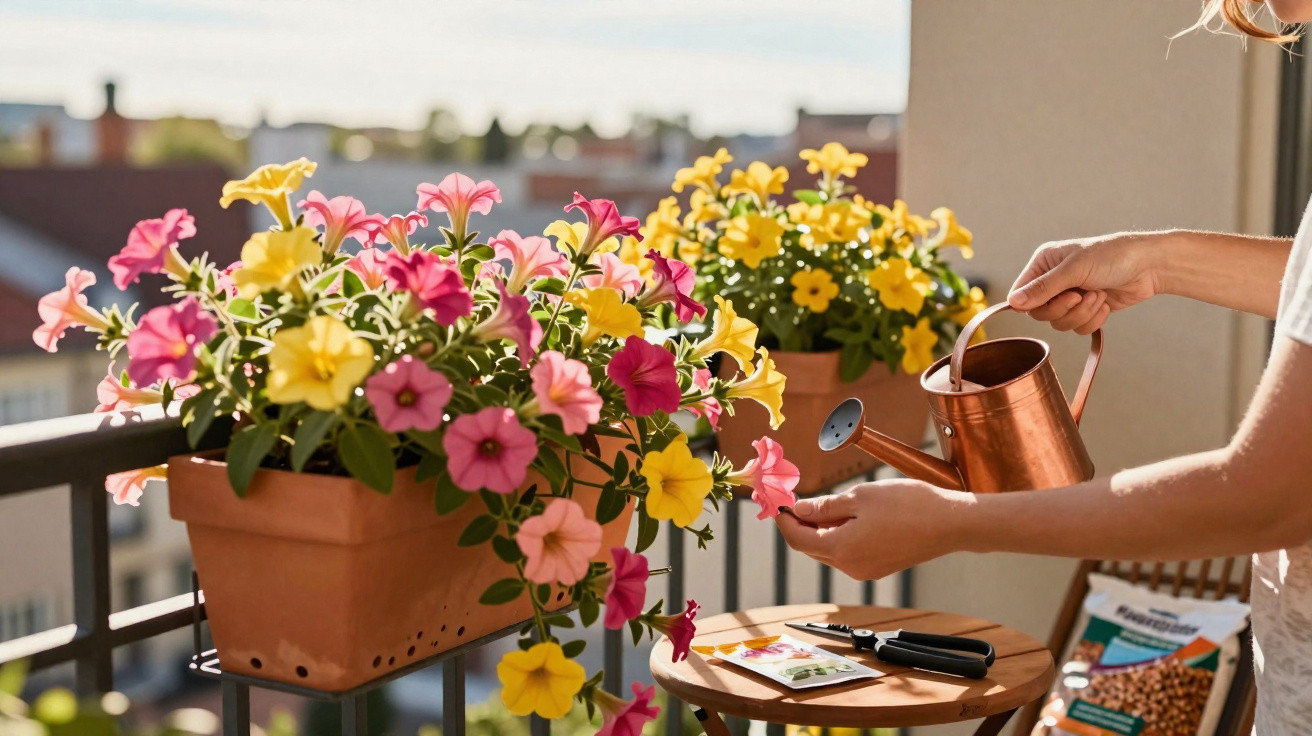
On countless photos in gardening catalogues you see the same look: planters with vibrant “clouds” of flowers spilling well over the edge. There’s rarely a secret trick behind it. More often, it comes down to choosing one particular plant - and putting it in at exactly the right point in spring. If you hit that window, you can enjoy densely packed balcony boxes for months.
The “Million Bells” that make balcony boxes overflow
The star of this floral display is Calibrachoa. In shops it’s commonly sold under names such as “Million Bells” or “mini petunia”. Botanically, it sits in the same family as the classic petunia, but it stays more compact, branches more freely and produces a noticeably heavier set of blooms.
Calibrachoa forms a rounded, trailing cushion. Plants typically reach about 15–30 cm in height, yet spread 30–60 cm across. In balcony boxes, hanging baskets and suspended planters, that growth habit creates the well-known cascade effect: a thick carpet of flowers that tumbles over the rim.
Calibrachoa produces hundreds of little bells from spring right through to the first frosts - provided the position and care are right.
The flowers resemble tiny petunias: small, bell-shaped blooms in yellow, pink, violet, orange, red or bicolour speckled forms. Newer varieties even offer double flowers and colour transitions that shift tone during the day or gradually across the season.
Why Calibrachoa feels so easy to look after
One major advantage balcony gardeners quickly come to appreciate is that the plant effectively “self-cleans”. Spent flowers drop away by themselves, so you don’t have to go through the planters with scissors every couple of days to remove deadheads.
That keeps the overall display looking tidy for a long time. If you’re short on time - or you prefer your balcony as a place to unwind rather than an ongoing project - this trait is a real bonus. Another plus is that Calibrachoa flowers almost continuously, as long as it receives enough light, water and nutrients.
Among breeders, varieties such as “Superbells Magic Double Grapefruit” are seen as standout performers. They carry double blooms that shift between yellow and rosy tones, giving the impression the plant is constantly changing its look.
The right time in spring: when the planting season begins
Calibrachoa likes warmth and is sensitive to frost. In Central European-style climates it’s generally grown as an annual. If you start too early, you risk stalling growth or damaging roots and shoots.
Only plant once there’s no risk of night frost and temperatures are consistently above about 8–10 °C.
In many areas, this window falls between mid-April and the end of May. In higher-altitude locations or particularly cool regions, it may be early June before conditions are reliable. The safest rule of thumb for hobby gardeners is: after the “Ice Saints” period, you’re usually in the clear.
If you plant your boxes straight after the last frosts, the roots get several weeks to work through the compost. At this stage the shoots tend to grow more upright and outward. By high summer they’ll trail much more strongly - precisely when most people are spending the most time on balconies and patios.
How many plants per box?
For a medium-sized balcony box or a hanging planter, trials generally suggest three to four young plants. That creates a full, evenly covered display without the plants competing too aggressively for space.
- 60 cm box: 3 plants
- 80 cm box: 4 plants
- Large hanging basket (30 cm diameter): 3–4 plants
The perfect pot: no waterlogging, plenty of air at the roots
Calibrachoa does not tolerate constantly wet compost. Waterlogging quickly leads to root rot, and plants can become weak or suddenly collapse. That’s why a free-draining container set-up is essential.
- Choose a container with generous drainage holes
- Add a drainage layer of expanded clay pebbles or coarse gravel
- Use only a loose, structurally stable balcony compost mix
- Don’t shovel heavy garden soil into the planter
Composts sold specifically for balcony boxes or hanging containers usually include enough coarse material to let excess water escape while still allowing air to reach the roots. A very open, lightly sandy mix - or compost loosened with perlite - works particularly well.
Watering and feeding: keeping the flower show going all summer
Calibrachoa grows quickly and blooms heavily, which takes a lot of energy. If you cut corners here, you’ll end up with sparse, pale cushions instead of a packed display. The key is a balance of steady watering and regular feeding.
Let the compost surface dry slightly between waterings - but never leave the roots sitting in wet conditions.
In typical spring weather, watering every few days is often enough. When temperatures rise sharply in high summer, hanging baskets in particular may need checking daily - sometimes even twice a day. Wind dries these containers out especially quickly.
For reliably abundant flowering:
- Mix a slow-release fertiliser or a little organic feed into the compost at planting time
- From about three weeks after planting, apply a liquid feed for flowering plants via the watering can every 14 days
- If growth is very rapid in high summer, increase feeding to once a week
If plants begin to go bare from the base or flowering slows down, it’s worth reassessing nutrition. In small containers, the available nutrients are used up fast.
July pruning trick: triggering a second wave of blooms
Many balcony gardeners notice their plants looking a bit tired from mid to late July. The cushions may still trail, but the sheer volume of flowers drops. That’s rarely “old age”; more often it happens because shoots have become woody and too long.
A light rejuvenation trim helps: shorten several shoots by 1–2 cm, spread across the whole plant. This isn’t a drastic chop - it’s gentle pinching back.
A light trim encourages fresh side shoots - shortly afterwards the plant pushes new green growth and begins another round of flowering.
Afterwards, water well and feed again. In many cases, that second flush can continue into October, provided early frosts don’t interrupt it.
Position, variety choice and smart combinations
Calibrachoa thrives in sun to partial shade. On a south-facing balcony with heat and wind, you’ll need tighter watering intervals, but the flower display is usually at its most impressive. On north-facing balconies it becomes more challenging, as the plant receives far less light and tends to grow less compact.
Varieties in strong, clean colours are popular for bold contrasts. Very fashionable are bicoloured patterns or double forms that can resemble tiny roses. Many nurseries label suitable balcony selections with notes such as “for hanging baskets”, “trailing” or “cascading”.
Mixed planting in one box can look particularly striking. Calibrachoa combines well with:
- Trailing geraniums for punchy colour accents
- Fragrant verbenas
- Structural plants such as sweet grass or ornamental sage
- White-flowering companions to visually calm very intense colours
The crucial point is that all partners should want similar conditions for sun, water and feeding. Combinations that stay very wet or are heavily shaded are less suitable.
Common mistakes - and how to avoid them
If someone has had disappointing results with Calibrachoa, it’s often down to one of these issues:
- Planting too early: cold nights can slow growth for the rest of the season.
- Using heavy compost: garden soil or clay encourages waterlogging and root rot.
- Inconsistent watering: constantly swinging between bone dry and soaking wet puts the plant under stress.
- No feeding: for continuous bloomers like Calibrachoa, the nutrients in the compost alone aren’t enough.
Avoid these pitfalls and, with relatively little effort, you can achieve dramatic flower cascades that turn a balcony or patio into a small but genuinely professional-looking display.
One extra tip for beginners: the name Calibrachoa can feel unfamiliar at first, but it appears in almost every garden centre’s balcony section in spring. Sometimes the plants are simply labelled “Million Bells” or “mini petunia”. If you ask for a trailing variety with lots of small flowers, you’ll usually be guided straight to them.
For families with children, the colourful bells are a great choice because they reward you quickly: just a few weeks after planting, the first cascades start to show. At the same time, children can pick up basic concepts such as “drainage”, “continuous bloomer” or “slow-release fertiliser” in a hands-on way - and see immediately how good care changes what a plant does.
Comments
No comments yet. Be the first to comment!
Leave a Comment