

Across countless front gardens, the once-proud Photinia hedge is suddenly looking tired: brown patches, bare sections, and leaf drop as early as the start of summer. Gardening forums are packed with pleas for help. From spring 2026, attention is shifting to a different shrub that’s seen as an easy-care replacement-while bringing just as much, and often even more, colour to the garden: Pittosporum.
Why Photinia hedges are failing more often
For years, Photinia-especially the variety known for its vivid red new growth-was a staple in garden centres. It grows quickly, forms a screening hedge in short order, and adds punchy spring colour. Yet in many places those same hedges now look decidedly battered.
Common signs include:
- leaf-shaped spotting in red or brown tones
- leaves that dry out and curl inwards
- bare shoots and complete gaps through the hedge
- an overall “holey” outline
In many cases the main culprit is a fungal disease that can surge under damp conditions. Mild winters and wet springs, which are now happening regularly, create exactly the environment the pathogen needs.
When Photinia hedges are planted close together and old, infected leaves are left on the ground, the fungus spreads especially aggressively.
Faced with this, many gardeners resort to hard pruning, copper sprays, or simply replanting with new Photinia. But without properly sorting the soil and giving shrubs more space, the issue usually persists-the disease returns, often within just a few months.
Pittosporum: the relaxed successor for struggling hedges
Pittosporum is gaining ground in the trade because it’s widely considered far more dependable-and it offers more visual variety than many people expect at first glance. It’s evergreen, and depending on the variety it typically reaches between 1.5 and just over 3 metres, making it well suited to a privacy hedge along a fence or beside a terrace.
What the shrub looks like and the effect it creates
This shrub stands out thanks to its dense, finely branched structure and a range of foliage styles:
- varieties with deep green, glossy leaves for a traditional hedge look
- variegated forms with a white or cream leaf edge
- slightly silvery or grey-sheened leaves for modern garden schemes
In spring, new growth often appears in lighter, fresher greens before deepening as the season progresses. Paired with variegated foliage, the result feels lively without becoming overpowering.
Growth rate and how much work it needs
Unlike often very vigorous Photinia, Pittosporum grows at a moderate pace. That comes with two clear advantages:
- the hedge doesn’t constantly overshoot the height you want
- one or two trims a year are enough to keep it tidy
For many hobby gardeners, a single cut after the main growth period in summer is sufficient. If you prefer a more precise finish, you can run the hedge trimmer through again in late summer or early autumn.
Pittosporum also forgives less-than-perfect cuts-ideal if you don’t want to, or can’t, work to the millimetre.
Why a mixed hedge has a clear advantage
One lesson from the Photinia fiasco is straightforward: garden monocultures are risky. If your entire screen depends on one species, you’re betting everything on that single plant. When disease takes hold, the boundary can suddenly become exposed.
A mixed hedge-using Pittosporum as the backbone-adds resilience and creates more visual interest. Good companions include, for example:
- Oleaster (Elaeagnus): very tough, tolerant of wind, often with silvery foliage
- Common dogwood (Cornus sanguinea): bright red stems in winter that look striking even without leaves
- Hazel (Corylus avellana): a native shrub that produces hazelnuts and offers wildlife cover
These combinations deliver changing highlights through the year: spring flowers, autumn colour, and vivid bark in winter. At the same time, risk is spread out. If one species fails, the hedge still provides screening thanks to the others.
How gardeners can replace Photinia step by step
1. Check what you have and act decisively
If you’re only seeing a few affected branches, you may be able to steady Photinia with targeted pruning and improved care. However, when bare sections stretch across several metres, a full replacement is usually the better option.
- Remove all clearly damaged plants, including the root ball.
- Don’t leave infected leaves, branches, or cuttings lying around the garden.
- Dispose of green waste via council collection or by burning (where permitted).
This reduces fungal pressure in the soil and on nearby plants significantly.
2. Prepare and loosen the soil
Once the hedge is removed, it’s worth checking the planting trench. Many hedges sit in compacted, heavy ground where water lingers-perfect conditions for fungi.
- Loosen the soil deeply, ideally with a spade or digging fork.
- Work in around one 10-litre bucket of well-rotted compost per planting hole.
- In heavy clay soils, mix in coarse sand or fine gravel so water drains away faster.
That creates airy planting pockets where new shrubs can establish roots quickly.
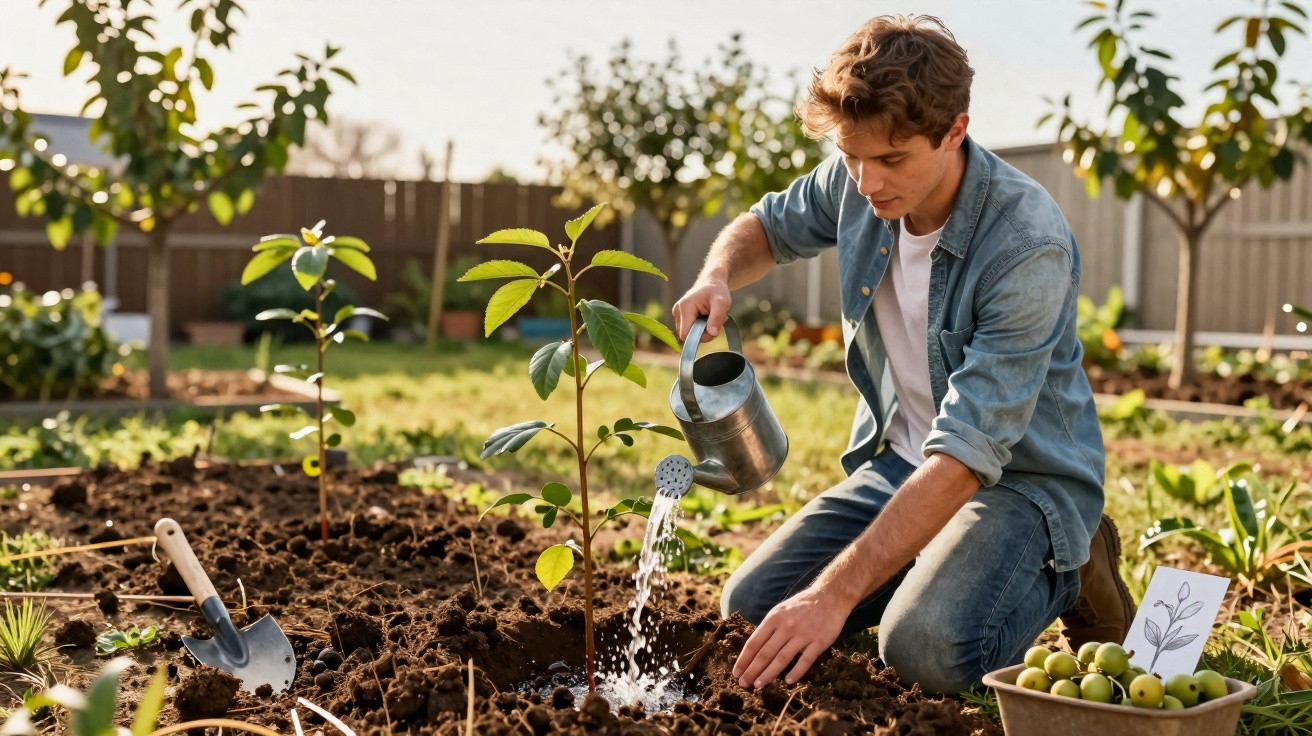
3. Plant Pittosporum and partners properly
For a hedge that’s dense yet still well ventilated, a spacing of 80 to 100 centimetres between two Pittosporum shrubs has proved effective. Over 10 metres of hedge, that works out at roughly 10 to 12 plants.
If you’re designing a mixed hedge, you can adjust the pattern. One example for 10 metres:
- 6 Pittosporum as the main framework
- 2 oleasters for silvery contrast
- 2 common dogwoods for colourful winter stems
Around the newly planted root balls, a 5 centimetre layer of bark mulch, woodchip, or leaf compost helps keep moisture even and suppresses weeds. In exposed, windy sites, one sturdy stake per young plant can be useful in the first season until the roots anchor properly.
Everyday care: minimal effort, strong results
In the first few months after planting, Pittosporum and its hedge partners mainly need consistent watering. For the first summer, a practical rule of thumb is:
- water 1 to 2 times per week, depending on conditions
- per shrub, let around 10 litres soak in slowly
By the second year, the plants manage with much less irrigation-provided they weren’t planted into pure sandy soil.
In spring, the hedge benefits from a light feed: about 50 grams of a balanced organic-mineral fertiliser per running metre is enough. Renew the mulch every two years to keep the soil active and to prevent it from silting up.
If you keep supplying the soil with compost over the long term, you strengthen the root system-robust plants fall ill far less often.
Typical mistakes when switching hedges-and how to avoid them
Many disappointments happen because people simply repeat the old approach. Three things are best avoided:
- Replanting the same species in the same spot: choosing Photinia again invites the next wave of disease.
- Planting too tightly: shrubs need airflow, otherwise moisture builds up inside the hedge.
- Leaving fallen leaves in place: infected foliage acts like a fungal reservoir, repeatedly re-infecting fresh growth.
With a little patience, the replanting pays off. Within a few years, a gappy, diseased hedge can be replaced by a resilient, colourful screen that looks good all year round.
What hobby gardeners should also know about hedge plants
Terms such as “evergreen” and “semi-evergreen” can confuse beginners. Evergreens like Pittosporum keep most of their leaves through winter, but they still replace them gradually over the year. Semi-evergreen plants shed far more leaves in very cold winters and can look temporarily thinner.
It becomes particularly interesting when you deliberately combine leaf shapes, flowers, and fruit. For instance, pairing Pittosporum with an early-flowering cherry laurel and a delicate ornamental crab apple creates not only privacy but also food sources for bees and birds. A simple boundary then turns into a habitat with real ecological value.
If you’re unsure which varieties will genuinely suit your local conditions, it’s best to ask at regional nurseries. The professionals there understand local soils, typical winter nights, and common disease pressures. With that support, a Photinia weak point can become a hedge that holds its own visually-while demanding far fewer nerves from the gardener.


Comments
No comments yet. Be the first to comment!
Leave a Comment