
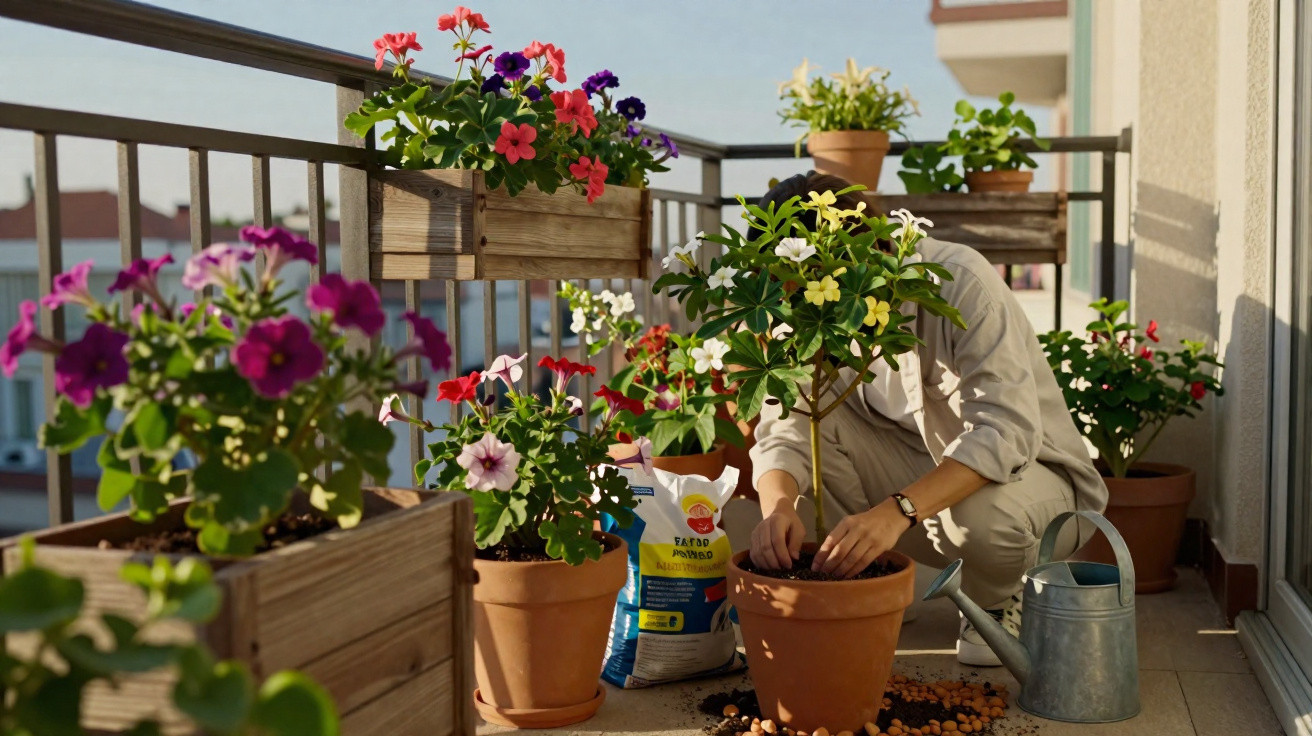
From April onwards, plenty of people get the urge to garden: that dull balcony should finally look colourful again - but ideally without a daily marathon with the watering can.
Anyone who has stood in front of the plant benches at a garden centre knows the dilemma: far too much choice and not enough certainty. Which flowers cope with blazing sunshine, what suits a north-facing spot, and which varieties won’t flop over the rim of the pot by July? With a handful of tough, reliable types, you can plant up a balcony in a single weekend so it stays in bloom all summer - without an overwhelming amount of upkeep.
Why April is the best time to start with balcony flowers
By April, potting compost finally begins to warm up consistently, most nights are free of frost, and nurseries are packed with young, vigorous plants. That’s exactly what container flowers need: enough time to establish strong roots before balcony boxes and pots heat up mercilessly in midsummer.
A south-facing balcony often gets six hours or more of direct sunshine. Sun-lovers thrive there - as long as excess water can drain away. Waterlogging is even more damaging in containers than in the ground, because roots have nowhere to escape. On west- or north-facing balconies, the situation is different: less heat, but moisture tends to be more even. Shade and part-shade plants reward these conditions with a long flowering season, while sun-seekers struggle.
"If you plan your balcony by compass direction, you’ll save yourself a lot of frustration in summer - and plenty of dried-out pots."
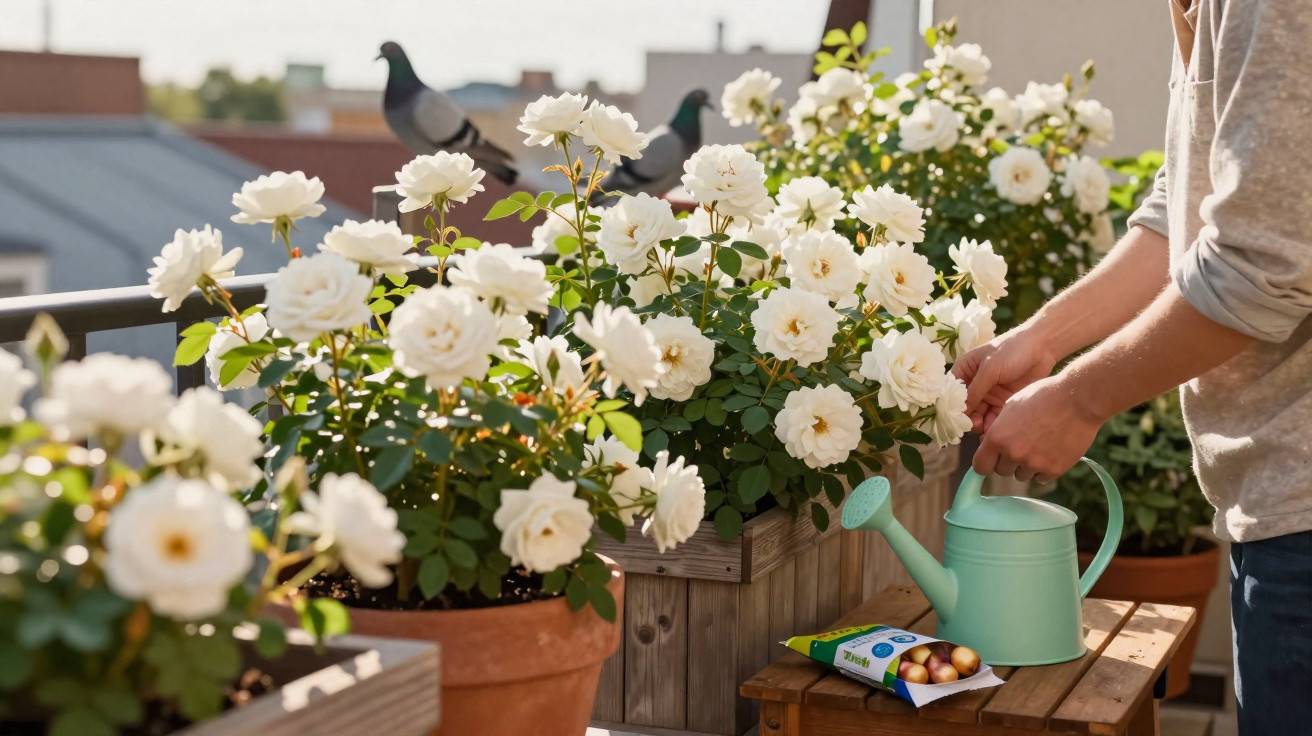
One simple, proven approach: give each pot one main plant, one or two “gap fillers”, and at least one variety that trails over the edge. The result looks like a compact cloud of flowers rather than a line-up of individual plants.
Preparing balcony pots properly in April
Before any flower moves in, a quick practical check is worth it. The container should be at least 20–30 centimetres deep so roots have room to spread. At the base, you need a good-sized drainage hole that’s clear - not blocked by old compost. A layer of expanded clay pellets or coarse gravel helps prevent water sitting at the bottom of the pot.
On top of that, use a loose, well-structured compost. Purpose-made balcony or container compost has a clear advantage, especially in sunny positions where cheap compost can quickly compact and turn claggy. If you like, mix in a little slow-release fertiliser. A thin mulch layer of fine bark chips or sheep’s wool keeps the surface moist for longer - handy if you don’t want to water every day.
Why used pots should be cleaned thoroughly
Many hobby gardeners simply put old pots back out and plant straight into them again. It may save time in the short term, but it can cost you plants later. Fine cracks and rims often harbour fungal spores, bacteria or pests that quietly transfer to the next round of planting.
"A quick wash for window boxes and pots reduces disease - and ensures new plants really get a fresh start."
Use warm water with a little vinegar, scrub well, rinse with clean water, and let the pot dry completely. Only then should you add the drainage layer and compost. This extra step can make a noticeable difference, particularly for more sensitive varieties.
Eleven robust potted flowers for sun, part shade and shade
The following selection is geared towards balconies that should flower continuously from April through late summer - with as little stress as possible when it comes to watering.
Sun-lovers for hot, south-facing balconies
- Petunias and Surfinia: A classic for window boxes, flowering almost nonstop. They want lots of light, nutrient-rich compost, and generous watering - but not necessarily every day. Removing faded blooms regularly encourages fresh buds.
- Calibrachoa (Million Bells): Like a finer, smaller petunia, producing dense cascades of flowers. They cope surprisingly well with brief dry spells, as long as the pot isn’t tiny.
- Geraniums (zonal varieties): A long-standing favourite because they handle heat, sun and wind remarkably well. They prefer free-draining compost and watering less often, but more thoroughly.
- Gaillardia (blanket flower): With red-and-yellow blooms, it brings “fiery” colour to pots and tubs. It tolerates drought extremely well and is particularly suited to larger containers.
- Dipladenia: A light climber or trailer that flowers from late spring right into autumn. Because it stores water in its roots, moderate watering is usually enough - ideal if you’re not at home all the time.
For all sun-loving plants, the rule is: water less frequently but deeply, and empty any excess water from saucers. That way, roots grow downwards instead of becoming waterlogged near the surface.
Flowering favourites for part shade and north-facing balconies
- Pansies and violas: Add colour early in the year. They cope with cooler temperatures, but they don’t like standing water.
- Primroses: Perfect for a bright spring start in shade or part shade. They tend to weaken in high summer, but can then be moved into a garden border.
- Short tulips and miniature daffodils in pots: Bring vivid splashes of colour as early as April. After flowering, let the bulbs dry out and plant them in the garden later.
- Begonia semperflorens (wax begonia): An almost tireless bloomer for shady to part-shady positions - very well suited to balconies with little direct sun.
- Lobelia (trailing types): Forms dense blue or white “clouds” of flowers and is excellent for filling gaps in boxes.
- Pinks (for example, Chinese pink): Pleasantly scented and adds structured, richly coloured flowers to pots.
- Heuchera: Valued mainly for its colourful foliage - from lime green to deep purple. It’s ideal for adding depth to balcony planting, grows well in containers, and is perennial.
Many of these plants work especially well together: heuchera as decorative foliage at the back, begonias in front, and lobelia threaded between them and spilling over the rim - a balanced look tends to come together almost by itself.
Plan location and plant combinations intelligently
A common mistake is mixing sun plants and shade plants in the same window box. One side gets scorched, the other sulks - and the overall result looks half-finished. It’s better to combine only plants with similar needs for light and water in each pot or planter.
| Position | Suitable types | Watering effort |
|---|---|---|
| Full sun | Petunias, Geraniums, Gaillardia, Dipladenia | Deep watering, less often; good drainage |
| Part shade | Calibrachoa, Lobelia, wax begonia, Heuchera | Evenly moist, no waterlogging |
| Shade / north-facing | Pansies, Primroses, Heuchera | Regular watering, plus a thin mulch layer |
How to cut daily watering down significantly
If you find yourself irritated in July, rushing around every evening with a watering can, the cause is usually pots that are too small or the wrong compost. Larger containers hold moisture for longer, as do quality composts designed to retain water. Light-coloured pots heat up less than dark ones, which also reduces evaporation.
A few simple routines help as well:
- Water in the morning or late evening, not in the midday heat.
- Aim at the compost, not over the flowers.
- Deadhead and tidy plants regularly through summer - less excess growth means less water lost, and more energy for fresh blooms.
Practical tips for long flowering into autumn
Many balcony plants begin strongly but lose momentum in August because nutrients run short. A liquid feed for flowering plants, added to the watering can every one to two weeks, keeps them vigorous. With perennials such as heuchera, a light trim in late summer is worthwhile so plants stay compact.
If you have the space, you can deliberately create height: taller dipladenia or geraniums at the back, medium-height begonias and pinks in front, and trailing petunias or lobelia on the edge. This builds depth, and even a narrow balcony can feel like a small city garden.
A final look at potential problems: constant waterlogging encourages fungal issues and root rot, while very dry air on windy, upper-storey balconies can cause scorched leaf edges. Simple saucers are useful for watering, but they shouldn’t be left permanently full. If you hang window boxes on railings, make sure the fixings are secure - after heavy rain they absorb water and become much heavier.
If you take these points on board in April, you’ll set yourself up for months of flowers. With the eleven types listed, almost any balcony can be planted successfully - from a hot, south-facing balcony to a cool, north-facing loggia. That way, summer stays colourful even if you don’t want to spend every day with a watering can in your hand.
Comments
No comments yet. Be the first to comment!
Leave a Comment